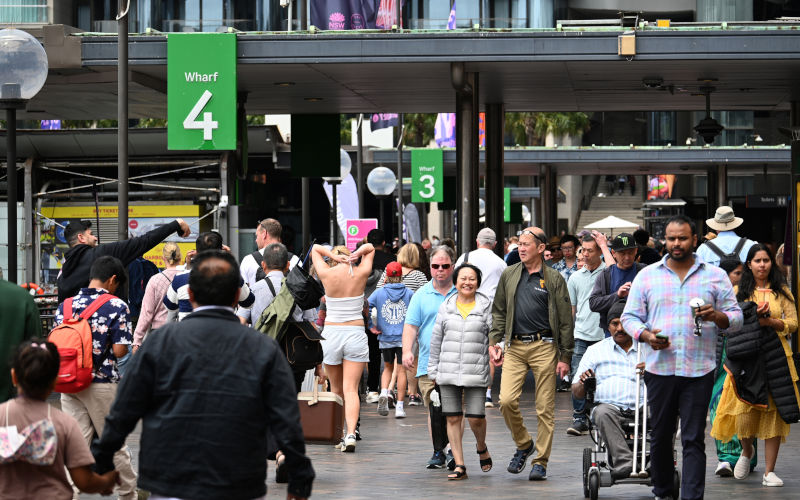
In the latest of our Foreign Policy Rethink series, Jocelyn Chey argues that Australia’s foreign policy must better reflect its multicultural society and leverage its diversity in international engagement.
Australian foreign policy must catch up with changes in the Australian community. Multiculturalism now defines our society, despite increasing racist attacks on Indigenous people and immigrants. Our urban schools are full of yellow and brown as well as white students, and rural industries would collapse without international backpackers and PALM workers. Nevertheless, ethnic diversity hardly features in government policy documents concerning international relations. At best it is acknowledged as a potential soft power tool. The time has come to reformulate foreign policy so that it reflects national reality.
The demographic shift towards more cultural and racial diversity followed a major reorientation of government policy under Whitlam, but it was not a purely internal matter. It coincided with a rapidly developing and increasingly mobile world, particularly in Asia. Multiculturalism as it emerged was paralleled by globalisation of technology, research, innovation, culture and the economy. Now the Indo-Pacific is the fastest-growing, most diverse and most innovative region of the world. Australia stands to benefit from its geographical position if it properly endorses multiculturalism.
The economic benefits of diversity are recognised in government. A New South Wales Multicultural Communities Council forum in March emphasised how entrepreneurs and networks are helping Australian businesses access new markets, facilitating smoother international trade and investment and enhancing global connections. Speakers noted that immigration also fills skilled labour gaps.
The 2017 White Paper on Foreign Policy stated that Australia was a “vibrant multicultural nation” and this identity was a source of national strength and a key element of engagement with the world. A Lowy Institute 2022 panel discussion, noting the White Paper, described a regrettable time lag in following through from verbal acknowledgment to government action. The Department of Home Affairs 2024 200-page Multicultural Framework Review found that multicultural policy needed bipartisan support but unfortunately immigration and multiculturalism are being politicised. Divisions have emerged between political parties, with One Nation appearing to favour a return to White Australia and all parties seem inclined to accommodate its extremism.
Nearly half of all Australians were born overseas or have a parent born overseas. Our diversity should be our strength, being leveraged to foster economic ties, strengthen diplomatic relations, and promote a secure society. To achieve this on a local and national level, governments should consult Chinese Australians, Indian Australians, Greek, Arabic, New Zealand and other migrant communities and listen to their views, not only on local issues but also international relations.
Foreign Minister Penny Wong said in 2018 that multiculturalism was not merely domestic policy, but fundamental to how Australia presents itself to the world and that diaspora populations in Australia had helped deepen ties in the Indo-Pacific. Chinese, Indian, Vietnamese, Filipino and other communities in Australia acted as bridges, fostering interpersonal connections, economic engagement and cultural understanding with their countries of origin. This is only partly true. Sometimes the bridge-building is compromised. Our Asian neighbours are aware of our racist past including our treatment of Indigenous peoples and asylum seekers. They see us as a European outpost and know that our defence alliance with the United States is the bedrock of our international relations and that we are happier aligning policies with countries with “shared values”.
The 2017 White Paper and subsequent updates emphasise that national security is strengthened by social cohesion. This should protect the open, inclusive and democratic Australian society and guard against extremist ideologies. A “cohesive” society is seen as more resilient and less vulnerable to foreign interference or radicalisation.
The flaw in this approach is that it is simply a newer version of outdated assimilation policies, the same ones that were conceived as a solution for Indigenous peoples who were expected to abandon their traditional culture and integrate wholesale. Now migrants also are told that they should leave their home countries’ prejudices and historic grievances when they move to Australia and “integrate”. This colonialist attitude failed to resolve problems in Indigenous communities and will equally fail to achieve social cohesion. Rather, let us encourage the preservation of migrants’ language and cultural skills, support teaching and research of foreign languages and school and university, and devote more resources to the settlement of newly arrived migrants so that they do not suffer discrimination.
Australian multiculturalism is facing challenges that could impact our foreign policy. A significant portion of the population is experiencing increased discrimination based on race or religion. Addressing this is crucial for maintaining the credibility of Australia’s international reputation as an open, tolerant, and egalitarian society. While cultural recognition has improved, ongoing efforts are needed to ensure better representation of diverse communities in political and institutional leadership. A diverse diplomatic corps, equipped with linguistic skills and cultural knowledge, can navigate complex political landscapes, particularly in Asia and the Pacific. The ability to present itself as a diverse, welcoming, and egalitarian nation will enhance Australia’s credibility on the global stage, especially when advocating for human rights and rules-based trade.
Our multicultural society is characterised by diversity. Sections of the community naturally have their own perspectives on foreign affairs. For instance, Chinese communities include people from mainland China, Taiwan, Hong Kong, Tibet, Xinjiang, Southeast Asia and elsewhere, each with different opinions on international relations. In formulating a national response to global events, parties and governments need to weigh carefully the views of various lobbies. Our democratic system depends on preparedness to listen and consider all views.
Australian foreign policy can no longer be viewed through a traditional, Eurocentric lens. It is now deeply intertwined with the nation’s multicultural reality. By embracing its diversity and leveraging its diaspora communities, Australia can strengthen its diplomatic, economic, and security ties in the Indo-Pacific and beyond.
Multiculturalism needs to be cherished by the nation and properly resourced and consulted so that it can contribute to a confident, interconnected global presence. Assimilation or integration is not the answer. It is a veiled attempt to preserve monochrome Anglocentric culture. Let’s replace it with a full-spectrum multi-coloured culture.

Jocelyn Chey is Visiting Professor at the University of Sydney and Adjunct Professor at Western Sydney University and UTS. She formerly held diplomatic posts in China and Hong Kong. She is a member of the Order of Australia (AM) and a Fellow of the Australian Institute of International Affairs.