Right-wing podcasting in Australia is akin to a craft beer with a niche following. It is not a mass market.
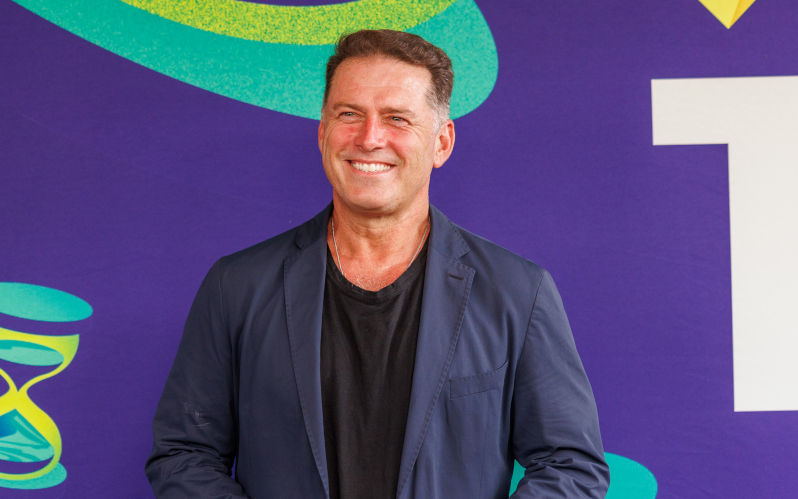
Karl Stefanovic and Nine parted ways last week, immediately, rather than at the end of the year as originally agreed. The trigger was a podcast interview with Tommy Robinson, the British agitator and English Defence League founder whose legal name is Stephen Yaxley-Lennon.
Stefanovic declared himself ‘free’ and ‘truly independent’, thanked his existing sponsors and openly called for new ones. Read one way, that is a man who has looked at the American media landscape and concluded there is a fortune to be made going it alone. On part of the diagnosis, he is right. On the part that matters, the numbers are brutal.
There is a persistent belief in this country that you can import the American grievance-media business model, the outrage economy, the audience-of-the-aggrieved, the monetised culture war and make it pay here the way it pays there. It is worth walking through why that belief is mostly wrong because it comes down to one thing: scale.
Start with the part, if Stefanovic has these plans, he gets right. Podcasting and alternate media are a genuine growth market, and not a marginal one. Roughly 9.6 million Australians now listen to a podcast every month, about 47 per cent of the population, up sharply in just a few years. Some of the fastest growth is among blue-collar workers and young men. If you were betting on where audiences are heading, you would bet here. That instinct is sound and should also act as ominous warning to legacy media platforms and any industry that relies on it for future revenue.
The problem is not the medium. It is who the audience is, and how many of them there actually are.
Take the figure or personality everyone reaches for: Joe Rogan. Yes, Rogan has built something enormously lucrative, more than 14 million followers on Spotify alone, a licensing deal reported to be in the hundreds of millions, top episodes that have drawn tens of millions of views apiece. But Rogan is a bad template for the aspiring merchants aiming to tap into grievance politics, because Rogan’s product is not grievance politics. His platform is pitched at several audiences at once. Yes, the right. But he has also platformed Bernie Sanders and figures from the left, and a large slice of his catalogue is comedy and mixed martial arts, the latter being how I found him years ago, long before mainstream media knew his name. Rogan’s genius is breadth. He is a general-interest broadcaster who sometimes wades into politics, not a partisan who monetises anger. Strip out the comedy, the fighters, even at times the science and history content, and you don’t have Rogan. You have a much smaller business.
Now consider the cleaner test case: Tucker Carlson, who really is pitched almost entirely at the politics of the right. At his Fox peak, he averaged more than three million viewers a night, occasionally topping 4.5 million. His network now claims episodes that average 56 million-plus ‘views’ across platforms. But that headline number is a public-relations artefact, an aggregate of two-second plays across YouTube, X, TikTok and podcasts. Independent measurement tells a more sober story: his main YouTube channel sits around two million subscribers with a couple of hundred thousand average views a month; reporting on his paid subscriber base has put it at something like 7,000 accounts. That is a real business. It is also, by the standards of the audience he supposedly commands, a modest one and it exists inside a market of 340 million people.
That is the point people miss. Even in America, once you narrow the pitch to pure right-wing politics, the genuinely monetisable core is far smaller than the reach numbers suggest. And America is where the model is supposed to work.
Now suppose the ambition is to skip the small pond and pitch straight into the US. Good luck. That market is not just enormous, 158 million monthly podcast listeners, it is savagely crowded. Rogan, Carlson, Ben Shapiro and the Daily Wire stable, Megyn Kelly, Theo Von, Shawn Ryan and a dozen others already occupy the space, with head starts of years and audiences an Australian entrant cannot buy. The idea that a departing breakfast-television host walks in and carves out a slice is fantasy.
Which brings us home, and back to scale. The single biggest podcast in all of Australia, Hamish and Andy, and note that it is comedy, not politics, pulls a little over 600,000 monthly listeners. The most-listened right-leaning news brand, Sky News’ daily update, sits under 450,000. Rogan’s Spotify following alone is larger than Australia’s entire monthly podcast audience, and roughly 24 times the size of our number-one show. There is simply no domestic audience of the size the American comparisons imply.
Then comes the demographic trap, and it is the one that should give any aspiring local Tucker real pause. Grievance media skews young and male, the very cohort now driving podcast growth here, with more than 40 per cent of men aged 15 to 34 listening daily. But young Australians are the least receptive audience in the country for right-wing politics. One Nation’s primary vote among Gen Z sits at around 10 per cent. Even among Gen Z men, the core demographic for this kind of content, the bit that theoretically should convert, it tops out near 15 per cent. So you are building a product for an audience least inclined to buy it. It’s akin to leaving a well paying job to to make craft beer. Yes, there is a market, but the scale is small. Yes, you can make money, but not in the millions.
If you genuinely wanted to make money from young, engaged, values-driven Australians, the smarter bet is the left, not the right: that is where the youthful energy and the loyalty are. But even there, scale caps the upside hard. You can build a devoted audience. You cannot, on Australian numbers, build one large enough to replace a seven-figure network contract.
And that is the wall every version of this plan hits. Sponsors do not pay for passion; they pay for reach. Reach requires scale, and scale is exactly what a nation of 27 million, most of whom don’t want what grievance media is selling, cannot provide. Let us not overlook the reality that even where One Nation tops out in polls at 30 per cent, there is another 70 per cent of Australians who do not support this version of politics. Stefanovic may well thrive independently. But if the wager is that Australia has a hidden American-sized market for monetised politics, the arithmetic says otherwise. Grievance politics is real. It just doesn’t scale.

Kos Samaras
Kos Samaras is a director at RedBridge Group, a research and strategy firm specialising in public opinion, social trends, and behavioural insights. He works across industry, government, and media to help organisations understand community attitudes and navigate complex social and political environments.