The World Cup is compromised, commercialised and often grotesque – but it can still show us something true about belonging, about multicultural Australia and the complexity of loving something, while refusing to look away from its failures.
I love the World Cup. But I also hate quite a lot about it. I should get that disclaimer out of the way first.
I love the sleep-deprived madness of it all. I love the sudden expertise people develop over the reserve inverted left-back from a country they’ve never visited. I love the sometimes weird and wonderful kits. I love how a single goal can lift an entire nation.
But let’s be honest, the World Cup is, in many ways, a bit gross.
This World Cup has, at times, felt like late-stage capitalism dressed up in an overpriced polyester football shirt.
The sponsorship machine. The bank-account-busting ticket prices. The commercial insertion of advertising breaks dressed up as essential player hydration.
It’s a vast moral laundering operation that tells us football is for everyone, while pricing ordinary fans out of the game and cosying up to the powerful.
Then there are the sharper outrages.
Somali referee Omar Artan was denied entry to the US, ending what should have been his World Cup debut. Iran’s coach and players have been at the pointy end of what looks like a geopolitical conflict played out in entry visas. We can’t know what effect having to move their training camp to Mexico had on their football, but it can hardly have helped.
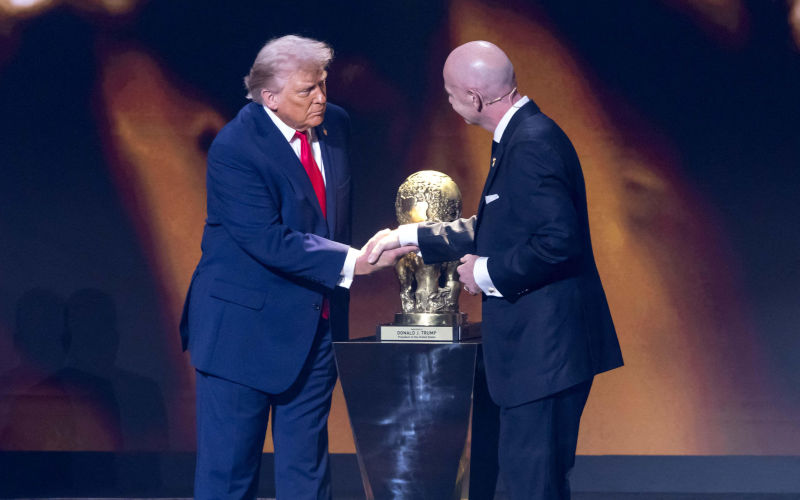
And then there was FIFA President Gianni Infantino’s appalling decision to present Donald Trump with a FIFA Peace Prize – a gesture so grotesque it defeats parody.
Among all this, the football happens.
A smaller footballing nation gives a global heavyweight a bloody nose. A goalkeeper becomes a national hero. A country many viewers would struggle to point to on a map becomes, for 90 minutes (plus injury time, plus hydration/ad break time), the centre of the world.
That’s the part of the game that FIFA, Donald Trump and the corporate sponsors don’t own.
The game itself belongs to the people who watch it, argue about it, cry with delight or sadness about it, and use it to say something about who they are and what they belong to.
That’s what Mainul Haque and Sirwan Barzanji captured so beautifully in their pieces for P&I this week as they wrote about the World Cup and multicultural Australia. Sirwan writes about his wife, who was not born here, jumping up from the couch after the Socceroos win against Türkiye and shouting: “We won!”
Not “they won”. Not “Australia won”. We won.
At a time when Pauline Hanson is calling for Australia to be a “monoculture”, the Socceroos are out there offering a much truer and better picture of the country we really are: names, families and histories from everywhere, all wearing the green and gold, and all chasing the same dream.
You couldn’t script a better answer to the smallness of Hanson’s politics.
The Socceroos don’t look like a monoculture. They look like a team reflecting a country made stronger by migration, difference and shared purpose. They look like “we” being made in real time.
Of course, football by itself doesn’t fix anything.
Football doesn’t erase racism. It doesn’t tackle inequality. It can’t make FIFA decent or even likeable. It didn’t make Trump a peacemaker just because the FIFA president presented him with a shiny gong.
But it still shows us something true: that joy and hope can survive inside hopelessly compromised institutions, and that a thing can be both beautiful and ugly at the same time.
That last point feels important.
We live in a political culture that often demands instant categorisation. Things are good or bad, you’re with us or against us, right or wrong.
But most things in life that matter are more complicated than that.
The World Cup is a grotesque commercial machine. But it’s also one of the few global rituals that can make strangers feel – even if just for a moment – part of a shared story.
Australia is a country capable of cruelty and cowardice in its politics. But it’s also a country where Australians all over the world can watch the Socceroos, feel proud this group of players is representing them, and say, without hesitation “we”.
None of this is a call for us to soften our criticism of things that deserve it. Quite the opposite.
If we care about football, we should be angry about what FIFA does with it. If we want to defend democracy, we should be mad when strongmen leaders abuse it. If multicultural Australia matters to us, we should push back hard when politicians try to shrink it into something meaner, whiter and less honest.
But anger is more useful when attached to reality. And reality is rarely clean – it’s full of small victories with bigger setbacks, compromised institutions, and people trying to do the right thing inside systems that work against them.
Perhaps that’s one of the reasons I love football – it’s messy (and Messi) and refuses neatness. The better team sometimes loses. Smaller national teams pull off upsets. A dreadful organisation produces an event with moments of genuine human beauty.
So yes, I have mixed feelings about the World Cup. And I think that’s a good thing.
Because if we can’t hold two thoughts in our head about football, how are we going to do it with war, climate change, inequality or democracy?
Having mixed feelings is recognising that the world is complex and making a choice about where to stand.
I’ll keep watching the World Cup. And I’ll keep being appalled by FIFA.
And I’ll keep thinking about that word: we.
Because in the end, maybe that’s what the World Cup does best – it asks us who we mean when we say it.
—
If you like our work, you can help. We take no corporate or government funding, run no ads and subscriptions are free. So please consider making a donation.

Martyn Pearce is the sub-editor at Pearls and Irritations