Labor’s primary vote is weakening while Green preferences remain crucial in close contests. Albanese’s hostility to the Greens may become increasingly difficult to sustain.
Anthony Albanese should be careful about continually insulting the Greens. He may rue the day!
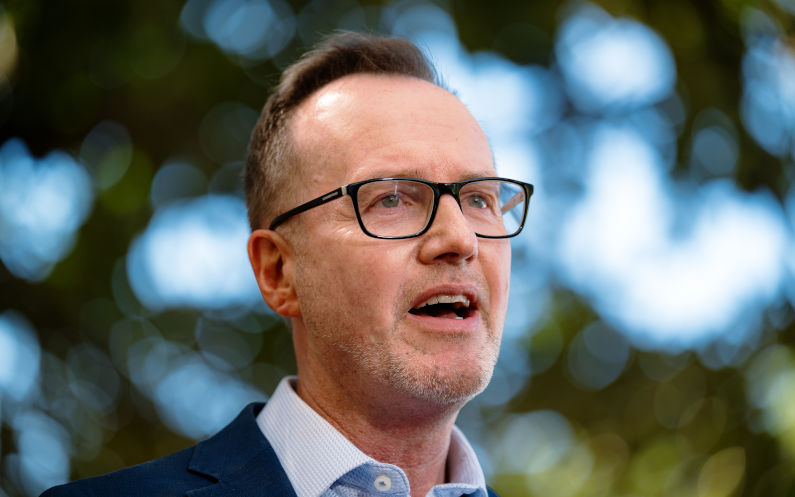
Just elected, David Shoebridge said that his objective is not to reform Labor but to replace it. That may not be as bold as it sounds. The first preference Green vote at the last two elections has been around 12 per cent. Recent polling shows it at around 13 to 15 per cent. The ALP first preference vote is down to 28 per cent.
The strategic interdependence between the ALP and Greens in relation to preferences contrasts sharply with the adversarial relationship between their parliamentary leaderships.
The Labor Party has good reason to be nervous and Albanese’s immediate response to Shoebridge’s election shows it.
Determined to occupy the political centre and make Labor “the natural party of government”, Anthony Albanese may be imperilling Labor.
Can David Shoebridge find a way to break through the Green voter ceiling of 12 per cent? He will need to contend with legacy media, which is consistently hostile to the Greens, like watermelons, green on the outside and red on the inside.
In several countries we are seeing disillusionment with major parties and the Greens increasing their vote significantly. In New Zealand the most recent polling shows the Greens at 16 per cent. This was the highest NZ Green polling number ever recorded. In the United Kingdom, polling puts the Greens at 10 to 13 per cent, up from 6.7 per cent at the last election. In the US, Zohran Mamdani’s election as New York mayor has demonstrated the electoral appeal of democratic socialist programmes centred on housing, childcare, public transport and taxing higher incomes.
Greens in many countries have transformed from fringe movements into mainstream forces by broadening their platforms beyond environmentalism. While climate urgency remains central, their vote share has grown significantly due to deliberately pivoting towards progressive socio-economic policies such as cost-of-living relief, housing affordability and wealth taxes. This shift has attracted young voters disillusioned by the traditional centre-left parties. The Greens have increasingly moved from protest parties, and loose movements, to influential power brokers within a few decades.
The Labor Party no longer represents many of the people who vote for it. It is controlled by an unrepresentative coterie of factional controllers like Richard Marles. Internal politics is conducted almost entirely within an elite class. This has produced a timid managerial poll-driven approach to politics. Raising money and the compromises that go with it, including gambling interests, have supplanted party membership.
By refusing to take the community seriously and by hiding from public discussion on issues such as AUKUS, Labor has disenfranchised its natural constituency. Can the Greens respond and capture those voters who are very much concerned about a timid government that has lost its moral bearings on such key issues as the genocide in Gaza?
That timidity and conservatism is also shown in the way that the government negotiates with the Coalition rather than the Greens for the passage of legislation in the Senate.
The ALP vote is clearly drifting south. In 2019 the primary vote for the ALP was 33.3 per cent. It fell to 32.6 per cent against Scott Morrison in 2022. With the benefit of both Trump and Dutton the ALP primary vote recovered to 34.6 per cent in 2025. It is now languishing at about 28 per cent in several surveys. It used to be in the mid to high forties.
Green preferences, which are critical for the ALP, range from 82 per cent in 2019 to 88 per cent in 2025. Those are very high figures.
In 2019 Labor won 68 seats but failed to win government. Green preferences flowed at approximately 82 per cent to Labor and were decisive in Labor holding several marginal seats that Labor might otherwise have lost. Cowan and Lilley were won from behind on preferences. Other victories, such as Macquarie and Eden-Monaro, were extremely close.
Labor won government in the 2022 election when 86 per cent of Green preferences went to Labor. As a result, seven Labor candidates won from behind on Green preferences. They were Gilmore, Lyons, Bennelong, Higgins, Robertson, Tangney and Boothby. In that election there would not have been a Labor victory without Green preferences. The ALP won 77 seats, the Coalition 58 and the crossbench 16. The ALP had a bare majority.
In the landslide Labor victory in 2025, Green preferences did not determine the result. However, in eight seats where the Coalition led on primary votes, Labor ultimately won after preferences – Aston, Banks, Brisbane, Deakin, Dickson, Menzies, Petrie and Solomon. Green preferences were important.
Anthony Albanese has shown hostility towards the Greens for many years. He takes Green preferences for granted. After the 2022 victory he was very hostile in staffing arrangements for Greens and Independent members of parliament. He variously describes the Greens as “blockers” and “a party of protest and not government”. He reserves his vitriol for the Greens rather than the Coalition. He particularly targeted former Greens MP Max Chandler-Mather, who is now heading the recently established Green Institute.
How David Shoebridge handles the issue of preferences will be the key to the next election. If the Greens deny preferences to Labor on a significant scale, many Labor MPs will be in difficulty. With the growing collapse of votes for the major parties, Green preferences for Labor will be more important than ever. However, that could be a two-edged sword. Some, perhaps most, Green voters would be reluctant to give their preferences to the Coalition and One Nation ahead of Labor. They may feel differently about high-profile independents.
There is an opportunity for the Greens on a wide range of issues – climate change, taxation of wealth and the fossil fuel sector, relations with our region including China, disengaging from the crazy regime in Washington, ditching AUKUS and opposition to the genocide in Gaza. Hopefully they will appreciate that we need additional taxes to properly fund childcare, education, health and housing, not by propping up private operators but by providing public funds for publicly operated services.
Bob Brown cut through in broadening the Green appeal in opposition to Australia’s close military relationship with the United States and bringing peace and disarmament to the Greens’ agenda.
Can David Shoebridge do the same? In the Senate he has been more than a match for Penny Wong and he has flagged his view on key issues. After his election as leader, he said “when we say that we want to tax these blood-soaked war profits of our export gas industry… when we say that we want to put in guard rails and clear laws to stop US billionaire tech bros covering the country with AI data centres like mushrooms it turns out that that is really popular”.
I could have imagined Albanese saying something similar 30 years ago, but not today.

John Menadue is the Founder of Pearls and Irritations and a board member. He was formerly the Editor-in-Chief. John was the Secretary of the Department of Prime Minister and Cabinet under Gough Whitlam and Malcolm Fraser, Ambassador to Japan, Secretary of the Department of Immigration and CEO of Qantas.