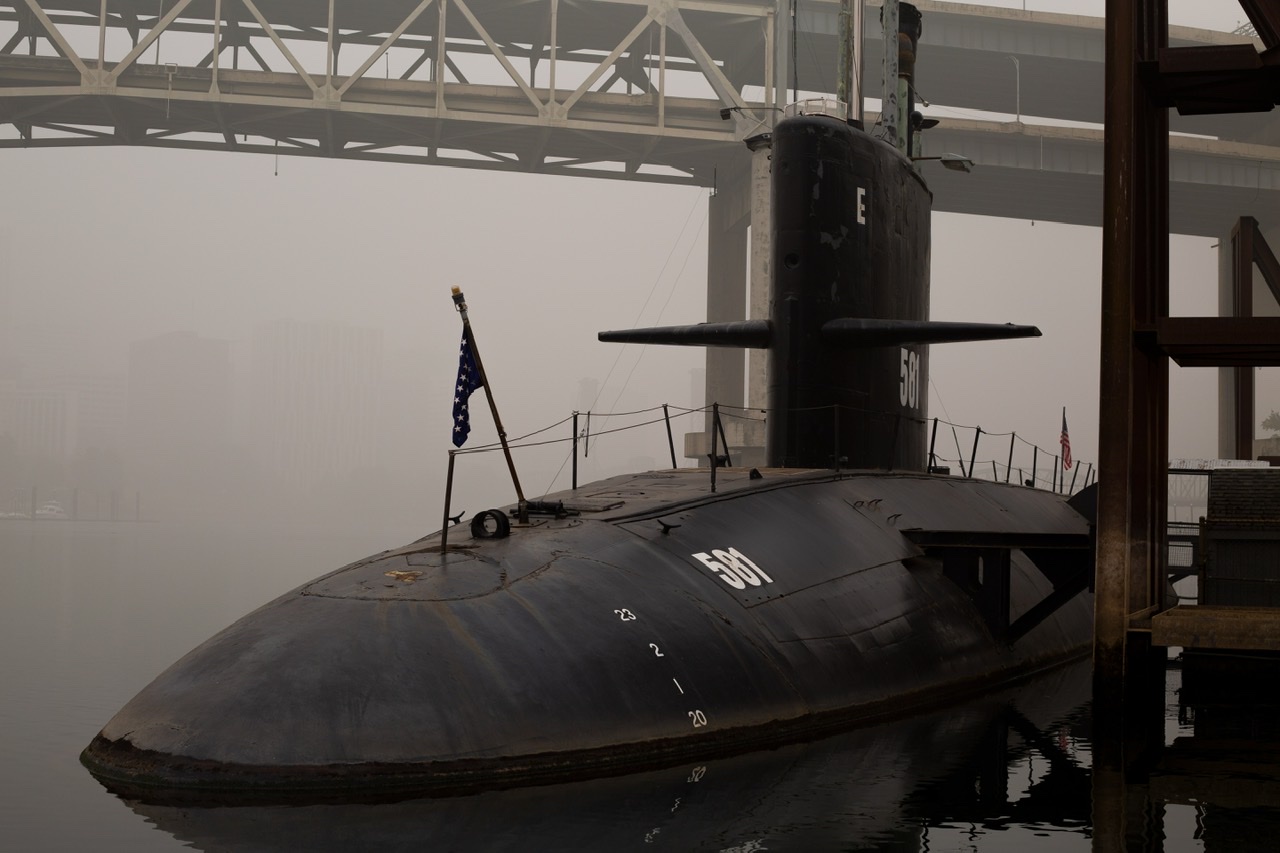
Our corporate media has failed to hold the government to account in its scandalous handling of the $90 billion French submarine purchase. For five years, the media has failed us. It is now rewarded in the new Media Code with 90% of the tax on Google and Facebook to be handed over to the three failing monopoly media companies.
Since July 2016 Pearls and Irritations’ writers Jon Stanford, Michael Keating, Hugh White and I have repeatedly drawn attention to the folly of the submarine purchase by the Turnbull government five years ago. Only two journalists, Brian Toohey and Michael Pascoe, have consistently drawn attention to this public scandal. The so-called defence and military journalists in the corporate media have been missing in action.
The Morrison government has at last announced a review of the boondoggle, tasking two senior naval people, Vice Admiral Jonathan Mead and Commodore Tim Brown, to review the mess. Significantly, these two naval officers have not been involved in the $90 billion scandal and are removed from the division in the Defence Department that has created the whole sorry story. They are strategic thinkers who will be reporting to the Prime Minister via the Chief of the Defence Staff and the Secretary of Defence, and not through the Chief of Navy.
Hopefully, we can begin to climb out of the worst defence bungle in our history, which has probably cost about $2 billion. Who said the Coalition is good at ensuring our security and good at managing taxpayers’ dollars?
In the five years of the boondoggle, our corporate media has been lost on the high seas. Embedded in the Navy and Defence to secure ‘exclusive’ media drops, they failed to examine and report on the mess. Just imagine the field day our media and journalists would have had if the ALP had got itself into this sort of a mess.
A brief summary of the five years of incompetence and media failure.
- The initial cost of the 12 French designed submarines was $50 billion, although the media suggested this was an over-estimate. The current cost adjusted for inflation is $90 billion and counting. As Hugh White the Professor of Strategic Studies at the Strategic and Defence Study Centre at the ANU and formerly Deputy Secretary of the Department of Defence put it on 23 September 2016 in Pearls and Irritations,
‘the acquisition strategy for the submarines almost guarantees a disaster whoever builds them, because the design and pricing are taking place in a completely competition-free environment. What we need is a competitive Project Development Study phase, in which two (or more) contenders develop detailed designs and provide tender-quality prices on which a fixed price contract can be based. That is standard in this kind of project, or used to be. As it is, the French can offer whatever they like at whatever price they choose to demand and we will have no option but to accept it – and the longer the current phase lasts the less option we will have, because the less we could be able to stand the delay of starting again.’ - The Effective Rate of Assistances is in excess of 300%. This is the excess cost we are paying for construction in Australia rather than buying from overseas suppliers. Compare that rate of assistance to the 5% that our car industry received before the Coalition shoved it out the door.
- Despite all the political propaganda in South Australia and the silence of Murdoch’s Adelaide Advertiser, the submarine project in Adelaide may provide only 2,000 jobs. The real value-added work will be done in France. We sold out for 2,000 jobs to help Christopher Pyne keep his seat of Sturt. At the same time, we lost 250,000 jobs with the closure of the auto industry, many of which were in South Australia. The Morrison Government now says that 60% of the submarine funding will be spent in Australia. I remain sceptical about that with a company like Naval Group.
- With luck, the 12 French Shortfin Barracuda submarines will be delivered some time between 2033 and 2050. As suggested, these submarines are to operate in the South China Sea against the Chinese navy. There is clearly no need for the Chinese navy to worry.
- With our six Collins Class submarines nearing the end of their lives from the mid 2020s, there will be a significant and wide capability gap for Australian defence.
- A critical assumption has been that the new French submarines would operate in coalition with the US in the South China Sea. But there seem to be two major problems with this. The first is that the French submarines are not nuclear powered and will be contesting the waters with Chinese nuclear-powered submarines. Second, it is also not clear that the US navy, with nuclear powered submarines, would want to operate alongside our conventionally powered submarines.
- And strategically, do we really need submarines to operate at long range in the South China Sea with the severe limitations involved. Isn’t the protection of our littoral zones where we should be focusing our intention?
See below, a post by Jon Stanford in Pearls & Irritations on 4 November 2016. It was one of numerous articles we have posted over the last five years, beginning in July 2016.
The Turnbull government’s decision on the future submarine (FSM) represents bad policy. It is bad for the Navy, bad for the taxpayer and bad for the future defence of Australia. Given the key role the FSM is meant to play in the future of the naval shipbuilding industry, it is also bad news for South Australia.
The Navy’s requirement is for a uniquely large conventional submarine (SSK) that can undertake force projection missions far from home. This in itself raises important strategic questions. Is this an appropriate role for Australia? Does the US want Australian submarines to operate in the South China Sea? In practice, should only nuclear submarines (SSNs) undertake such missions?
But accepting the Defence requirement for what it is, the concerns around the decision to acquire the DCNS Shortfin Barracuda submarine are considerable. They relate as much to the very substantial risks involved as to the excessive cost.
In terms of the acquisition costs budgeted by Defence, $4.6 billion represents an eye-watering price for a SSK. A nuclear-powered Barracuda costs less than half this in France. A very large Virginia class SSN currently costs $3.6 billion in the US. Most SSKs cost less than $1 billion.
The French submarine appears to be easily the most expensive out of the three proposals submitted under the competitive evaluation process (CEP). TKMS, the German contender, offered to build twelve advanced submarines in Adelaide for around $20 billion, the same cost as in Kiel. At about $750 million in Japan, an improved Soryu class submarine would cost more to build in Adelaide, but far less than $4.6 billion.
Turning to risk, there is a fundamental flaw in the process itself. By eliminating all competition before a detailed design has been produced, the Navy faces substantial risks. What if the eventual DCNS design is untenable on technical grounds? What if the price quoted by DCNS, now a monopolist, is unacceptable? Australia could be forced to buy an existing design off the shelf from overseas that may not meet all the Navy’s needs.
This scenario is not impossible because the French proposal involves major technical challenges. Nobody has ever converted a nuclear submarine to a SSK before. Many submarine experts doubt that it can be done. The hull forms are different. The use of pump-jet propulsion in the Barracuda, while a breakthrough technology in SSNs, may be far less efficient at the low speeds associated with a SSK.
Another technical risk with the DCNS proposal is that, unlike the other two contenders, it doesn’t incorporate air-independent propulsion (AIP). AIP allows a SSK to remain submerged for up to three weeks, albeit moving at slow speeds. Because of improved anti-submarine technologies, which allow SSKs to be detected when ‘snorting’ (recharging their batteries close to the surface), AIP is a sine qua non for an advanced SSK in the twenty-first century.
A major risk with the French proposal is the tardy delivery schedule, with the first submarine not entering service until the 2030s. This will necessitate a major upgrade to the Collins submarines to keep them in service until the 2040s. This involves massive risk. Collins cannot be converted to embody AIP. Deep diving will become increasingly dangerous as the platform ages. While the likely cost of the upgrade to Collins is in excess of $15 billion, it may not deliver a credible submarine capability.
Given the ADF’s preference for American weapons and systems, a further risk is that the US will refuse to allow the full transfer of sensitive technology to a French platform. The recent comprehensive leak of DCNS’ top secret submarine data is likely to make the US more wary of providing sensitive technologies to France. This means that an American combat system, as well as US cruise missiles and torpedoes, may be unavailable.
One popular theory suggests that the choice of the Shortfin Barracuda is merely an artifice to allow the nuclear version of the platform to be acquired down the track. Peter Jennings, Executive Director of the Australian Strategic Policy Institute, certainly thinks so: “it’s probably a good bet to say that the reason we’ve gone with the Barracuda is that some of the 12 builds can be nuclear.”
If this is Defence’s cunning plan, it is highly questionable. First, the Germans and Japanese do not produce nuclear submarines and so were participating in the CEP, in good faith, on the basis of a false prospectus. Secondly, it is also a highly risky approach to replacing Collins. Even if we started now, it would take 15 years to develop the hard and soft infrastructure required to operate SSNs. We do not know if this will ever be politically acceptable in Australia. We have not undertaken any process to determine whether a French SSN would be more appropriate to the Navy’s needs than an American or British design. We may well also need to procure SSKs to complement the putative long-range SSNs, and the Shortfin Barracuda is unlikely to be the best available platform for that role.
Overall, the risks involved in the DCNS proposal are so high as to be unacceptable, particularly in light of the costs involved. A senior Defence official is quoted as saying “If you asked someone to devise a new submarine program with the highest risk factors at every stage, you could not have done a much better job. It will almost certainly end in tears and possibly a catastrophe”.
Fortunately, it is not too late to change course. To date, the only agreement with DCNS is for the development of a detailed design. The solution is to keep the competitive process alive by extending the CEP and resuscitating the other proposals. As Hugh White has said, “what we need is a competitive Project Development Study phase, in which two or more contenders develop detailed designs and provide tender-quality prices on which a fixed price contract can be based. That is standard in this kind of project, or used to be.” As well as proposing a tender price for building them overseas, each contender would also be required to provide a detailed plan for building the submarines in Adelaide under a fixed price contract.
Apart from the benefits of re-establishing a competitive process, extending the CEP would also help repair relations with Australia’s friends in Japan and Germany. There was considerable angst in both countries not only about the outcome of the CEP but, more fundamentally, about the process itself. Both the German and Japanese proposals were rejected by Defence for reasons that were regarded by the proponents as being largely spurious.
Extending the CEP would not delay the acquisition. Indeed, the FSM may be in the water sooner than currently projected. At the same time, the major risks in the current process would be substantially reduced and there is a much greater likelihood that the Navy would be provided with the right submarine at an acceptable cost.
Further reading
Jon Stanford and Michael Keating – Submarines; cost, capability and timelines. 5/4/2016
Jon Stanford and Michael Keating – The mistaken decision on submarines. 29/4/2016
John Menadue. Defence White paper. US, China and Barracuda – class submarines. 26/4/2016
Jon Stanford. French submarines and the East and South China Seas – why?. 6/5/2016
Jon Stanford. Business welfare under the Coalition: two case studies (1) 16/9.2016
John Menadue. Cars, submarines – costs and jobs and a likely disaster. 11/10/16.
John Menadue. Mr 300%. 18/11/16.
Murder, corruption, bombings – the company at centre of Australia’s submarine deal

John Menadue is the Founder of Pearls and Irritations and a board member. He was formerly the Editor-in-Chief. John was the Secretary of the Department of Prime Minister and Cabinet under Gough Whitlam and Malcolm Fraser, Ambassador to Japan, Secretary of the Department of Immigration and CEO of Qantas.
Comments
9 responses to “The French submarine boondoggle is Australia’s biggest defence blunder and compounded by media failure”
John, the Chinese already have the capacity to blow submarines out of the water in the South China Sea region whether American or Australian because they have focused their defences on doing exactly that for years. Even the US’s Rand Corporation does not think the US is capable of winning a war against China and it believes America needs 10 years of further obscene levels of spending and weapons production before it gets there. America is incapable of winning a war close to China, and even if a major war broke out between the two countries involving nuclear missile attacks on US soil, America would be highly likely to fail as well. More than 50% of the US discretionary budget is being spent on military spending to catch up on weapons while American’s go without food, decent incomes, medical insurance, and having reliable infrastructure in the country – much of it is old, run down, and failing.
Imagine in 10 years time where China will be at, they know the US is weak and with the straight forward rapidly achievable plans of the highly focused CCP they will realise far more than what the US can achieve and be way in advance of US forces once again.
Australia is blowing money in the most ridiculous ways on these submarines, and by 2050 they will be useless. It’s obvious the costs will obviously blow out further and the delivery date will just keep getting pushed further ahead in time. What a mess has been made, and Linda Reynolds who I allege is the puppet of the military-industrial-government complex shows more loyalty to this than Australians. Let’s also acknowledge that Turnbull made a mess of this as well, and it is worrying as to why they went with this company. What was going on behind the scenes? What crony deals have been stitched up? It is currently at a cost of nearly $4,000 for every Australian, man, woman, or child, for these useless boy’s toys.
And this is not the only disaster facing the federal government The F-35 Joint strike fighters are a 25 ton lemon each one, $100 million a piece, and likely to cost $100,000 per hour of flight time for maintenance. Now even the US itself realises it needs to do something about the failure of the entire project because so many changes in design to suit the various needs of the US military have made an aircraft far heavier than they were intended to be. But it fits no one’s specific purpose. These aircraft still have over 180 design flaws.
The Liberals have locked us into incredible debts here for ridiculously expensive lemons, but anything can be sacrificed to be the US lapdogs, and any spin can be concocted to make Australians think this should make them feel secure. All because this government is totally incapable of diplomacy with China, and also seems hostile to good relations within the neighbourhood we live in.
Rand Corporation perhaps has an interest in saying that China could win a war against the US if fought near China’s coast. The bigger the threat, the more money for their pals in the military-industrial complex.
By the same token, in 10 years’ time, the chances are the Chinese will have made up for the weaknesses they have now. And by then, if present trends continue, the socio-economic situation in America for at least half of Americans will be ugly in the extreme. So ugly that even a country like Ethiopia, with Chinese Belt & Road investments, will seem like a haven in comparison. American exceptionalism will have an entirely different meaning!
America hasn’t won a war in years, and gets bogged down with most of its wars for years as well. Saddam Hussein and Afghanistan were different to tackling a very big state like China with the kind of weapons it has now accumulated.
Even in Vietnam the the US could not win the war, despite agent orange defoliant clearing the tropical forests and dropping more bombs on the country than in WWII. It was on Vietnamese soil, the Vietnamese were motivated because they were defending their own country and had the advantage of knowing the terrain.
Imagine that with China where the US have to go a long way from home to stage a war on or near Chinese territory. The US might have aircraft carriers but all of China serves as an aircraft carrier with many more aircraft at the ready, missiles, frigates, and their own submarines. Besides, the Chinese are in advance with electronics, cyber and jamming technology, and last year it was already reported (by Pepe Escobar) that some US aircraft had lost control over their aircraft for a short period of time – they were out of control. America is all over the place with its new F-35s, the project appears to be a failure, so they are falling behind there as well. Given China’s government makes plans, sets goals, and actually gets things done with little hindrance getting in the way, and they already expect to be attacked by the US, in 10 years time America will be even further behind.
If the war escalated beyond that and nuclear weapons were deployed, then China could still inflict serious damage on several major US cities. But of course if it ever got to that stage we are all pretty much done for.
Well, America now can’t even properly feed their troops at their own capital. So it isn’t a stretch to say the warhawks are in a for rude shock from the competence department when they get finally get their wish of a hot war against China.
Well, America now can’t even properly feed their troops at their own capital. So it isn’t a stretch to say the warhawks are in a for rude shock from the competence department when they get finally get their wish of a hot war against China.
America hasn’t won a war in years, and gets bogged down with most of its wars for years as well. Saddam Hussein and Afghanistan were different to tackling a very big state like China with the kind of weapons it has now accumulated.
Even in Vietnam the the US could not win the war, despite agent orange defoliant clearing the tropical forests and dropping more bombs on the country than in WWII. It was on Vietnamese soil, the Vietnamese were motivated because they were defending their own country and had the advantage of knowing the terrain.
Imagine that with China where the US have to go a long way from home to stage a war on or near Chinese territory. The US might have aircraft carriers but all of China serves as an aircraft carrier with many more aircraft at the ready, missiles, frigates, and their own submarines. Besides, the Chinese are in advance with electronics, cyber and jamming technology, and last year it was already reported (by Pepe Escobar) that some US aircraft had lost control over their aircraft for a short period of time – they were out of control. America is all over the place with its new F-35s, the project appears to be a failure, so they are falling behind there as well. Given China’s government makes plans, sets goals, and actually gets things done with little hindrance getting in the way, and they already expect to be attacked by the US, in 10 years time America will be even further behind.
If the war escalated beyond that and nuclear weapons were deployed, then China could still inflict serious damage on several major US cities. But of course if it ever got to that stage we are all pretty much done for.
“Our corporate media has failed to hold the government to account”. A government is what holds its citizens to account or fails to do so. The Freudian slip quoted implies that the media are, and ought to be the real government, and the de jure government its stooges. The implication is true of liberal democracy. A situation in which the de jure and de facto governments are the same is derided by liberal democrats as “authoritarianism”. In a liberal democracy, the media govern, like any greedy dictator, for their own profit. Only socialists govern for the benefit of the masses, who fall into misery under any other kind of government whether they vote for it or not.
While generally agreeing with your assessment, in fairness I think it should be acknowledged that Robert Gottliebsen of the Australian has done a good job in the last couple of years exposing what is wrong with the submarine contract