
America’s record of failed wars exposes the limits of military power and raises serious questions about Australia’s continued reliance on the United States. (more…)
Allan Patience
-
Productivism won’t fix Australia’s economic woes
Australia’s productivity debate is overlooking the deeper economic problems created by decades of neoliberal policy. (more…)
-

What is a monoculture?
The idea of a monoculture is repressive. What Australia needs is the opposite – a revived cosmopolitan version of multiculturism. (more…)
-

Inequality in Australia is growing
To address inequality and the social problems it gives rise to, Australia must return to a robust mixed economy with essential services in public control. (more…)
-

Populism grows where inequality is ignored
Populism is often dismissed or ridiculed, but its rise reflects decades of policy choices that have deepened inequality and left many Australians behind.
-
Serious times call for serious leaders
In a time of global instability and mounting crises, Australia is being led by an unserious leadership class across politics, business and beyond.
-
Reclaiming the common good from neoliberalism
New thinking about the common good challenges decades of neoliberal policy and raises questions about inequality, public services and Australia’s federal system.
(more…) -

The end of the lucky country’s security fantasy
As the post-war global order unravels, Australia’s long-standing reliance on great and powerful friends is proving dangerously hollow – and the country is unprepared for what comes next. (more…)
-

Australia’s teachers – undervalued and overburdened
As ATAR scores dominate headlines, the work of teachers remains largely invisible. They are central to education and social cohesion, yet underpaid, overworked and routinely taken for granted.
-
Too many states, too little nation: time to fix the federation
Australia’s federal system was designed for the nineteenth century. Today it produces duplication, dysfunction and state parochialism that frustrate national governance and reform. (more…)
-

Non-aligned and successful: Indonesia’s lesson for Australian foreign policy
Australia’s new security agreement with Indonesia comes at a critical moment. Jakarta’s non-aligned tradition offers lessons for a country still tied to a lopsided alliance with the US. (more…)
-
China-phobia in Australia is endangering the country’s security
The toxic roots of China-phobia are deeply embedded in modern Australia’s cultural history. It has a firm grip on the minds of many of Australia’s policy wonks, politicians, media commentators, and the general public. (more…)
-
Is Gen-Z the transformative generation?
There is an epochal divide opening up between Gen-Z voters (born between 1997 and 2012) and previous generations that are beginning to struggle for relevance. (more…)
-

The governance crisis in Australia’s universities
Recent media reports that Julie Bishop might have bullied an academic staff representative on the ANU council are alarming. (more…)
-

The US is a very foreign country
The Albanese Government has recently handed over a second tranche of some $800 million Australian tax-payers’ dollars to the United States, with the total now more than a billion dollars. This is part of the most woeful con job ever in the grim history of Australia’s defence procurement record – AUKUS. (more…)
-

An entirely new approach to public policy
At the outset of the second term of the Labor Government, we may reasonably ask: What policy innovations will the prime minister and his colleagues bring forward? (more…)
-

The contemporary world is run by political dinosaurs facing extinction
An aging generation of mostly male leaders is presently occupying the commanding heights of the most powerful states around the world. (more…)
-

Australian foreign policy is in the doldrums
Opinion polls indicate Australians are at last waking up to the fact that their country’s security reliance on Trump’s US is no longer tenable. (more…)
-
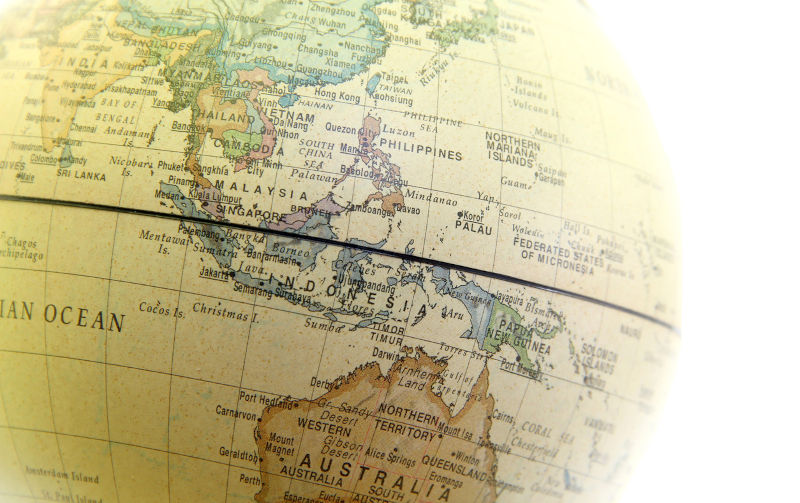
Australia’s misunderstanding of the Asian Century
In October 2012, Prime Minister Julia Gillard released a white paper titled Australia in the Asian Century. (more…)
-
It’s time to rethink socialist principles amid the ruins of neoliberalism
Socialist principles are an unloved entry in the contemporary lexicon of Western political thought. (more…)
-

Is Dutton a ‘strong’ leader? Is Albanese a ‘weak’ leader?
Peter Dutton portrays himself as a strong leader, capable of standing up to bullies abroad while contrasting himself to weak leaders at home. His stentorian posturing is underpinned by a grimly reactionary imagination. Meanwhile, Anthony Albanese quibbles and stalls as he tries unsuccessfully to fend off Trump’s tariffs, plaintively offering up access to Australia’s rare minerals as a bribe to get the transactional Trump on-side. (more…)
-
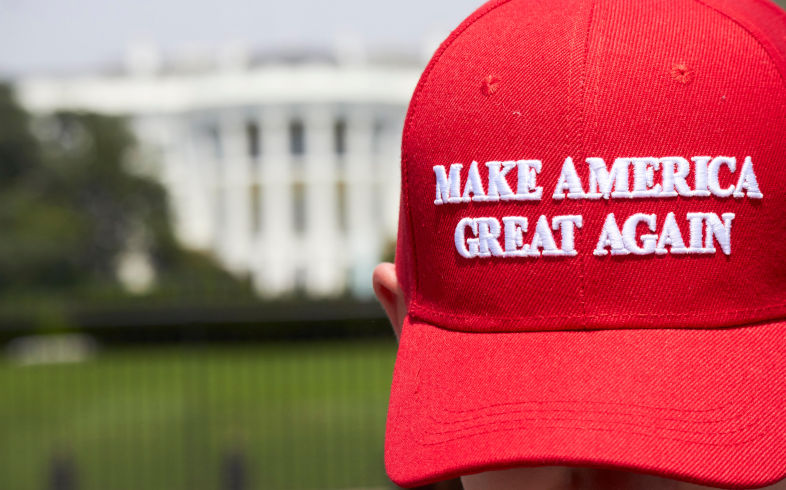
Is Peter Dutton the tip of a Trumpist foreign policy for Australia?
In 1951 Australia turned to its newfound “great and powerful friend” America, consummating the move by signing the ANZUS treaty. ANZUS remains seriously misunderstood by most Australians, especially among the ageing ranks of conservative aficionados in Australia where it has the status of a holy cow. This is despite the fact that the treaty is only an agreement to “consult” if ever Australia’s security is threatened. It is no guarantee that the US will come to Australia’s defence, whatever threat may arise. (more…)
-

Joseph Camilleri and Allan Patience: Beyond the crises – How can we inspire people and institutions to take action?
Allan Patience and Joseph Camilleri discuss global crises — climate change, war, the mental health epidemic, and human rights violations — highlighting the lack of leadership across politics, business, media, education, and religion. The discussion encourages us to ask not only why we’re in this state, but how we can create a better future and overcome the obstacles in our path. (more…)
-
Trump 2.0 and the crisis in Australia’s delusional middle power imagining
Politicians, media commentators and academics routinely assert that Australia is a middle power. They assume that while their country is not a great power, it has a loftier status than smaller states around the globe, enabling it to “speak louder than the latter and to exert some influence on the former”, as John Campbell once put it. In fact, Australia’s middle power imagining is delusional. This has always been the case, but Trump 2.0 is presenting Australia with a wake-up call about its middle power delusion. (more…)
-

Australia’s hard culture and Great Replacement Theory
Racism has always been at the core of Australia’s hard culture. A hard culture is one which entrenches meanings of exclusiveness (or uniqueness), resistance to change, hostility towards outsiders, and acceptance of the status quo as normal. Any deviance from the status quo is seen as perverse, undermining “respectable” cultural beliefs. (more…)
-

The problem of God
In a recent post Eric Hunter asked: “Why doesn’t God save the world?” (P&I, 10 February 2025). It’s an interesting question, usually framed under the rubric of “the problem of evil.” Hunter prefers to believe in science rather than to believe in God. So why did he post about God in the first place? (more…)
-
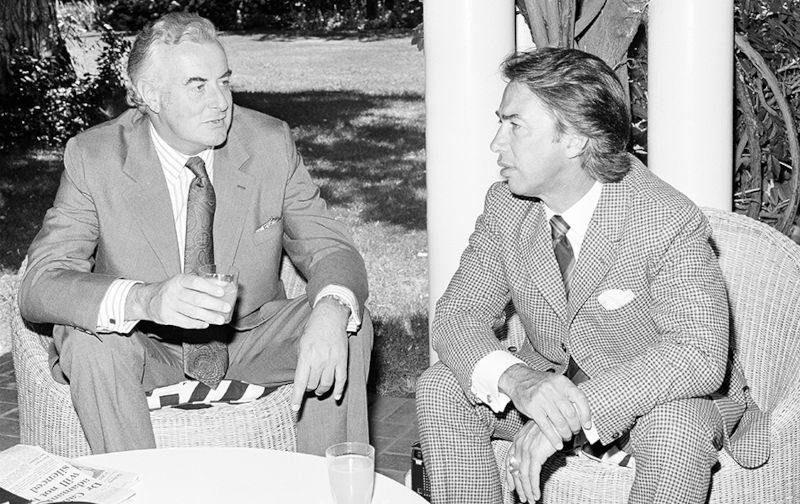
Strong leaders versus inspiring leaders: Australia’s current dilemma
It’s said that what the world needs today are strong leaders whom social media and associated propagandists insist are the only ones who can bring order back into a dangerously chaotic world. Their strengths, it is claimed, outweigh their shortcomings. In Australia, attention is turning to Peter Dutton, who according to his supporters, is the epitome of a strong leader. (more…)
-
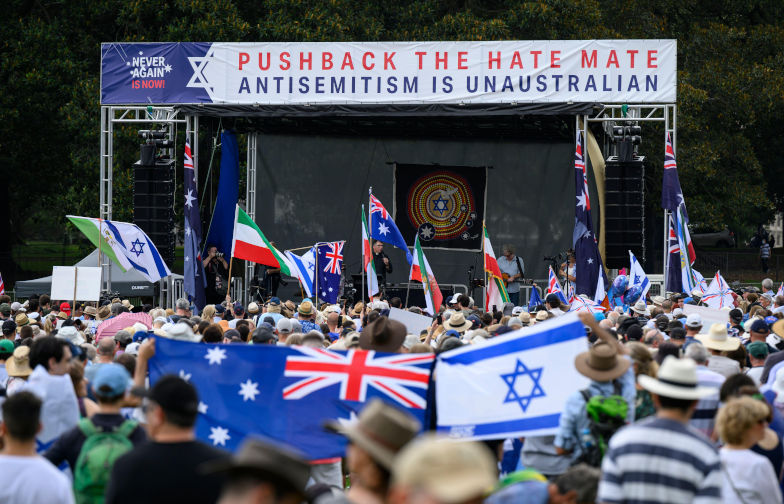
The unravelling of Australian society
Australian society has never really been a cohesive entity. In the past its various socio-economic, religious, ethnic, cultural, and political factions have simply hung together largely through a sense of xenophobia about the outside world (read Asia) rather than a commitment to national unity based on shared values and mutually beneficial interests. But today xenophobia is compounding into fear and loathing on the campaign trail and in the interstices of a society that is in danger of unravelling.
-
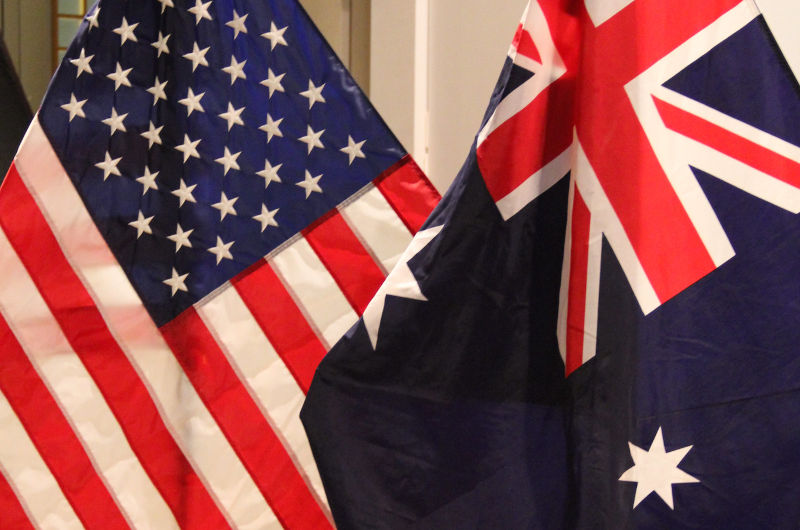
The disruptions to come: Australian foreign policy in the Trump era
As the Trump presidency looms across America and the world, Australia faces major foreign and security policy challenges on three fronts: (i) How would a Dutton government respond? (ii) How would a renewed Albanese government respond? (iii) How would a minority Labor government respond?
-

On the gravy train: Venality and a misplaced sense of entitlement are corrupting democratic institutions in contemporary Australia
Crikey’s recent revelation that some 170 politicians and media commentators have had overseas trips fully or partly funded by particular interest groups, shines a spotlight on a deeply embedded problem in our political and media institutions. Coalition figures appear to be the most frequent beneficiaries of this duchessing. (more…)