A clumsy protest over the social media use of Senate evidence exposed a deeper problem. The public service must answer to Parliament and the public, while MPs must protect its political neutrality. Both sides need to remember where their responsibilities begin and end.
Andrew Podger
-
Fixing the APS remuneration mess
Australia’s public service pay system remains fragmented after decades of failed reform. Fixing it requires a coherent APS-wide approach to classifications, labour markets, remuneration and the merit principle itself. (more…)
-

Peter Wilenski: Reformer
Peter Wilenski helped reshape Australia’s public service, championing responsiveness, equality and openness. But his rejection of political neutrality left a more complicated legacy for public administration and reform today. (more…)
-
Can the US public service survive the Trump era?
Public administrators in the United States are exploring how to reshape the civil service as a pillar of American democracy. (more…)
-

Robodebt report is still not the end of the road
The National Anti-Corruption Commission’s Robodebt report provides transparency and some accountability, but key findings and the lack of public detail on APS code breaches leave troubling questions unresolved.
(more…) -

Gordon de Brouwer: A disappointing legacy
Gordon de Brouwer leaves as APS Commissioner having strengthened capability processes and leadership roles, but without the legislative and institutional reforms needed to restore integrity, independence and long-term resilience.
(more…) -

Jobs for mates, by design: the government rejects its own integrity review
The government’s response to the Briggs review abandons legislated reform and leaves ministers wide discretion over appointments across the commonwealth. (more…)
-

‘Stabilising’ relations with China while differences widen
The Albanese Government’s “stabilised” China policy faces the test of deepening ideological and strategic divides. (more…)
-
What’s constraining ‘frank and fearless’ advice?
A central argument for the government’s proposed widening of exemptions under the FOI Act is the claim that the current provisions constrain the provision of “frank and fearless advice” by the public service. (more…)
-

Four reasons Australia’s superannuation system isn’t the world’s best
When Australia embarked on its unique retirement incomes system in 1992, the World Bank was quick to encourage other countries to take the same approach to “averting the old age crisis”, claiming it would “protect the old and promote growth”. (more…)
-

FOI Amendment Bill: Not what Faulkner or Allan Hawke wanted
The Explanatory Memorandum for the government’s Freedom of Information Amendment Bill 2025 claims it implements or responds to certain recommendations from previous reviews and inquiries, citing in particular the late Allan Hawke’s 2013 review of the legislation. (more…)
-

Essential APS reform – more to do
It is hard not to fear that the Albanese Government has decided not to pursue the further reforms to the APS it promised during its first term in office. (more…)
-

Intergenerational equity is more important. But let’s not exaggerate the problem or be misled about the solutions
Treasurer Jim Chalmers identified three priority areas for tax reform he said had attracted support from his roundtable participants:
- A fair go for working people, including in intergenerational equity terms,
- An affordable, responsible way to incentivise business investment, and
- A simpler, more sustainable tax system to fund the services people need.
-

How should Services Australia be constructed?
The Robodebt Royal Commission recommended that the government “undertake an immediate and full review to examine whether the existing structure of the Social Services portfolio and the status of Services Australia (SA) as an entity are optimal” (Rec. 23.1). (more…)
-

More fundamental changes to the means test are needed than those intimated by DSS
Based on the redacted version released recently under Freedom of Information( FOI), DSS’s incoming government brief seems overall to be a valuable document, particularly the volume titled, ‘Strategic Considerations’, which canvasses longer-term challenges for the portfolio. (more…)
-
The public service under Albanese Mark 2: The good news and the bad
The appointment of Steven Kennedy to PM&C and Jenny Wilkinson to Treasury is welcome news for several reasons. (more…)
-

Tax concessions for super do not need a major rethink
Chris Murphy’s article in The Conversation on 3 June calling for a rethink of superannuation tax arrangements misrepresents the Henry Review’s recommendations for taxing super and overlooks the subsequent measures taken by the Gillard and Turnbull Governments. (more…)
-

Appointing a new secretary of PM&C
The appointment of a new secretary of PM&C demonstrates, perhaps better than anything else, the attitude of the prime minister, and the government as a whole, towards the public service. The secretary must form a close relationship with the PM, but must also recognise his or her key role in promoting the APS Values, including non-partisanship. (more…)
-

The key lesson from the US: ‘Merit’ really is the most important public service value
Perhaps the most repeated message at the recent ASPA national conference, in the face of attacks on the civil service by the Trump administration, was the importance of merit-based employment. (more…)
-

How is the US civil service responding to the Trump administration?
There is a perennial debate in all democracies about how responsive the civil service should be to the elected government and about the degree of independence implied by merit-based employment, professional competence, non-partisanship and impartiality. (more…)
-

If I were the minister assisting the PM on the public service …
Before any new ministry is announced, the current minister, Katy Gallagher, or the shadow minister, Jane Hume, should provide early advice to the prime minister-elect on the structure of his ministry and the machinery of government. (more…)
-
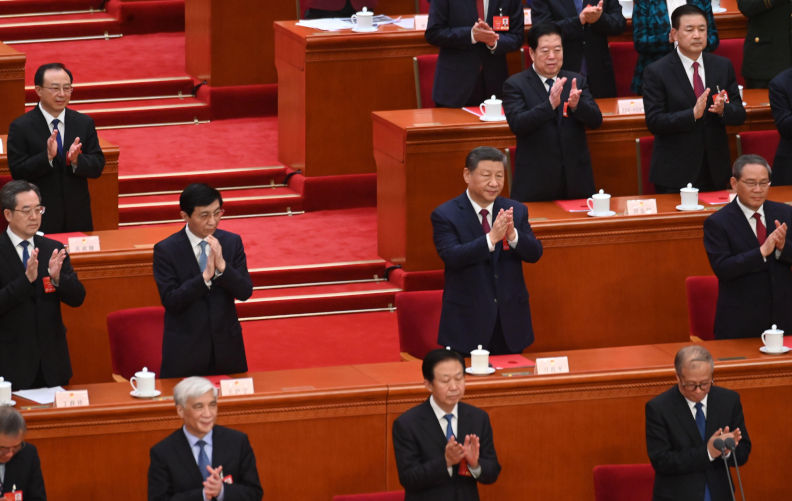
Figuring out China: It’s still complicated
I visited Beijing in December for the first time since COVID, at the invitation of Renmin University and the Beijing Municipal Government. As well as attending the major conference they were hosting, I was keen to catch up with members of the network of public administration scholars I had helped to establish 15 years ago. (more…)
-

At last: A serious attempt to fix retirement phase of super
Last year’s Treasury Discussion Paper, “The Retirement Phase of Superannuation“, highlighted the emphasis that has been placed on the accumulation phase of Australia’s superannuation system, and the continued slow progress on the retirement phase, 30 years on from the system’s creation. Sadly, the government’s timid response in November to Treasury’s suggestions and the wealth of submissions its review attracted demonstrated once again unwillingness to bite the bullet and ensure the system actually meets its objective of “delivering income for a dignified retirement”. (more…)
-

The APS has more work to do to address Robodebt revelations: Review of Mean Streak by Rick Morton
Towards the end of his book, after referring to the NACC initial decision not to investigate alleged misbehaviour and to the completion of the APSC’s code of conduct investigation, Rick Morton states:
‘a large group of the senior management of the Australian Public Service … would like that to be the end of things, as if robodebt was the result of a few bad actors and not the inevitable crisis that springs from a sclerotic institution.’
It is a conclusion that, sadly, I largely agree with.
-

Albanese squibs on APS independence: Can the crossbench force genuine reform?
While the Albanese Government has made some progress in rebuilding APS capability, it has dropped the ball on restoring the degree of independence it promised. Moreover, because so little of what it has done has been legislated, almost everything of consequence could be quickly undone by a future government. For genuine and lasting reform, we must therefore turn to the crossbench to insist on appropriate legislation by the next Parliament. (more…)
-

Finding a fair and productive level of inequality: A review of Battlers and Billionaires by Andrew Leigh
When I met Andrew Leigh before his ‘Meet the Authors’ discussion of this new edition of his book, I had to ask him, ‘how on earth do you do this?’. Lyn Hatfield Dodds who moderated the discussion opened with the same question. (more…)
-

Why the Productivity Commission is kidding itself on childcare
A more robust analysis by the commission might have yielded different priorities or recommendations for childcare. (more…)
-

COVID 19 Response Inquiry Report: A comprehensive review despite its limited terms of reference
My recent review of the book, Australia’s Pandemic Exceptionalism, by Steven Hamilton and Richard Holden (H&H) highlighted its ‘convincing, frank and honest account’ in just over 200 pages, and encouraged the Health Department in particular to listen to its lessons. The official COVID-19 Response Inquiry Report by Robyn Kruk, Catherine Bennett and Angela Jackson ( KB&J) may lack H&H’s punchiness but is an equally impressive document that deserves careful reading not only by Health but across the Commonwealth and the States. (more…)
-

Health Department: Listen to these lessons from our COVID 19 experience
A review of Steven Hamilton and Richard Holden, Australia’s Pandemic Exceptionalism: How we crushed the curve but lost the race, UNSW Press (more…)
-

‘Fairness and balance’ in P&I reporting on the Middle East
Discussion about the Middle East is difficult. Conflicting views are deeply held and even reasonable people struggle to speak, and to listen, dispassionately and with respect.
(more…)