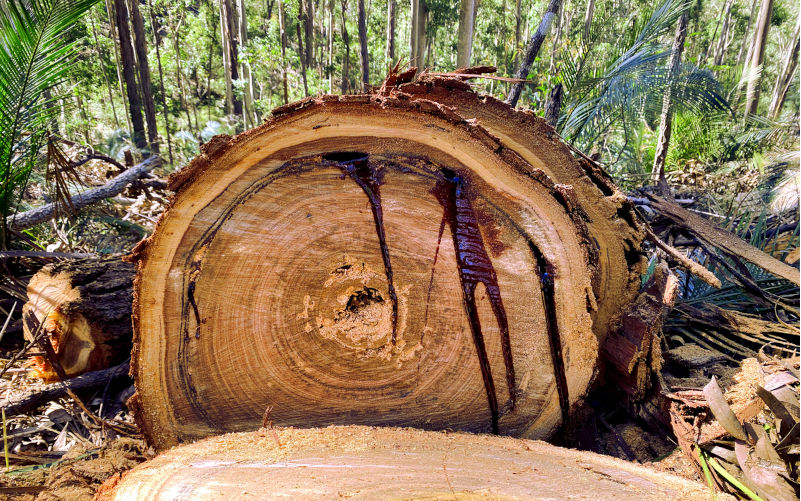
When Labour Governments moved to protect native forest in the past – Hawke, Wran, Gallop, Kirner, Beattie, Carr – they knew that they were protecting irreplaceable natural values and resources. Even as late as the early 2000s however, the role of forests in climate change mitigation was little known. It was certainly not a matter of any significance in public debate. (more…)
Bob Debus
-
A good start to urgent climate change abatement: end native forest logging now
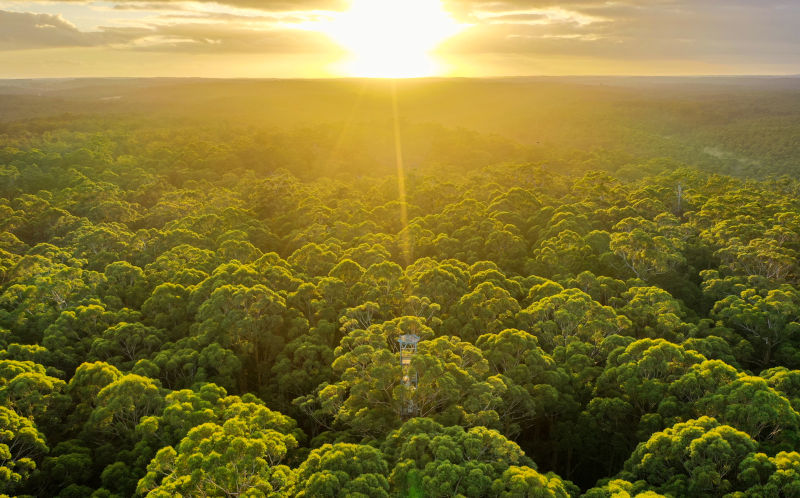
The native forest logging industry is a fundamental danger to Australia’s natural environment and an utter disaster for climate change policy. (more…)
-
We have to fix environmental policy while we can
Two months ago, the budget of the New Zealand Government set aside an amount of $1.5 billion to create 11,000 regional jobs in the protection and restoration of the environment. If Australia were to match this COVID stimulus initiative per capita it would budget $7.5 billion for 55,000 jobs in the regions.
-
BOB DEBUS supports Pearls and Irritations.
Pearls & Irritations is unique. Its contributors and readers are a growing community of people with an exceptionally wide-ranging and open-minded commitment to effective, progressive and rational public policy. (more…)
-
BOB DEBUS. It’s no excuse to trash the planet.
As nearly everybody now understands, the changes that have occurred in public policy in
the last few weeks are without precedent, at least since the Second World War. They tell
us in the most straightforward possible way that only government finance and organisation can support the people in a national emergency. (more…) -
BOB DEBUS: OUR LAND AND OUR WAY OF LIFE
Between late 2001 and early 2003, during the so-called Millennium Drought, eastern Australia experienced unprecedented periods of bushfire. (more…)
-
BOB DEBUS. Must Prisoner Numbers Grow Forever? (an edited version of a lecture given to the Law Society of New South Wales, 22 August)
We can all accept imprisonment as the appropriate response for serious and violent crimes. Nevertheless there is a plethora of studies confirming the common sense conclusion that prison is damaging for individuals at a psychological level, especially in the absence of rehabilitative services; that rates of recidivism, however measured, remain persistently over 50 per cent and up to 75 per cent for Indigenous prisoners; that somewhere around half of prisoners have a mental illness or cognitive impairment; that a high proportion the prison population is received from a very small number of socially disadvantaged postcodes; that the over-imprisonment of Indigenous men, women and children is a continuing national tragedy; and critically, that rates of imprisonment are mostly quite unrelated to the rate of crime. (more…)
-
BOB DEBUS. How close to Armageddon do we have to get?
The 2019 OECD Environmental Performance Review for Australia, launched recently and reported in The Guardian if hardly anywhere else, makes horrible reading. “Australia is home to a 10th of global species and is seen by many as synonymous with pristine coastal areas and an outback brimming with nature. However the country is increasingly exposed to rising sea levels, floods, heat waves, bushfires and drought”… wildlife is in a poor state and its condition is worsening… Australia’s Strategy for Nature 2018-2030 appears “unlikely to catalyse progress”. With the exception of the Reef 2050 Plan funding for conservation and research is falling. “Australia has no national long term vision on sustainable development…is one of the most carbon-intensive economies in the OECD, has no long term strategy for lowering emissions…and emissions are projected to increase by 2030.” https://www.theguardian.com/environment/2019/jan/30/australias-record-on-emissions-and-sustainability-condemned-by-oecd-review (more…)
-
Restoring integrity in nature conservation. Part 2 of 2
‘There is a limit to what laws can achieve, but they are an essential part of any robust system of environmental governance. Environmental laws should effectively enable the protection, conservation, management and, where needed, restoration of our national heritage. The effectiveness of our environmental laws must be founded on the values of integrity, transparency and accountability, in both their formulation and enforcement. These laws must also be kept up to date, so that they continue to reflect our ever-changing environmental, social and political conditions. Our current laws fall short of these standards’. (more…)
-
BOB DEBUS. Restoring integrity in nature conservation Part 1 of 2
The Australian Government’s short and pointless document, published just before Xmas and entitled Strategy For Nature 2018-2030, has been accurately described as a ‘global embarrassment’. It is useful only insofar as it reminds us that Australian government policies for nature conservation have, in the last five years, easily matched the destructive irrationality of polices directed toward climate change. (more…)
-
The things that must be done…
Some Genuine Decision-Making Power: Dealing with the over-representation of Aboriginal people in the prison system
This is an extract from the 2016 Frank Walker Memorial Lecture delivered by the Hon. Bob Debus AM on 16 February 2016. The Hon. Frank Walker QC was NSW Attorney General from 1976 to 1983. He later became a Federal Government Minister and a District Court judge. As a former Attorney General himself Bob Debus believes that Walker’s approach to the affairs of Aboriginal people remains the correct one.
See link for full speech: http://www.nswlaborlawyers.com/fwl2016.
“When Frank Walker was in office in the early 1980’s there was no heroin epidemic, no talkback radio law and order campaigns and there were less than 4,000 people in prison in New South Wales.
In June last year there were nearly 12,000 inmates and more than 2,800 or 24 percent of them were Aboriginal. Nationally, there were nearly 34,000 inmates, 27 percent of them Aboriginal. For every 100,000 non-Indigenous Australians there were 146 in prison last year. For every 100,000 Indigenous Australians 2,253 were in prison.
There is some encouragement in the news that there has been a decline in the rate of imprisonment for younger males over the last ten years, but here’s the rub. In the last decade or so overall rates of Aboriginal incarceration have increased by more than 50 percent In New South Wales.
Modern ‘law and order’ politics arrived in New South Wales in the lead up to the 1988 general election when Frank Walker and I both lost our seats. Heroin related rates of street crime — violence and robbery — had begun what was to be a steady 20 year period of increase and there was straightforward, reasonable concern about it in the community.
However, this was also the first election to be conducted in the climate of resentment, revenge and hysteria generated across the tabloid media by the new talkback style of radio. Frank was Minster for Youth and Community Services by then and I recall that his completely sensible juvenile cautioning scheme was attacked for being “soft on crime”. The Liberal’s promise of “Truth in Sentencing” legislation and the restoration of summary offences legislation was a defining, successful election strategy.
Once the cork is removed from this particular bottle it’s very hard in real life to get it back in. Politicians may be indifferent to an increase in levels of incarceration, or they may strenuously try to limit it, but either way they cannot operate in isolation from aroused media and public opinion.
In any event a long wave of more punitive laws concerning sentencing, bail and parole saw a substantial increase in the prison population across Australia and the Common Law world. And these changes had predictable and disproportionate effects upon Aboriginal offenders, in several ways.
Aboriginal legal services, underfunded as they have been, have still made sure that fewer people are verballed or plead to crimes they don’t commit. However problems still reside in the consequences of intensive policing and the high visibility of the kind of street level offences habitually committed in impoverished communities, not least traffic offences.
On 30 June last year there were more than 9,000 Indigenous prisoners in Australia and 7,100 of them had been in prison before. It is quite critical to understand that – as a statistical matter — the higher rate at which Aboriginal people first arrive in prison is much less significant than the rate at which they come back to it.
Substantial possibilities do exist, apart from more adequate funding, for improving the way that the justice system itself deals with Indigenous people. I will mention only a few of the most obvious.
- In these days of frequent ideological attack upon the civil service it’s worth reminding you that dedicated, competent public servants can fix some things just by paying attention, by doing the administration of government well.During the year 2009/2010 the average daily number of juveniles in custody in New South Wales reached 485, in part at least because of strict bail condition requirements. Rooms were doubled up and healthy young people were being placed in clinical beds. Officials understood that these circumstances could lead to a riot, incidents of self-harm and the like. Fifty percent of inmates were on remand. A quarter of that remand population were detained for a breach of bail without committing a new offence, typically for breach of curfew. There had also been a number of kids who had been granted conditional bail but could not meet all the required conditions.So special officers were placed in all children’s courts and were also available to provide information to magistrates at any court hearing children’s cases. Their function was not to supplant the lawyer’s role of advocating for bail but rather to provide the court with options and to mobilise resources to support young people having difficulty meeting bail requirements.In 2014/15 the average daily population of Juvenile Justice Centres was stable at an average of 286, a fall of around 40 percent. The proportion of Indigenous inmates remained unchanged at 50 percent, so there are now 20 percent fewer Indigenous kids in full time detention in New South Wales than there were five years ago.
- My next example concerns the reduction of recidivism. We know that Indigenous inmates are more likely to be arrested and charged with new offences. We know also that the reduction of reoffending is by some distance the fastest way to reduce the Indigenous prison population. We know from internationally validated data that tailored through-care and back of prison sentence programs assisting inmates to reintegrate into the community are effective in reducing recidivism.We know these three things but here in New South Wales nevertheless, the Government is taking no notice.Prisons are running seriously over capacity. In such circumstances rehabilitation work is always degraded but the situation appears to be worse than that. The Budget Papers show that targeted offender programs and education programs have actually been reduced. When prison numbers rise at the same time as savings are demanded, the funding of custodial programs will always come at the expense of rehabilitation programs. And that is to the detriment of the inmates and the budget in the long term.
- My final example concerns diversion from the prison system. There are plenty of established diversion and rehabilitation programs that are more effective and cheaper than prison. Drug Courts reduce offending, cognitive behavioural therapy works. Increased expenditure on all these measures would reduce imprisonment.Circle Sentencing Courts have engaged Aboriginal communities in the sentencing process and improved local relationships with the justice system, but don’t appear to be reducing offending as effectively as many of us expected a decade ago. However evaluations suggest that greater investment in support services, including drug and alcohol services and post sentencing programs linked to circles, would have a measurable effect on reoffending.”
Bob Debus AM was an ALP member of the NSW Parliament and Attorney General, Minister for the Arts and Minister for the Environment. He was also a member of the House of Representatives and Minister for Home Affairs in the Rudd Government.
-
Bob Debus to deliver Frank Walker Memorial Lecture.
Invitation to attend Frank Walker Memorial Lecture.
Join us as we celebrate the life times of former NSW Attorney-General the Hon. Frank Walker QC, with guest speaker the Hon. Bob Debus AM. This event is free to attend. Post-lecture drinks will be held at Penny Lane (the bar above the lecture theatre).
“Over-representation of Aboriginal people in prison: The need for some genuine decision-making”
Frank Walker grew up among tribal people in New Guinea and from a young age stood up for the rights of Aboriginal people in Australia. On the one hand concern for justice for Aboriginal people drove many of his successful reforms to the criminal law. On the other hand his landmark Aboriginal Rights Act of 1983 reflected his desire to allow Aboriginal people to take more control over their own lives.
To our consternation however, the rate of Indigenous imprisonment has actually been rising rapidly. Last year non-Indigenous Australians were imprisoned at the rate of 146 per 100,000 citizens. The rate for Indigenous Australians was 2,253 per 100,000 citizens. Yet many solutions for the crisis of imprisonment are also known.
Former Attorney General of New South Wales, Bob Debus, believes that Walker’s approach to the affairs of Aboriginal people remains the correct one.
He will discuss solutions to the crisis of over-representation of Aboriginal people in the prison system and the need for a renewed political movement to drive them.
About Bob Debus
NSW Attorney General (2000/2007), NSW Minister for Corrective Services(1995/2001), Commonwealth Minister for Home Affairs (2007/2009), Chair of the House of Representatives Standing Committee on Aboriginal and Torres Strait Islander Affairs (2009/2010).
EVENT DETAILS
RSVP: By clicking here and then scrolling to bottom of page
When: February 16, 2016 at 6pm – 8pm
How much does it cost ? Technically nothing, but we do have to cover costs for venue hire and bar tab so please bring your $10, $20, $50 notes so we can collect your donation on the way in.
Where: University of Technology Sydney, Building 11, Lecture Theatre 00.401
Where is that ?: Just a short walk from Central Station, cnr Broadway and Wattle St, enter from Broadway – see map below
-
Bob Debus. A breach of faith on renewable energy.
Well, this is just getting stupid. We are entitled, after events last week, to ask if the Federal Government has the capacity any longer to act in good faith when the interest of the coal industry is at stake.
Tony Windsor and Barnaby Joyce, whatever their manifest differences, reflected the opinion of local people, the normal application of the precautionary principle and everyday common sense when they protested last week’s approval of the giant Watermark coal mine immediately adjacent to the aquifers and rich farmland of the Liverpool Plains in northwest New South Wales. In any event, no conditions of approval can prevent the destruction on site of 800 hectares of highly endangered box-gum woodlands, their associated rare bird and animal life.
Australian scientists were also correct last week to wearily dismiss the ‘embarrassing’ support offered by Dennis Jensen MP and other members of the Liberal Party for the establishment of yet another ‘review’ of climate science. It is certain that no country representative at the UN Climate Change Summit in Paris later this year will be questioning established climate science.
Indeed international concern about the Australian Governments’ climate policies is increasing and condemnation has been coming from some unexpected quarters for a while now. Lord Deben, a former Thatcher Government Minister and head of the Committee on Climate Change in Britain, said last year that, “Mr Abbott is recklessly endangering our future as he is Australia’s”. A leading advisor to the conservative chancellor of Germany described Tony Abbott’s single-minded promotion of the coal industry as an ‘economic suicide strategy’.
In the last fortnight an exceptionally broad coalition of Australia’s peak business and social groups have come together to support emissions reductions far deeper than anything proposed so far by the Government. They specifically pointed out that “delayed, unpredictable and piecemeal action will increase the costs and challenges of achieving goals and maximising the opportunities” for doing so.
Unrepentant, Abbott Government Ministers last week moved to take unpredictable and piecemeal action to undermine an agreement reached only in May, which had the acknowledged purpose of returning some certainty for investment in the renewable energy sector. Here is the background.
The Abbott Government came to office promising to abolish the demonised Emissions Trading Scheme, actually very similar in substance to the scheme previously proposed by John Howard and in principle advocated by Milton Friedman. Last July it became the only Government anywhere in the world to abolish a carbon-pricing scheme: emissions from electricity generation have begun in consequence to climb again.
Over 60 countries have established renewable energy targets and the Abbott Opposition promised to maintain Australia’s already established, bipartisan 20% Renewable Energy Target (RET) when it came to office. However, in the event it moved quickly to establish a Review of the RET headed by a well-known climate sceptic, an initiative that caused large-scale investment in renewables to freeze almost entirely. Nevertheless, the Review found that the RET was succeeding in cutting emissions and that it would benefit electricity consumers into the future. That is to say, it was made clear that the only beneficiaries of a reduced RET are coal fired generators.
The Government however, would not relent. Without coherent explanation it conducted protracted negotiation over 15 months before the Opposition reluctantly agree to legislate a reduction in the RET from 41,000 GWh to 33,000 GWh, held steady until at least 2018. Australia became the only country in the world to have reduced a renewable energy target but it seemed at least that an industry that already employs 20,000 people could at least resume growth in a more certain investment environment. But not so.
The Gillard Government had established the Clean Energy Finance Corporation (CEFC) in 2012 for the same purpose: to assist the application of capital ‘through a commercial filter to facilitate increased flows of finance into the clean energy sector, thus preparing and positioning the Australian economy and industry for a cleaner energy future”. The CEFC has typically contributed funds as part of a consortium, encouraging private banks into the field, across a range of technologies, while ensuring a solid return on its own investment. At any other time in Australia’s political history it would have been regarded as a welcome success.
However, it too is a victim of the clumsy mash up of anti-regulation neoconservative political ideology, technical error, inconsistency and idiosyncratic prejudice with which the Abbott government approaches the world. The Government’s free market ideals have not caused it to curtail massive subsidies to the fossil fuel industry but it did come to office promising to abolish the CEFC: at first making the demonstrably incorrect argument that its activity crowded out private finance. However, the Senate has frustrated its intention.
Now, unable to delay investment by stalling the RET or abolishing the CEFC, the Treasurer and the Finance Minister are doing what they see, presumably, as the next best strategy to dampen investment in renewables.
They have instructed the CEFC not to invest in small solar or wind technology, the two areas which are at present most easily rolled out on a large scale and therefore most likely to bring about rapid increase in actual renewable energy production. The government seeks to suggest that the CEFC should be used only for developing emerging technologies, but this is disingenuous.
The essential point of the CEFC is to increase the amount of capital investment flowing into technology that increases the production and use of renewable energy. The action of the government is calculated to stop it and if anybody has an explanation that does not involve a breach of good faith I’d like to hear it.
Bob Debus AM was an ALP member of the NSW Parliament and Attorney General, Minister for the Arts and Minister for the Environment. He was also a member of the House of Representatives and Minister for Home Affairs in the Rudd Government.