
The prime minister Scott Morrison is in a lot of trouble again. He will probably get out of it, with just a few more bruises and scratches, but the clock is running down on his leadership. (more…)
Jack Waterford
-
Rot starts from the top
Scott Morrison encapsulates the retreat from values, the lack of regard for truth, for decency and the long-term public interest. Those he leads or those in the public service obliged to do his will can hardly be blamed for using his example as their inspiration. (more…)
-
National Party greed was once restrained by Liberals
We ought to be asking questions about the mysterious failure of public service systems to hold any senior public official to account for anything, let alone to punish or dismiss. (more…)
-
After the pandemic war, no political point in refighting the battles
Anthony Albanese has become too fond of saying that Scott Morrison had two big jobs this year – to roll out the vaccine, and to fix quarantine, and that he’s failed with both. The next election will not be a report card on how the coalition managed the pandemic, but about the future. (more…)
-
What has Australia gained from the crisis the pandemic represented?
This time last year, I was arguing that Morrison would be judged at the next election not by his success in managing the pandemic, but by his success in reviving the economy. I think it is largely his fault that he is now about six months behind schedule in leading Australia out of the pandemic, and that this has reduced his political opportunities. Had he done as well as, say, Israel or Spain in organising vaccines – and he could have – he could be thinking of an election towards the end of this year. It looks as if he must now look to the first half of next year. (more…)
-
Housing politics dominated by the interests of the already-housed
The housing market is not effectively closed to most young women and men by accident. House prices keep growing not so much by excess demand but because of the rewards we give investor buyers, the advantages in place for those already in the market and the tax and other advantages of owning a house, whether for one’s own family or as an investment. First home buyers will always be at the back of the queue while others have such advantages and they don’t. (more…)
-
Old Canberra a model of cheap land and government housing
Canberra was once in a position to show how ordinary working Australians could get into the housing market at a fair price. That fair price, in today’s terms, was about a third of current prices. (more…)
-

Government rorting is now the Australian way of doing business
Australia has moved to a deeply corrupted system of doling out consultancy contracts to mates by pure discretion, in circumstances which in the classic Morrison style are compulsively secretive, and vague in sums and contract terms. (more…)
-

Public servants as courtiers rather than stewards
Phil Gaetjens, former Treasury official, former boss of Scott Morrison’s private office and now head of the Prime Minister’s Department is an unusual public servant who seems to have accepted that he is never going to be regarded as any sort of detached public servant independent of the government of the day.
(more…) -
The probity standards public servants walk past are the ones they accept
Phil Gaetjens is not the only senior public servant who can be relied upon to see things in the government’s eyes, even when being asked for an objective opinion. There’s all too much advice coming to government which is masquerading as independent judgment but has merely been pre-arranged to appease, to the point where some “independent” reports are being reworked in minister’s offices. (more…)
-

Advice being tailored for political, not medical, need
Scott Morrison has repeatedly reiterated that all decisions in relation to Coronavirus public health measures have been taken in accordance with medical advice. But the advice itself has frequently been considerably less than transparent, even as he has had medical officials standing alongside him, giving every appearance of having crafted his words and drafted his decisions. (more…)
-
All too convenient to blame the Health bureaucrats
Caroline Edwards, Associate secretary of the Commonwealth Health Department may have seemed churlish in refusing to accept that her department’s efforts in organising coronavirus vaccinations, essentially under her control, had been an abject failure. (more…)
-
The path to petty tyranny and public poverty
The new style of government, and the growth of spending by unaccountable discretion, owes as much to the pandemic as to the personality and secretiveness of Scott Morrison. We are on a path to petty tyranny and public poverty.
-
The way, the truth and the life of Reilly
A few weeks after the First Fleet stopped at Port Jackson and disgorged a representative collection of thieves, cheats and vagabonds, the British House of Lords began the impeachment trial of Warren Hastings, the recent Governor-General of India for the East India Company, accused of looting the wealth of India on an epic scale — certainly more than all of the convicts and prisoners of Great Britain were capable of stealing in their lifetimes.
-
No room for the poor at the Pentecostal table
To the core coalition supporters, any call for higher taxes for richer people is invariably “exciting the politics of envy.” Any undue stress on the sufferings or disadvantage of the poor involves identity politics. Any sustained attack on established ideas — including racist, sexist or ageist ones — often involves “political correctness gone mad”. Radical right provocateurs, especially those who claim for themselves victimhood status after being attacked for their ideas, say they are being “deplatformed”. None of these labels has much meaning as such, other than as abuse. Those who scream about it most are themselves most likely to be doling out similar abuse, often, because of their power and influence, to great effect.
This doesn’t mean that the tactics or ideas of those who advocate for causes unpopular with the radical right — the environment, or violence against women — for example — ought to be immune from criticism. They should be, but by honest debate.
Scott Morrison’s claim that Australian politics have become corrosive because of identity politics and tribalism misses the point. All too often the divisive and polarising events in Australian politics are not efforts of outsiders to get themselves power or a voice, but efforts of the establishment in trying to deny them just such a seat inside the councils of state. Morrison is not complaining of the identity politics of fundamentalist protestant churches, or rent-seeking farmers, football clubs, television stations or pharmacists. They are parts of a settled status quo with which he is so comfortable that he is unsettled whenever anyone wants to put their place, their rights or their presumptions under any sort of scrutiny.
Morrison leads a government with no great respect for established institutions of society, and no reputation for respect for the conventions. Look, for example, at its corruption of quasi-judicial appointments, the independence of police and the public service, the demonisation of asylum seekers, and the way public money is being doled out to cronies by whim and discretion, without regard for the law. But those who are trying to speak up for people who have always been outsiders in Morrison’s comfortable little status quo are, apparently, the demons. The contrast might be seen best from Morrison’s personal zeal to harass and coerce people on welfare, and to ensure that no one gets a penny more than that to which they are entitled, while at the same time being relaxed and dismissive of concern at multimillionaires who have put personalised government grants straight into their trouser pockets.
Playing identity politics is made to sound awful — even “un-Australian” and, implicitly, something that we do not want. Yet politicians of the modern generation — led by Morrison himself — are continually seeking to divide Australians — to sort them into in-groups and out-groups, goodies and baddies, people to be included when we thing of decent people like ourselves, and people right-thinking people should avoid. Morrison’s in-crowd, for example, involves “quiet Australians” who are churchgoers and who belong to “traditional” families, which by his way of thinking involves formal heterosexual marriage, with the male partner determined by God to be the head of the family.
He does not rain anathemas on Jews, or Muslims, or Buddhists, openly denounce same-sex relationships or single parenthood, but you can be sure by his very phraseology that they are not among the people he has in mind when he thinks of, or refers to “normal”, ordinary, or “quiet” Australians. His people are provident, hard-working, law-abiding, and intensely patriotic, somewhat anti-intellectual and non-cosmopolitan, decent citizens who participate in community organisations. They are farmers and tradesmen, teachers perhaps, nurses, even cops, but not otherwise public servants — for many of the insiders a term of abuse. Morrison’s quiet Australians have traditional values, are fairly conservative in general attitudes, and have assimilated a sense of “Australianness” that involves concepts such as egalitarianism, mateship, self-reliance and a distaste for bullshit.
Morrison may not mean to exclude Lebanese, Chinese, Indians or Afghans, or even Aborigines, from his mental concept of nationality. But anyone listening to him talk knows that he sometimes has to remind himself that many Australians are not of Anglo-Saxon stock. Nor, for that matter, male. Those he is patronising can always tell.
The sorts of concerns Morrison expresses were not invented by him. If one reads The Australian, or reports from the Institute of Public Affairs, Australian culture, history, society and politics are suffused with the worst type of identity politics, stifling political correctness, and, these days, attempts by latte-sippers in wine bars attempting to deny platforms to, or freedom of expression, to those with ideas — particularly right-of-centre-ones — with whom they do not agree. We are moving, they all agree, in a new dark ages of tribalism, in which once agreed conventions and institutions are under attack, with some folk openly seeking to undermine the very foundations of civil society.
To these, among those engaged in identity politics are groups seeking to define themselves by some secondary characteristics — such as their sexuality – then claiming victim status for themselves based on the idea that society has long been discriminating against them. What some — not Morrison — describe as the “victimhood industry” involves more and more salami-slicing of potential types, or sets, of self-described disadvantage, groups claiming government and societal neglect, discrimination, or outsiderness needing to be brought into the fold, often making claims for compensation for past disadvantage, or a need for positive programs to allow them to compete fairly with the sort of quiet Australians that Morrison says he represents.
Another way of describing many of those said, by this sort of definition of identity politics, is that most of the players are those who operate at a marked disadvantage, because of the characteristics they claim, in ordinary Australian society. Lesbians, gays and transgender people, and single mothers are no less Australians than the most decent son of an Australian policeman, but are generally, if not universally, materially worse off, and face all sorts of active and passive discrimination within the community and even from the state, whether in the housing market or the employment market. They often have worse health profiles, with less capacity to afford to access assistance. In many cases, people with their characteristics — for example homosexuality — have faced the criminal law, blackmail, harassment (particularly by police) and physical and sexual abuse. Legal discrimination may have ended, but the scars of past oppression are often compounded by the hatreds and petty discriminations of some people within the ranks of quiet Australian as well as among the gangs of young males who have inherited but exaggerated the prejudice and violence of their quiet ancestors.
Among some groups, such as indigenous Australians, evidence of obvious disadvantage in areas such as health, education, employment, and housing is obvious. Only somewhat less obvious is the toll of mental illness, alcohol and drug abuse, disability, family and community dysfunction (often much aggravated by bureaucratic mismanagement and self-defeating welfare systems), and continuing patterns of child removal, as well as incarceration rates. Less noticeable are the lasting scars of actively genocidal policies, dispersal, concentration, “stolen children” policies and mass incarceration. A good deal of the crime this generates — including crime against their own — can be thought of as a form of post-traumatic stress.
There was a time when the poor, the halt and the lame, and all of the others on whose plight Jesus Christ put all of his emphasis, could feel they had some representation, and that their interests were given high priority. How strange that a government dominated by members of a small religious sector cannot be seen as the champions of the least of Christ’s brethren.
-

The devil in the detail of identity politics
If anyone was in any doubt about whether Australian politicians speak the same language, or swim in the same ocean, it would be worth thinking about labels of “identity politics.” Or “political correctness’’.
-
Morrison’s miracle appointment
Scott Morrison took a risk – no doubt a calculated one – in talking frankly and personally at a conference of fellow Pentecostals – but I am not going to criticise him for doing so. The risk was that he would be criticised for mixing matters of church and state – perhaps in some way of misusing his political position to somehow further the interests of his sect. For some secularists indeed, merely confessing to religious feelings might deepen their personal dislike for him. (more…)
-

Morrison’s day of reckoning may bring down his temples
It’s all very well to have a prime minister who believes that he has been anointed by God for his task, and is thus above some of the checks and balances imposed by law and by custom on the mere mortals who have preceded him. Experience and the career so far of Donald Trump suggest, however, that a day of reckoning will come when either human chicanery or an act of omission by God deprives him of his mandate. Even assuming he goes with good grace, it is doubtful that the structures and styles he developed in government can or should endure. (more…)
-
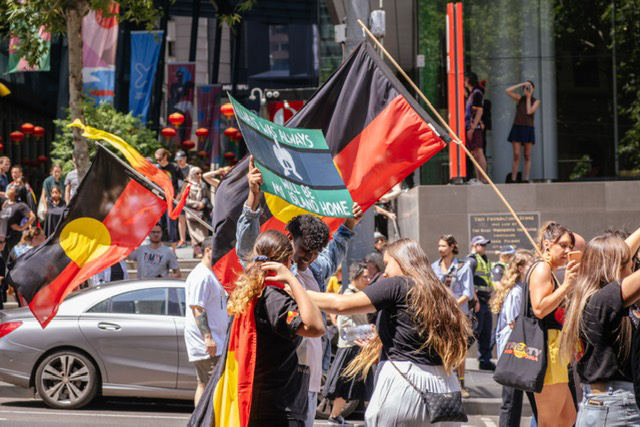
What have our governments done to tackle rates of Indigenous custody?
From one perspective one could see the conviction of Derek Chauvin for the murder of George Floyd as a triumph of the American justice system – a proof, somehow, that American police are accountable to the law, that bad police practice, having its roots in racism will be found out, and that the jury system will get things right. (more…)
-

America needs to re-invent its police
The George Floyd case triggered a new wave of protests in the American Black Lives Matter movement, but the cause and the protests have been there for years. (more…)
-
Will secrecy trump justice for murdered Afghans?
Thousands of Australian men and women fought in Afghanistan and Iraq without being in breach of any of the rules of warfare, but one can imagine that whatever pride they have in their personal and military accomplishment is muted by their knowledge that a small minority face credible charges of murdering civilians and other war crimes. (more…)
-
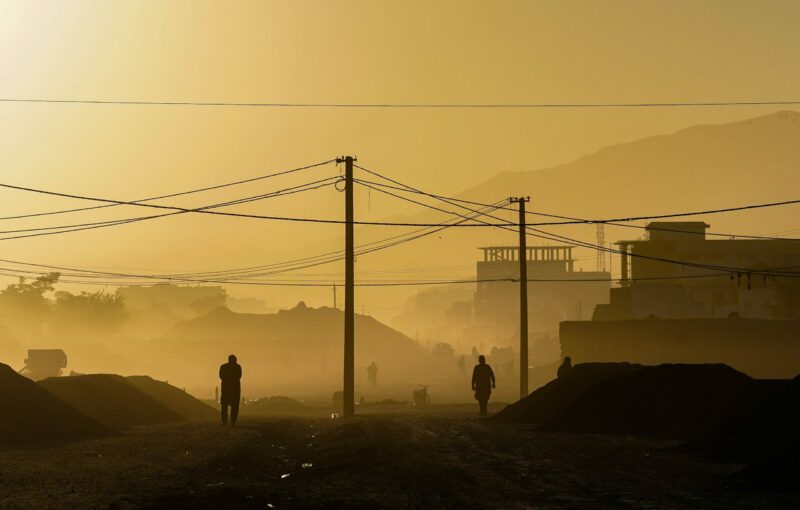
Our MPs and Generals hope we forget the foolish Afghanistan war and the wounds it left on our honour
The aftermath of the Brereton inquiry into war crimes committed by SAS soldiers involves much more than continuing efforts to prosecute. It also involves findings of the degree of culpability of officers at all levels above the non-commissioned soldiers accused, as well as the whole culture of the SAS, perhaps of the whole army. (more…)
-

Morrison’s minders at the heart of his doldrums
Perhaps a day will come when the champion rorters, liars, and conscious mis-managers of public resources are before a serious corruption commission and out on their ears. (more…)
-
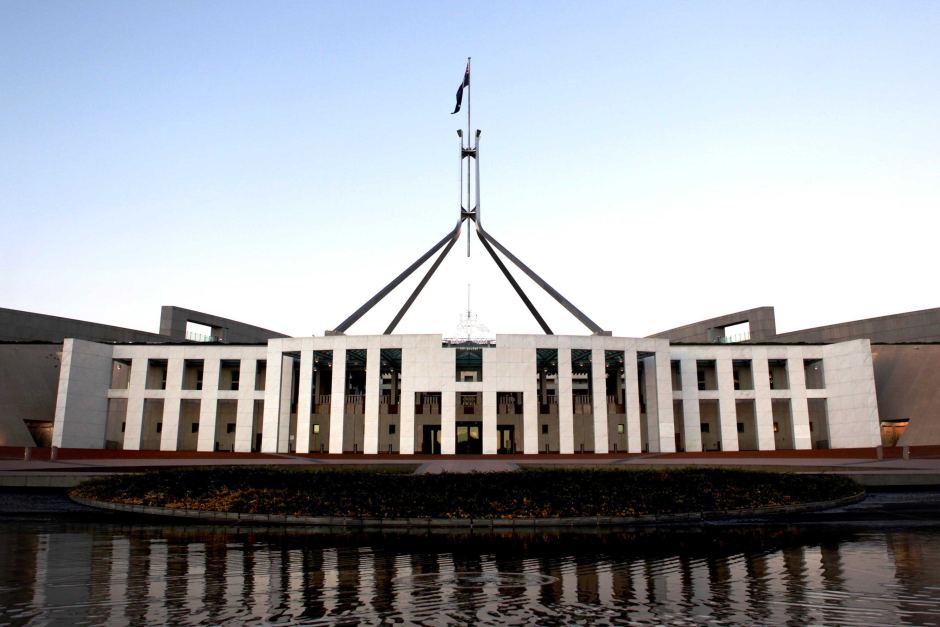
Ministerial staff can’t be strangled but they can be leashed
It is probably too late to throw partisans out of ministerial offices, or even to strangle the triennial increase in the number of ministerial staff, whether or not they are to be subjected to ordinary rules of civility and respect for each other. But it is not too late to set some enforceable public standards of minder behaviour and public accountability to force them into the light. (more…)
-

Morrison’s over-hyping of vaccine delivery
If the mass vaccination of Australians against the severe effects of Covid-19 proves to be a complete political debacle for the government, it seems likely at this moment that it will be more a consequence of its being over-hyped by the prime minister than of serious mismanagement of the program, or even the incompetence which is increasingly tending to accompany programs devised by new anti-public sector methods. (more…)
-

The usual suspects and mates, making a killing from vaccinations
Australia has the right to whinge about Europe’s withholding of solid vaccines orders. We have done that, even as we have accepted the decision with reasonably good grace. We have to, more or less, because there is no immediate hope of reversing the decision through law courts or military invasion, and because our moral, as opposed to our legal right, is not the greatest. (more…)
-
Sexual assault policies fit pattern of abuse of power
Three decades ago, Bob Hawke seized on Joh Bjeke-Petersen’s revolt against John Howard’s leadership of the Liberal Party with a campaign slogan which said of the coalition, “If you can’t govern yourselves, you can’t govern the country.” Obvious party disunity tends to have that effect. (more…)
-

Women’s passion and anger isn’t enough to force lasting change
It is said that early in the catalogue of Morrison’s mismanagement of recent issues that some of his advisers asserted the matters that had come to the fore – alleged rape, the safety of women in parliament and in the wider world – was a “doctor’s wife” sort of issue, of intense interest only to the female chattering classes, with little bite in the main electorate, particularly among women predisposed to vote conservative. (more…)
-
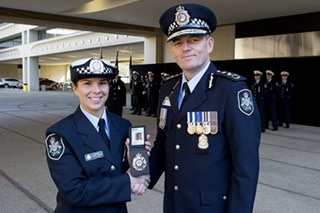
The AFP clearing-house: more political than useful
Some of the AFP commissioners have entrenched the AFP’s reputation as the most politicised force in the country. When one considers the NSW and Victoria Police, that is really saying something. (more…)
-

Sexual violence makes a farce of the rule of law
One should always take great care in assuming the reliability of statistics or the factual basis of arguments and prejudices promoted by the NSW Police Commissioner, Mick Fuller. But he may have made the argument for fundamental reform of sexual violence and sexual harassment laws in suggesting, defensively this week, that only a small proportion of sexual assaults are reported to police, that of these, only about 10 per cent are developed to the point of charges against the perpetrator, and that of these, only about 10 per cent advance to a conviction. (more…)