
If the Catholic Church wishes to change a culture of secrecy, leadership has to come from the top.
Kieran Tapsell
-

Pope Leo XIV and some unfinished business
In its 2017 Final Report, the Australian Royal Commission into Institutional Responses to Child Sexual Abuse recommended changes to canon law, the most important of which was the abolition of the pontifical secret over child sexual abuse by clergy. (more…)
-
Pope Francis and zero tolerance of child sexual abuse
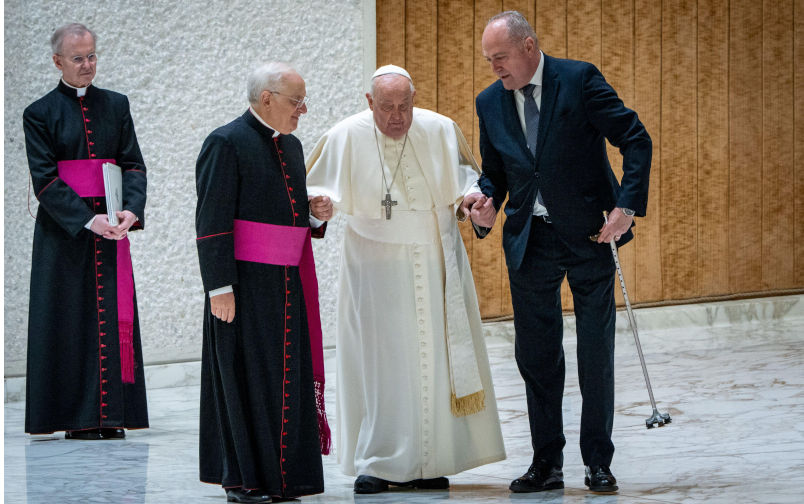
Since his election in 2013, Pope Francis has publicly claimed eight times that the Catholic Church practises “zero tolerance” towards child sexual abuse by clergy. At worst, this is simply untrue, and at best, like Humpty Dumpty in Alice in Wonderland, he makes the expression mean whatever he wants it to mean. (more…)
-
Pope Francis and practising what one preaches
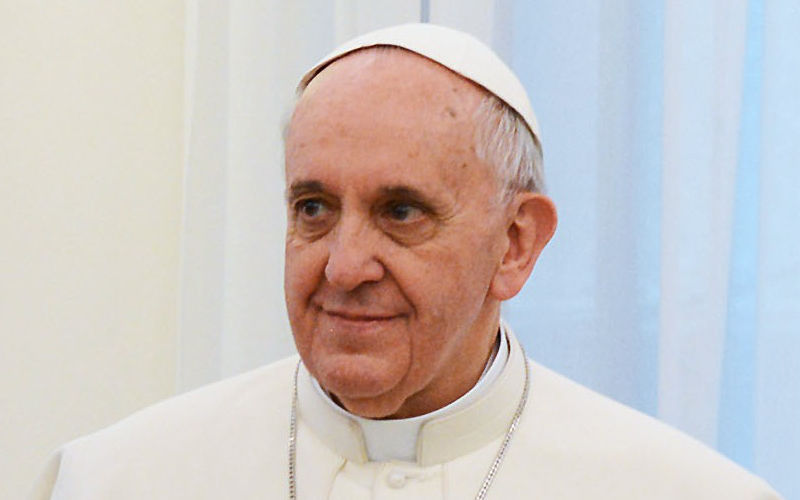
Pope Francis has called upon Church authorities to cooperate with civil authorities in relation to child sexual abuse by Church personnel. When it comes to the Vatican cooperating, it is a different story. (more…)
-
Pope Francis’ reforms the Church’s disciplinary system in response to royal commission
One of the main reasons for the Catholic Church shifting around abusive priests was because its disciplinary system was dysfunctional. Far more children were abused than would have occurred if it had a decent one. The Royal Commission made recommendations for change, and Pope Francis has adopted some of them, but he has retained two of the most harshly criticized canons.
-
Pope Francis on just wars, capital punishment and voluntary assisted dying
Pope Francis and his Congregation for the Doctrine of the Faith have recently made pronouncements on these life and death issues. The Church’s teaching on the taking of human life has never been particularly coherent. (more…)
-
A Former President of Colombia Has His Oscar Wilde Moment
Senator Álvaro Uribe, a former president of Colombia, commenced a private prosecution against Senator Iván Cepeda for attempting to pervert the course of justice by paying witness to make false allegations against him. The judge dismissed the case, and found that it was Uribe who was doing the perverting. The matter is now before the Colombian Supreme Court, and Uribe has been placed under house arrest. (more…)
-
Pope Francis finally makes bishops accountable for cover-ups
On 16 July 2020, the Vatican published a manual for dealing with allegations of child sexual abuse against Church personnel. It marks a significant change in culture expressed in canon law for the last 100 years where the Church was more concerned about providing immunity for clergy child sex perpetrators than it was for the welfare of their victims. (more…)
-
KIERAN TAPSELL. Pope Francis Abolishes the Pontifical Secret Over Child Sexual Abuse.
On 17 December 2019, Pope Francis abolished the pontifical secret over child sexual abuse by clergy. This was the first step in returning the Catholic Church to its 15 century old tradition, which it abandoned in 1917, of regarding child sexual abuse as a crime that needed to be punished by the State. Francis has still not gone far enough because the restoration of that tradition requires the imposition of mandatory reporting to the civil authorities, as demanded by two United Nations Committees. (more…)
-
KIERAN TAPSELL: Has the Pontifical Secret Been Secretly Buried?
After the criticisms of the pontifical secret at the February summit conference in Rome on child sexual abuse, it was widely expected that it would be abolished. It never happened, but recent announcements by two bishops’ conferences suggest that it may have been quietly buried behind closed doors. (more…)
-
KIERAN TAPSELL: Pope Francis and the Closed Door Syndrome
For all his good points, Pope Francis has a credibility problem over child sexual abuse. Public statements are made, but once the door is closed, the paper that comes out contradicts what has been said. His latest Apostolic Letter, Vos Estis Lux Mundi, is no exception. (more…)
-
KIERAN TAPSELL. Anzac Day and apologies for the sins of the past.
Apologies for the sins of the past have always created controversy. If it is accepted that nations are entitled to glory in the great achievements of their individual members, then it is also appropriate that they regret what other members have done. (more…)
-
KIERAN TAPSELL. The Australian Church Response to the Royal Commission Final Report on the Pontifical Secret.
The Australian Catholic Bishops Conference in its response to the Royal Commission’s Final Report has claimed that the pontifical secret does not inhibit bishops from reporting all allegations of child sexual abuse against clergy to the civil authorities. In view of statements to the contrary by the Church’s senior canon lawyers in the Roman Curia, three judicial commissions in different parts of the world and two United Nations Committees, Pope Francis has no choice but to clarify the situation. (more…)
-
KIERAN TAPSELL. Accountability, Clericalism and Culture in the Catholic Church
Pope Francis has little chance of overcoming clericalism and the toxic culture of cover up in the Catholic Church unless he changes those parts of canon law which are dripping with it. (more…)
-
KIERAN TAPSELL. The ball is in Pope Francis’s court over the culture of cover-up.
Pope Francis’ letter to the people of Chile over child sexual abuse in that country and its cover-up would suggest that he might have read the Final Report of the Royal Commission into Institutional Responses to Child Sexual Abuse. Instead of blaming the “bad apples” amongst the bishops for the cover-up, he acknowledges for the first time that there are problems with the barrel. However, he will never get rid of the culture of cover-up unless follows the recommendation of the Royal Commission and two United Nations committees and abolishes the pontifical secret imposed by canon law over clergy sexual abuse of children. He is an absolute monarch and can do it with the stroke of his pen. (more…)
-
“Catastrophic institutional failure” can be fixed
The Australian Royal Commission into Institutional Responses to Child Sexual Abuse spent five years interviewing over 8,000 survivors, their abusers and personnel from institutions that had covered up the abuse. The Commission found that 61.8% of all survivors within religious institutions had been under the care of the Catholic Church. The Commission’s 17 volume Final Report, released on 15 Dec 2017, made hundreds of recommendations for change in structures, practices and internal laws of institutions. Many of the recommendations addressed to the church involved changes to canon law.
Two of these recommendations received massive media attention: that celibacy no longer be obligatory and that civil reporting laws should not provide an exemption in the case of confession. There has been some pushback against these recommendations because they involve overturning long traditions in the church. But many other recommendations had more to do with church law and practice, and could be more easily implemented, if church leadership is willing to take up this challenge. (more…)
-
KIERAN TAPSELL. Secrets and the Royal Commission’s final report.
Media attention has been drawn to the recommendation in the Final Report of the Royal Commission into Institutional Responses to Child Sexual Abuse that religious confession should not be exempted from civil law requirements to report child sexual abuse. However, of much greater practical significance is the recommendation that the Catholic Church’s pontifical secret should not apply to such abuse. (more…)
-
KIERAN TAPSELL. The Royal Commission Report on the Melbourne Archdiocese
On 5 December 2017, the Royal Commission into Institutional Responses to Child Sexual Abuse released a redacted version of its Report of Case Study No. 35: the Archdiocese of Melbourne. It strongly criticized Church personnel for failure to protect children under its care. It blamed both the culture of secrecy and inadequate structures for the failure, and described those failures a number of times as “appalling.” (more…)
-
KIERAN TAPSELL. University report lifts the lid on child sexual abuse in the Catholic Church
Researchers from RMIT University in Melbourne have produced a landmark report on the systemic reasons for child sexual abuse in the Catholic Church. (more…)
-
KIERAN TAPSELL. Sex Abuse and the Seal of the Confessional
The Australian Royal Commission into Institutional Responses to Child Sexual Abuse has just released its Criminal Justice Report in which it deals with many matters relating to the way child sexual abuse within institutions is handled by the Australian criminal justice system. In the course of that report, it recommends mandatory reporting of all suspected child sexual abuse within institutions and the creation of new offences of failing to take proper care to prevent such abuse. (more…)
-
KIERAN TAPSELL. A Different Scorecard on Pope Francis
Pope Francis has rightly been acclaimed for his stand on climate change, poverty, inequality and refugees, but on these issues he can only encourage others to act. When it comes to the role of the laity in Church governance and the cover up of child sexual abuse, Pope Francis’ rhetoric does not match his actions. He will never have the moral authority of a Nelson Mandela while he refuses to initiate changes to canon law that would bring them into line. (more…)
-
KIERAN TAPSELL. ‘The Attachment’ by Ailsa Piper and Tony Doherty.
The subtitle to this book is Letters from a Most Unlikely Friendship, and it consists of a series of letters with some occasional background comment between a “lapsed” Catholic (although none of the authors use that word) turned “agnostic with pantheist leanings” and a well known Sydney Catholic priest, Tony Doherty. (more…)
-
KIERAN TAPSELL. The Royal Commission, Religious Liberty and the Jehovah’s Witnesses
A more difficult issue is the Jehovah’s Witnesses’ practice of “shunning” those who decide to leave the organisation as adults because of sexual abuse. It may be that the Commission is left with no other alternative but to condemn it as cruel. Quite apart from Church/State separation issues, legislation can be effective to overrule Jehovah’s Witnesses wishes that their children not have blood transfusions, but it is a blunt and useless tool to make them love their neighbour. (more…)
-
KIERAN TAPSELL. A Response to Francis Sullivan
I agree with what Francis Sullivan has said in the edited version of his speech to Catalyst for Renewal. But there is a recitation of history in the full version that cannot go unchallenged. (more…)
-
KIERAN TAPSELL. Vatican Reform on Child Sexual Abuse in Disarray – Does Pope Francis get it?
Zero tolerance in a professional context almost invariably means dismissal, but Pope Francis’s claim that the Church has a “zero tolerance” policy is not borne out by the figures he presented to the United Nations: only one quarter of all priests found to have sexually abused children have been dismissed. That’s a 75% tolerance not zero. (more…)
-
KIERAN TAPSELL. The Royal Commission and Religious Liberty
Three law professors, Michael Quinlan and Keith Thompson (Notre Dame) and Frank Brennan (ACU) have criticized any attempt by the Royal Commission into Institutional Responses to Child Sexual Abuse to discuss the doctrines and canon law of the Catholic Church on the grounds that such a discussion would breach religious liberty and the separation of church and state. (more…)
-
Kieran Tapsell. Cardinal Barbarin and accountability.
Cardinal Philippe Barbarin of Lyon is currently being investigated by French police for failing to report sexual offences against children by some of his priests.
It is alleged that he knew about allegations against them in 2007 and 2009. Despite his denials of any wrongdoing, there have been calls for his resignation.
On Good Friday, retired auxiliary Bishop Geoffrey Robinson of Sydney, Australia, called on Pope Francis to request the resignation of every bishop who has failed to properly address cases of child sexual abuse.
It is unlikely that Pope Francis will agree, because it would undermine the integrity of the Church’s canon law as a coherent legal system.
The rule of law requires people to be punished for disobeying the law, not for obeying it – and this applies as much to canon law as to civil law.
Every bishop takes an oath on his consecration that he will obey all ecclesiastical laws. In 2002, when Cardinal Barbarin became Archbishop of Lyon, Pope John Paul II’s decree, Sacramentorum Sanctitatis Tutela of 2001 imposed the pontifical secret, a permanent silence, on all allegations of child sexual abuse by clerics. There was no exception for reporting such crimes to the civil authorities.
In 2002, Cardinal Desmond Connell of Dublin told the Murphy Commission in Ireland that earlier that year, he handed over to the Irish police some diocesan files relating to priests who had sexually abused children. He said that handing them over involved the greatest crisis of his time as archbishop, and he wondered if he had betrayed his consecration oath. The diocesan files were subject to the pontifical secret.
In 2001, Bishop Pierre Pican of Caen in France was given a 3 month suspended prison sentence for failing to report a serial sex abusing priest to the police. At his trial, the president of the French Catholic Bishops Conference, Cardinal Louis-Marie Billé, condemned the demand that such crimes should be reported as “intellectual terrorism” and as an infringement of “professional secrecy.”
In September 2001, Cardinal Dario Castrillón Hoyos, the prefect of the Congregation for Clergy, and a canon lawyer, wrote a letter to Bishop Pican congratulating him for covering up the priest’s crimes, and stating that bishops should be prepared to go to jail rather than report them to the police. He said he was sending a copy of his congratulatory letter to all bishops of the world holding up Pican as an example to be followed. He later said that his letter had been sent with the approval of Pope John Paul II.
In February 2002, Archbishop Tarcisio Bertone, (now a cardinal), a canon lawyer and the secretary of the Congregation for the Doctrine of the Faith, of which Cardinal Joseph Ratzinger was then the prefect, rejected the demands that bishops report priests for child sexual abuse. On 29 April 2002, Archbishop Julian Herranz (now a cardinal), the president of the Pontifical Council for the Interpretation of Legislative Texts, the pope’s delegate for making binding interpretations of canon law, said the same thing.
On 16 May 2002, Cardinal Oscar Rodriguez Maradiaga, now in charge of Pope Francis’ group of cardinals to reform the Roman Curia, said that bishops should be prepared to go to jail rather than to report these crimes to the police.
“We are pastors, not agents of the FBI or CIA,” he said.
Cardinal Karl Lehmann, the chairman of the German Catholic Bishops Conference,Cardinal Jan Schotte, then secretary general of the Synod of Bishops and Professor Gianfranco Ghirlanda SJ, a judge of the Apostolic Signatura, and dean of the Faculty of Canon Law at the Gregorian University in Rome all made similar statements in 2002.
In 2010, Pope Benedict XVI extended to the rest of the world a dispensation from the pontifical secret that had been given to the United States in December 2002, and which was just enough to keep bishops out of jail: bishops should report but only where there are civil reporting laws. Previously, canon law required them to break such laws.
Very few countries in the world have reporting laws for historical abuse (where the victim is an adult), which forms the vast bulk of all complaints. Not all countries have welfare reporting laws for children at risk. Since 2010, the pontifical secret still prohibits bishops from reporting allegations of abuse where there are no or inadequate civil reporting laws.
The requirements of canon law are irrelevant to Cardinal Barbarin’s guilt or innocence under French law.
But if he is convicted of breaching French law for failing to report such allegations to the civil authorities, should anyone be surprised that he acted in the way he did? The alleged offences occurred in 2007 and 2009, before the dispensation to report where the civil law required it was extended to France.
Had Cardinal Barbarin reported those allegations to the civil authorities he would have breached his consecration oath to obey all ecclesiastical laws, as well as going against the overwhelming weight of opinion of the Church’s senior cardinals and canon lawyers as to his moral, ethical and canonical obligations – he should be prepared to go to jail rather than report crimes against children by his priests.
For Pope Francis to sack these bishops, or call upon them to resign would undermine the whole idea of the rule of law in canon law.
In September 2014, Pope Francis rejected calls from the United Nations Committees on the Rights of the Child and against Torture to abolish the pontifical secret for clergy sexual abuse of children and to impose mandatory reporting under canon law. Until he does that, no bishop can be held accountable for covering up child sexual abuse in those jurisdictions where there are inadequate civil reporting laws.
So even if Cardinal Barbarin is convicted, he cannot be held accountable under canon law, precisely because he obeyed it.
Kieran Tapsell is the author of Potiphar’s Wife: The Vatican’s Secret and Child Sexual Abuse (2014 ATF Press).
-
Kieran Tapsell. Bishop Ronald Mulkearns: Blaming the Foot Soldier
The “Nuremberg defence” takes its name from the claim by Nazi officials at the Nuremberg War Crimes Tribunal that they should be acquitted because they were following “superior orders”. In one of the most significant judgments in international law, the Nuremberg Tribunal held that following superior orders in the case of crimes against humanity is no defence, although it may be a factor in determining the appropriate punishment.
Justice Robert Jackson, the chief prosecutor, wanted to make heads of state accountable for the orders they gave, and for what they allowed to happen under their watch. Historically, he pointed out, accountability had been the least where responsibility had been the greatest. Jackson accepted that responsibility was greatest where the power was strongest, and this is the stance now taken by the International Criminal Court.
Bishop Ronald Mulkearns, both before and after his death on 4 April 2016, has been the object of sustained criticism for the cover up of clergy sexual crimes against children that occurred during his time as bishop of Ballarat from 1971 to 1997. His successors in the Ballarat diocese, Bishops Connors and Bird accused him of “effectively facilitating child sexual abuse” and making “terrible mistakes”.
On Good Friday, former Bishop Geoffrey Robinson said on ABC radio that in the 1980s he considered Mulkearns to be one of “the most forward looking and caring bishops”, and he found it difficult to understand how he had acted as he did.
Ronald Mulkearns was a canon lawyer with a doctorate in canon law, and was one of the founders of the Canon Law Society of Australia and New Zealand, and the first chairman of the Special Issues Committee set up by the Australian Catholic Bishops Conference to find a better way of dealing with child sexual abuse by priests and religious. Anyone with that kind of background takes his canon law seriously. In 1971, when he was consecrated bishop, he had taken an oath to obey all ecclesiastical laws.
The Victorian Parliamentary Inquiry Report concluded that Mulkearns had dealt with complaints of sexual abuse in the strictest confidentiality, and had tried to “quarantine the information as far as possible”, in accordance with the policy laid down by canon law.
Bishop Robinson conceded in his ABC interview that the protocol that he created in 1996, Towards Healing, (which required reporting to the police) was not supported by the Vatican because “it didn’t follow their rules” and was “outside the laws of the Church.” The Australian bishops under Geoffrey Robinson were only prepared to defy canon law in 1996, the year before Ronald Mulkearns’ retirement. But by then the damage in Ballarat had already been done.
Mulkearns real mistake was in not breaking his consecration oath to obey canon law in which was written the “terrible mistakes” identified by Bishop Bird. Mulkearns should have defied canon law, but, as a canon lawyer, he would have known that Pope Paul VI’s 1974 Instruction Secreta Continere purported to take away his conscience where a matter, such as clergy sexual abuse of children, was covered by the pontifical secret. Keeping the secret was his conscience. In 1996, Mulkearns was interviewed on the ABC Four Corners program and stated: “I believed I acted in accordance with my conscience.”
In that same year, and one year before Mulkearns’ retirement, Fr Brian Lucas in a paper given to the Canon Law Society of Australia and New Zealand told his audience that there may be cases so sensitive, that it is in the best interests of the parties and of the Church that canonical proceedings not be commenced, and that “documents not be created in the first place.” Such a stance was justified under canon law if it was necessary to avoid scandal and the subsequent loss of faith. The most likely inference one can draw from Mulkearns’ failure to keep records was the same as the Royal Commission found with Fr Lucas: a desire to protect the Church from “scandal”, or to protect priests, or both.
Canon law prior to 2001 made it virtually impossible for a bishop to dismiss a paedophile priest, and it forbade him to report these crimes to the police. The Murphy Commission in Ireland concluded that “the structures and rules of the Catholic Church facilitated the cover up” of sexual abuse in the Archdiocese of Dublin. The same can be said of the diocese of Ballarat under Bishop Mulkearns.
Bishop Geoffrey Robinson told the Royal Commission: “However great the faults of the Australian bishops have been over the last thirty years, it still remains true that the major obstacle to a better response from the Church has been the Vatican.” That statement is still true because of the refusal of Pope Francis to reform canon law as it relates to child sexual abuse by clerics.
Which brings us back to Justice Robert Jackson and Nuremberg. If you read the submissions made by the Australian Church at the Victorian Parliamentary Inquiry and to the current Royal Commission, there is hardly a whisper about how canon law affected the behaviour of bishops. It seems that the Australian Church wants to take us back to the days before Nuremburg where accountability had been the least where responsibility had been the greatest: blame the foot soldiers and not the generals.
Following superior orders is not a defence, but in the modern world, responsibility is the greatest where power is strongest. And that power is in the Vatican and the seven popes who, since 1922, established, expanded and maintained a system of cover up under canon law.
Kieran Tapsell is the author of Potiphar’s Wife: The Vatican’s Secret and Child Sexual Abuse (2014 ATF Press)
-
Kieran Tapsell. Cardinal Pell and the Church’s “Omerta”
Cardinal George Pell must now be regretting not having come back to Australia to give his evidence to the Australian Royal Commission into Institutional Responses to Child Sexual Abuse in the relatively small town of Ballarat in the State of Victoria. By claiming that his medical condition did not allow him to travel, and offering to give video evidence in Rome, he has turned his performance in the witness box into a media feast that otherwise might have gone unnoticed in the international press.
First there was the Tim Minchin song that went viral, “Come Home Cardinal Pell”: https://www.youtube.com/watch?v=EtHOmforqxk . Then the extraordinary donations by Australians of some $A 200,000 to pay for abuse survivors to attend at the Quirinale Hotel in Rome to watch Pell give evidence.
Pell’s performance in the witness box ensured an even greater media coverage. It was repeatedly put to him by counsel assisting the Commission that his claim of lack of knowledge of child sexual abuse in Ballarat was “implausible”, which gives you some idea of the findings that are likely to be made against him in the Commission’s Report. Ever since the Erebus Royal Commission in New Zealand, the Commission is obliged to put to parties being investigated a likely finding to allow them to respond. Pell’s responses only made such a finding more likely.
After the completion of his evidence, Pell met with the survivors in Rome. Survivor David Nagle said that they talked about “the future”, and what Pell could do in his position in the Catholic Church.
One thing Pell can do is to take Pope Francis aside, and tell him how essential it is for him to change canon law to reflect the demands of the United Nations Committees on the Rights of the Child and against Torture that mandatory reporting of all allegations of child sexual abuse to the civil authorities should be imposed by canon law.
At the moment, canon law requires a cover up in most circumstances because very few countries have comprehensive reporting laws. The pontifical secret as defined by Pope Paul VI’s Instruction, Secreta Continere of 1974 is imposed by Art 30 of Pope John Paul II’s Motu Proprio, Sacramentorum Sanctitatis Tutela, as revised by Pope Benedict XVI in 2010. The only exception so far allowed is where the civil law requires reporting – a dispensation given to the United States in 2002, and extended to the rest of the world only in 2010. Otherwise, the pontifical secret applies – a position that is confirmed by the Italian and Polish Bishops Conferences’ statements in 2012, 2014 and 2015 that their bishops will not be reporting clergy sexual abuse because their civil laws do not require it.
Now that Cardinal O’Malley, the President of the Pontifical Commission for the Protection of Minors, has said that it is the ethical and moral obligation of bishops to report all allegations to the civil authorities irrespective of whether there are civil reporting laws, Pope Francis really has no other option but to change canon law to reflect that position.
Bishops on ordination swear an oath to obey “all ecclesiastical laws”, not Cardinal O’Malley’s statements about their ethical and moral obligations. Secreta Continere purports to take away the bishop’s conscience when it comes to the pontifical secret. Some bishops might reject that claim but others would take it seriously, because canon law derives from the Vicars of Christ.
On 26 September 2014, Pope Francis specifically rejected the United Nations demands for mandatory reporting under canon law with the casuistic excuse that such a measure would interfere with the sovereignty of independent States. Where there is no conflict between canon and civil law, canon law interferes with that sovereignty as much as the rules of golf. No country in the world forbids the reporting of child sexual abuse to the civil authorities.
Even Archbishop Scicluna, the former prosecutor for the Congregation for the Doctrine of the Faith and one of Pope Francis’s legates before the United Nations Committees, has changed his mind from the submission he put to the United Nations Committees: it is up to the victim to report unless there is a civil reporting law binding on bishops. After seeing the movie, Spotlight, Scicluna said that “bishops must understand that it is reporting that will save the church, not ‘omerta,’” – a reference to the Mafia’s code of silence. Yet that is precisely what the pontifical secret requires: a permanent silence on allegations and information obtained by the Church about child sexual abuse by clergy.
If Cardinal Pell really wants to do something about child sexual abuse in the future, he should use his influence to advise Pope Francis to sign a decree that puts into law what Cardinal O’Malley said about the moral and ethical responsibilities of bishops. If he does that, he will go down in history as the Pope who finally put an end to the Church’s “omerta” over clergy sexual abuse of children that has existed since Pope Pius XI’s Instruction Crimen Sollicitationis of 1922.
Kieran Tapsell is the author of Potiphar’s Wife: The Vatican’s Secret and Child Sexual Abuse (ATF Press 2014)
-
Kieran Tapsell. Pope Francis Continues the Policy of Cover Up
In May 2014, my book, Potiphar’s Wife: The Vatican Secret and Child Sexual Abuse was published. It accused six popes from 1922 onwards (Pius XI – Benedict XVI) of establishing, confirming and expanding a system of cover up of child sexual abuse by clergy through the strictest secrecy imposed by canon law over allegations and information gained by the Church in its internal inquiries. On 9 April 2015, I wrote a piece for this blog stating that it looked like Pope Francis will be the seventh pope to follow suit when he rejected the call from the United Nations Committees on the Rights of the Child and Against Torture to require mandatory reporting under canon law: https://publish.pearlsandirritations.com/blog/?p=3524
In his blog of 4 June 2014, Francis Sullivan from the Truth, Justice and Healing Council described my book as “highly controversial”. Despite the high controversy, neither the TJHC nor any other representative of the Church have challenged what I have written. The only canon lawyer, to my knowledge, who has written a review of the book, is Fr Thomas Doyle OP in the United States National Catholic Reporter on 22 April 2015, in which he described it as “the most comprehensive, insightful and accurate exposition of the canonical landscape yet to be produced.” http://ncronline.org/books/2015/04/book-offers-insight-canon-laws-role-sexual-abuse-crisis Professor Ian Waters, at a meeting in Melbourne, criticized some aspects of the book, while emphasing that he was talking in his private capacity. I published a transcription of his talk and my response on Richard Sipe’s webpage: http://www.awrsipe.com/Miscl/Ian-Waters-Speech-with-Commentary5.pdf.
Since the publication of the book, I have repeated my views about the role of canon law in the cover up in numerous articles in Pearls and Irritations, Global Pulse Magazine and in the National Catholic Reporter. No canon lawyer has challenged what I have written.
The recent announcement by the Vatican that bishops are “not necessarily” responsible for reporting allegations of child sexual abuse to the police, and that only victims or their families should decide on reporting, is not surprising, and it is misleading. Bishops are not given any option – they are forbidden to report these allegations under Art.30 of Sacramentorum Sanctitatis Tutela, because the pontifical secret is imposed on them by Art 1(4) of the 1974 Instruction of Pope Paul VI, Secreta Continere. The pontifical secret is a permanent silence that even binds those who accidentally come across the information gathered in the Church’s internal inquiries. A dispensation was given in 2010 to allow reporting where there is a civil law requiring it, but very few jurisdictions have comprehensive reporting laws to cover all cases of child sexual abuse (only New South Wales and Victoria have them in Australia).
In response to the Vatican announcement, Francis Sullivan said that bishops are “morally obliged” to report information to prevent the risk of further abuse. Few would disagree with him, but the Vatican does. Bishops on ordination swear an oath to obey “all ecclesiastical laws”, not Francis Sullivan’s opinion of their moral obligations. Secreta Continere even purports to take away a bishop’s conscience – keeping the secret is his conscience.
Francis Sullivan described the Truth, Justice and Healing Council’s 207 page submission to the Royal Commission of 3 October 2013 as a “warts and all history going back many decades”. Canon law is mentioned 55 times, but there is no mention of the biggest wart of all, the pontifical secret. The submission contains a paragraph which, if appearing in a commercial document, would be in breach of the prohibition on misleading and deceptive conduct under the Competition and Consumer Act 2010. It stated: “There is nothing in the 1983 Code that is in conflict with any applicable civil law obligations relating to the reporting of allegations of child sexual abuse.” The Code does not contain the whole of canon law. The secrecy provisions are not in the Code. The Council’s submission on Police and Prosecution Responses of 15 August 2015 makes no mention of the pontifical secret either.
In June 2014 an eminent Professor of Moral Theology wrote a very positive review of Potiphar’s Wife in a Catholic online magazine. It was withdrawn after a week, because, he told me, he had received some emails from canon lawyers criticizing it. I suggested to him that these canon lawyers should write a critical review of the book, and, if necessary I can respond. Nothing has appeared.
Last week, Father Hans Zollner SJ, president of the Center for Child Protection (CCP) at the Gregorian University, says cover-ups and denial are still too prevalent in the Church. He makes no mention of the role of canon law and the pontifical secret: http://www.globalpulsemagazine.com/news/battle-against-clerical-sexual-abuse-has-long-way-to-go/2594
Cardinal Francis George, one of the Church’s foremost intellectuals, said in a 2003 article in the Ave Maria Law Review that if you want to get rid of a culture, you first have to get rid of the law that embodies it. So long as the pontifical secret applies to allegations of child sexual abuse of clergy, the cover up will continue. In Potiphar’s Wife, I explained the theological reasons for Church spokesmen being reluctant to acknowledge the most significant factor in the cover up. Unless they do, the problem will never go away
Kieran Tapsell is the author of Potiphar’s Wife: The Vatican Secret and Child Sexual Abuse (ATF Press 2014)