
In the last three years there has been a blizzard of new laws with respect to youth justice across Australia. While some laws have been welcome, a substantial number have been retrograde. In this category, laws with respect to young children have been the most controversial. This fact has attracted critical attention from a number of respected international and non-governmental human rights organisations. (more…)
Spencer Zifcak
-

Federal parliamentary committee presents a decisive case for an Australian Human Rights Act
Parliament’s Joint Committee on Human Rights has tabled a report that makes a persuasive argument for comprehensive legislation to protect Australians’ fundamental human rights. Its Inquiry into Australia’s Human Rights Framework (2024) identifies a catalogue of deficiencies in the nation’s disaggregated systems of human rights protection. The report provides a new and compelling case for Parliament to revisit the idea that Australia should join every other Western nation in providing comprehensive legal protection to combat the widespread infringement of human rights. (more…)
-

David McBride’s trials and travails
Last week, David McBride, the Military Officer who disclosed tranches of confidential documents with respect to the behaviour of Australian Defence Forces during the nation’s involvement in the wars in Afghanistan, was sentenced to six years imprisonment. McBride believed that in making these disclosures he had acted appropriately and correctly in the public interest. (more…)
-

The indefinite detention of people seeking asylum in Australia is at an end
In all of the heated, political imbroglio that has surrounded the discussion of the release of some 150 asylum seekers from immigration detention recently, one crucial perspective has passed almost without public discussion. It’s really important. It’s about the relevant constitutional law. (more…)
-
The Constitution, sovereignty and The Voice
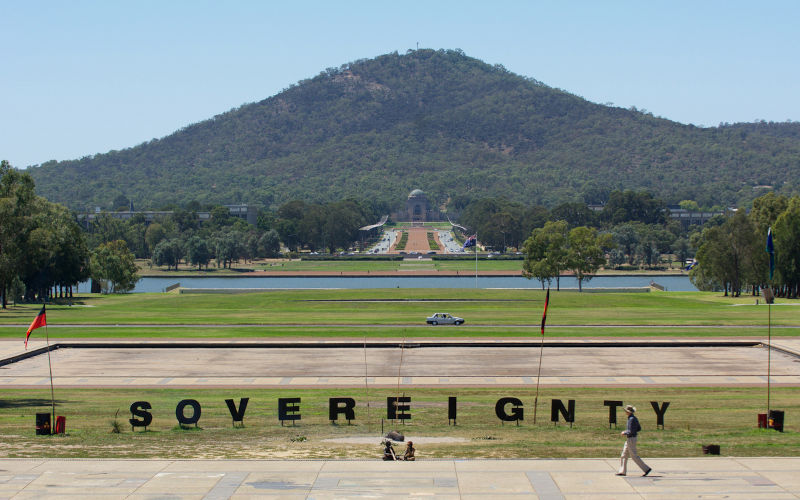
One question relating to the upcoming referendum on ‘The Voice’ that has recently come to prominence concerns the question of sovereignty. Who or what is ‘sovereign’ as the term is applied to the governance of Australia? Is there any such thing as Indigenous sovereignty? Might it be said that in Australia sovereignty is or could be shared? Might First Nations people be sacrificing some part of their sovereignty if a Voice to parliament is endorsed at the referendum? None of these questions affords an easy answer. (more…)
-
Abolishing the Administrative Appeals Tribunal: An unfortunate but necessary development
It is a sad indictment upon Executive government, that a costly charade is exactly what the AAT had become. The level of Executive interference with the constitution and operation of the tribunal had reached such a level that it had almost destroyed the tribunal’s reputation for impartial and independent decision-making. (more…)
-
Australia excoriated over refusal to allow UN torture committee to visit places of detention
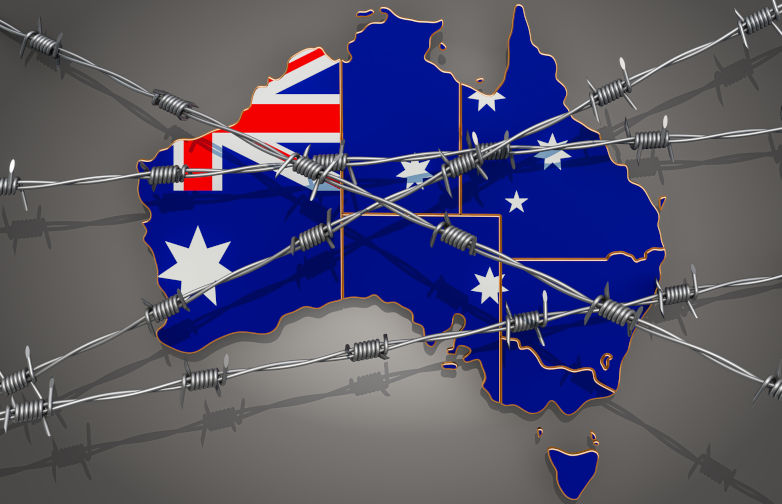
Australia is a party to the United Nations Convention Against Torture. Pursuant to the terms of the Convention, the UN has established a Sub-Committee for the Prevention of Torture (SPT). The Committee’s mandate is to prevent torture, cruel, inhuman or degrading treatment. It pursues that mandate through visits to member states. Member states are obliged to allow the SPT unannounced and unhindered visits to places throughout a country where people are deprived of their liberty. Australia has just refused to permit the Sub-Committee to undertake its mandate here. (more…)
-

The unconscionable prosecution of Bernard Collaery was an assault on the values Australia holds dear
Last week Attorney-General Mark Dreyfus put an end to Canberra lawyer Bernard Collaery’s criminal prosecution. (more…)
-

Disinformation and misinformation: An electoral plague
While the major parties contest the election with competing policies and competing claims, an altogether different political contest is in play. This is the contest, across the political spectrum, between competing half-truths and deceptions. Ever since the Federal election in 2016, electoral disinformation and misinformation, particularly that communicated through social media, has become a blight upon Australia’s electoral landscape. (more…)
-

Morrison on a Federal Integrity Commission is not credible
The Prime Minister has broken his promise to adopt legislation establishing a Federal Integrity Commission. The decision is not all that surprising. It has been clear for a long time that the Government does not favour a federal anti-corruption body. What is interesting, however, is how impoverished the reasons that the Prime Minister has given for ditching a commission actually are. (more…)
-
The contemptible prosecution of Bernard Collaery is an assault on the rule of law
The Coalition’s vindictive legal campaign reveals its contempt for democratic rights and shows how easily prosecution can slide into persecution.
-

When is a Cabinet not the Cabinet? When the Prime Minister says that it is
Senator Rex Patrick has won the right to access documents from the National Cabinet. Scott Morrison should never have tried to keep them secret.
-
Detaining Refugees Indefinitely: The Executive v The Judiciary
Recently, a Federal Court Judge ordered the immediate release of a young man from immigration detention. The man had been in immigration detention for five years. The Federal Government wasn’t happy. It introduced legislation into the Commonwealth Parliament to make sure that no such release could happen again. The Government’s power to detain non-citizens indefinitely was affirmed and strengthened. That was not a good outcome.
-

Australia’s human rights failings seriously exposed
Every four years, all member states of the United Nations are required to submit their human rights record for review by the UN Human Rights Council (UNHRC). Australia had its turn in January this year. By any account, Australia’s record with respect to the protection of human rights remains relatively satisfactory. However, the recent interchange that took place between Australia and other member states of the UNHRC disclosed the existence of serious deficits in our protective responsibilities. (more…)
-
Western governments will have blood on their hands unless they stop persecuting Julian Assange
The case of Wikileaks founder Julian Assange is complex, containing elements of law, freedom of speech and of the media, journalism, politics, international relations and health. In the recent hearing to determine whether Assange should be extradited to the US, health became the dominant discourse. He may die if several Western governments do not stop persecuting him. (more…)
-
Christian Porter’s Federal Integrity Commission is a complete flop
Recently, a team from Transparency International and Griffith University released an important report. The report, Australia’s National Integrity System: A Blueprint for Action, proposed that an entirely new and comprehensive governmental integrity system be developed in Australia. Plainly the report picked up on the fact that public concern with the abuse of public power for private or political gain has been escalating significantly. Instances of governmental corruption have attained a level of crisis federally and in states. (more…)
-
Susan Ryan. A formidable and compassionate advocate on human rights.
Susan Ryan, the minister for education in the Hawke Government and the pioneer who brought Australia its Sex Discrimination Act, died very recently. This is a remembrance from a friend. (more…)
-
Witness K and Bernard Collaery: An Unjust Prosecution Gets Even Worse
The prosecution of former ACT Attorney-General, Bernard Collaery, and his client, Witness K, continues to play itself out before the ACT Supreme Court. This is a legal fiasco of the first order. The prosecution should never have commenced. (more…)
-
Searches, Seizures and Sanctions in Australia’s Immigration Detention Camps
A disturbing and distressing new development has occurred in the Commonwealth’s policies with respect to immigration detention. Pursuant to an amendment to the Migration Act (Cth), non-citizens who have committed criminal offences in Australia are now subject, under s.501, to mandatory cancellations of their visas. (more…)
-
SPENCER ZIFCAK. The New Asio Powers: The Good, the Bad and the Ugly
The Minister for Home Affairs, Peter Dutton, has introduced new, comprehensive powers for ASIO. The Australian Security Intelligence Organisation Amendment Bill 2020 repeals ASIO’s existing questioning and detention warrant framework and introduces a reformed and extended compulsory questioning scheme. The Bill is not all bad. But there is quite enough in it to cause those with a concern for the protection of civil liberties, sleepless nights. (more…)
-
SPENCER ZIFCAK. The Religious Discrimination Bill
The Religious Discrimination Bill, introduced by the Attorney-General Christian Porter, has its flaws. Nevertheless, it walks a more or less acceptable line between arch proponents and critics of the recent campaign for greater religious freedoms. The Government has produced relatively moderate legislation that mirrors Commonwealth anti-discrimination legislation related to race and sex. In that sense it is familiar and justifiable. Whether it is necessary and appropriate is an entirely different question.
-
SPENCER ZIFCAK. Journalists, media freedom and the law.
The Australian Federal Police (AFP) raids on journalists from News Corporation and the ABC have caused very considerable community consternation. The fact that these raids occurred in the immediate aftermath of the recent election and within a day of each other served only to animate public concern. These events have prompted a re-appraisal of the state of media freedom in Australia. The AFP has defended its actions, journalists have been up in arms, media’s management has complained of intimidation, and the government has denied any responsibility. In their own way, each has responded understandably. The basic problem does not lie primarily with their actions. Instead, it is the law that is problematic. (more…)
-
SPENCER ZIFCAK. The Federal Government Corrodes the Independence of the Administrative Appeals Tribunal
The Federal Government Corrodes the Independence of
the Administrative Appeals TribunalThe Commonwealth Administrative Appeals Tribunal (AAT) is a quasi-judicial body designed to promote the rule of law and good government by enabling citizens to call into question the decisions of public sector departments and agencies. The Tribunal reviews government decisions on the merits of questions of law and fact. Its jurisdiction is extensive including, among other things, jurisdiction with respect to migration and refugees, taxation, social security, the NDIS, veterans affairs and freedom of information. Given that the Tribunal may overrule decisions taken within government and substitute its own, the relationship between the two bodies is not always easy. It is critical, therefore, that the Tribunal should operate independently, free from improper or undue political influence. Its independence, however, is now under concerted political attack.
-
SPENCER ZIFCAK. Offshore Processing: The New Legal Attack.
Two new legal actions designed to put an end to Australia’s policy of offshore processing have just landed at the High Court of Australia. In a novel twist, the cases will not depend on the High Court’s interpretation of the Migration Act. Nor are they constitutionally founded. Instead, the National Justice Project, the law firm representing detainees, is arguing that the Commonwealth has acted negligently. The negligence, it is said, is constituted by crimes against humanity committed by Australian authorities against refugees in the immigration detention camps on Manus Island and Nauru. (more…)
-
SPENCER ZIFCAK. No Friend But the Mountains’:* Behrouz Boochani’s Extraordinary Narrative Of Life on Manus Island
Behrouz Boochani is an Iranian journalist, writer and refugee. He arrived in Australian waters by boat seeking refuge after a near fatal journey from Indonesia. He never made it to the mainland. Kevin Rudd had shut down access to Australia. Tony Abbott had opened out the desolate encampments on Manus Island and Nauru. Boochani was rescued at sea, transferred to Christmas Island and then flown to Manus. He’s been incarcerated there for more than five years. Thanks to the High Court’s morally indefensible decision in the case of Al-Kateb, he’s slated to remain on the island, isolated and alone, indefinitely. (more…)
-
The Attorney-General, the ASIS officer and his lawyer: the shameful Timor prosecution
Last week the Attorney-General, Christian Porter, announced that he had approved the prosecution of Witness K, a former ASIS operative and his lawyer, Bernard Collaery, a former Attorney-General of the ACT. They are to be prosecuted for a breach of s.39 of the Intelligence Services Act 2001 (Cth). The prosecution arises out of the involvement of Witness K and Collaery in legal disputation between the governments of Australia and Timor-Leste concerning their respective entitlements to revenues from oil and gas fields located in the Timor Sea. (more…)
-
SPENCER ZIFCAK. Vigil for Eurydice Dixon
Eurydice Dixon was raped and murdered no more than shouting distance from where I live. Had she screamed I might have heard her cry from across Melbourne Cemetery. But if she did, no one heard her. (more…)
-
SPENCER ZIFCAK. Are Thousands of Asylum Seekers in Australia About to be Thrown off Income Support?
About two months ago, Peter Dutton’s Department of Home Affairs took a decision that will have momentous consequences. In an initiative, given no publicity, the Minister decided that the substantial majority of asylum seekers awaiting the determination of their applications for refugee status will have their income support terminated. (more…)
-
SPENCER ZIFCAK. Need an urgent medical transfer from Nauru? Forget it.
The former Commissioner of the Australian Border Force (ABF), Roman Quaedvlieg, made a remarkable admission last week. It occurred in an exchange on Twitter with a former senior medical officer who had worked with refugees on Nauru. In a tweet, Quaedvlieg admitted that during his tenure the ABF had deliberately obstructed and thwarted the transfer of refugee detainees from Nauru to Australia for acute medical treatment. (more…)
-
SPENCER ZIFCAK. Government Policies globally and the Torture of Refugees
Nils Melzer is the UN Special Rapporteur on Torture and Cruel, Inhuman and Degrading Treatment. Recently, he presented a damning report to the UN Human Rights Council on the subjection of refugees across the world to torture. Melzer’s fundamental contention was this. The primary cause for the massive abuse suffered by refugees globally is neither migration itself nor organized crime. Instead, it is the inexorable trend amongst States to base their official refugee policies on deterrence, detention and criminalization rather than on protection, human rights and non-discrimination.
I am a measured person. Reason is my first strategy. But, nevertheless, I think it’s time for the nation to consider the probability that this country is responsible for torture and cruel, inhuman and degrading treatment – not only directly domestically but also indirectly internationally. A noticeable number of the 7 million torture victims worldwide is likely down to us. (more…)