A SERIES of posts on this blog in the last two weeks have highlighted aspects of the People’s Republic of China (PRC) that are often overlooked in discussion of the bilateral relationship. We have to get used to living with the Chinese elephant in our neighbourhood. (more…)
Category: China
-
The Chinese Communist Party: does it stay or does it go?
Contemporary China cannot be comprehended without understanding the role of the Chinese Communist Party (CCP). With 85 million members it represents a tiny share of the total population (1.4 billion) but is the world’s largest political party. Its organisation, structure and internal discipline ensure it is the spinal cord of governance of the People’s Republic of China (PRC), moving all the parts. Extraordinarily, it has remained one of the world’s most opaque and enigmatic political organisations in the world. We often know more about the inner workings of mafia families than we do about the CCP. (more…)
-
Hong Kong’s stability is being restored.
The National Security Law for Hong Kong has had a profound impact since its enactment on June 30, 2020, ending the era of lawlessness, bringing back peace and stability. A city famed for its decency and tolerance has reasserted its values and triumphed over those who wished it ill. (more…)
-
Grenville Cross-Closure of Apple Daily in Hong Kong and the political obsessions of one man .
It is always sad when people lose their jobs, and there is sympathy for the Apple Daily employees now facing redundancy. They include journalists from, for example, the entertainment, finance and sports desks, as well as engineers, printers and delivery workers. They have all fallen victim to the political obsessions of one man, the newspaper’s founder and Next Digital owner, Jimmy Lai Chee-ying, and to the machinations of his inner circle
-
A sinking DFAT has given policy making over to ASPI
Despite the line being spun by recently retired Secretary, Frances Adamson, AC, DFAT appears to be in the process of being scuttled by ASPI.
-
How many are fleeing Hong Kong?
Google, “fleeing Hong Kong”, today, and over 100 headlines immediately present themselves. Most speak of deep fear and plans to escape. (more…)
-
China seeks client states not ideological conquests
Australia came away from the G7 meeting in Cornwall comforted by the support of others. But joint statements tend elegantly to fudge differences and do not absolve us from reaching our own conclusions and crafting our own strategies. (more…)
-
Here’s what will happen in Hong Kong in 2047
It is becoming increasingly clear what will happen to Hong Kong’s economic and legal foundations at midnight on June 30th, 2047, when the transition period to being part of China comes to an end. Nothing. (more…)
-
Hong Kong, Apple Daily and freedom of the press
The arrest of the chief editor and chief executive of Hong Kong’s Apple Daily newspaper signals the end to Hong Kong’s free press, according to Western press reports like Austin Ramzy and Tiffany May’s article in the New York Times of 16 June. It is taken as an indication of Beijing’s growing stranglehold over Hong Kong and its disregard of the rights and norms guaranteed under the framework known as “One Country Two Systems.” -
Western media’s campaign to ignore the obvious
I’m not alone, there are hundreds, if not thousands of people like me posting, blogging and vlogging positively about China, many are Chinese citizens, many are not, one common factor with all of these people is that they are either ignored by Western media, or if they are considered at all, they are ridiculed and disparaged as being unreliable, accused of being paid, or as is often alleged on Twitter and YouTube, “coerced” by threats to our families to toe a certain CPC line and produce Communist propaganda. (more…)
-
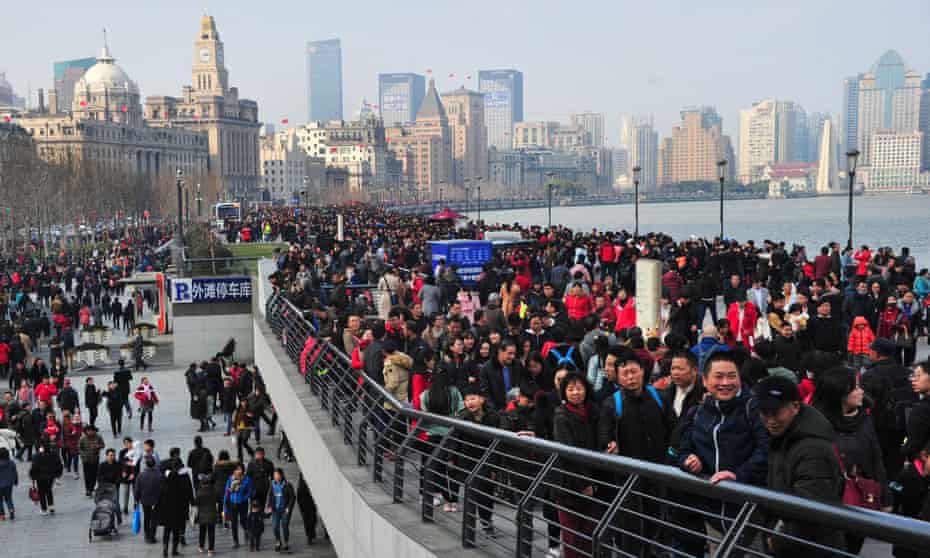
How to engage with China
The Chinese government’s overriding goals are unity, stability, security, and prosperity. They arose from its “century of humiliation” (1839-1949) when it underwent invasion, addiction, civil war, and destitution. The Great Leap Forward campaign (1958-62) triggered famine and the Red Guard riots (1966-67) destroyed heritage and education. All post-Mao governments have brutally cracked down on internal dissent lest it leads again to fracturing and secession. To outsiders that is intolerable, but most Chinese accept a tightly policed state is preferable to a turbulent and broken one. Also, any visitor to China knows that its people are not dispirited. In failed states, street crime is endemic. In China it is non-existent. (more…)
-
Tiananmen Square “Massacre” is a difficult story to handle
The event, when it occurred on 4 June,1989, aroused deep emotions in Hong Kong. It led to a mass street demonstration in which tens of thousands participated; many office workers left their desks to join in the march from Central to Victoria Park. It was entirely spontaneous and peaceful. Since then it has been “commemorated” by a candle-lit vigil in Victoria Park each year, until last year when it was banned.
-
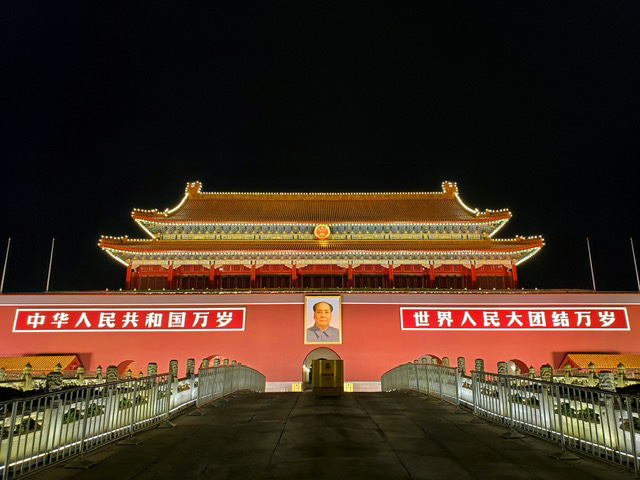
The Tiananmen Square massacre: the one sided story
If you thought we knew everything about the Tiananmen Square Massacre of June 3-4, 1989, think again. Mysteries remain. Some are so significant we need to review our ideas about what was going on in China at that time. (more…)
-
London reports on Hong Kong: politics undercut analysis
The British Foreign, Commonwealth and Development Office (FCDO) issued its latest “six-monthly” report on Hong Kong on 10 June.[1] Although this report has emerged five and half months after the end of the period it covers, from 1 July to 31 December 2020, the delayed delivery does not appear to have improved its substance. (more…)
-
Why the Western narrative of China’s ‘debt trap diplomacy’ is another big lie
To work well, the lie must be introduced early, repeated often and insulated from contradiction by a narrative of “fake news” and accusations of “witch hunts”.
-
Hong Kong is not dying after all.
On 25 May, the China Centre at Jesus College, Cambridge University, hosted a significant online, two-hour seminar on The Future of Hong Kong. (more…)
-
Do free markets still beat central planning?
Institutional arrangements are complex systems, shaped by history, geography, and culture. The objective should not be to identify a one-size-fits-all approach, but rather to devise the combination of characteristics that would deliver the greatest good for the greatest number of people, with the right checks and balances. (more…)
-
Three things I learned as a white Australian academic in China
The term ‘nuance’ is often used to capture the multiple grey areas in our quest to understand China. The experience of teaching in a Chinese university led me to find a way to pinpoint and locate some of these nuanced spaces through an honest recognition of my own cultural and historical baggage.
-
Was there a Wuhan lab leak? Why an inquiry won’t dig out the truth
A year ago, the idea that Covid-19 leaked from a lab in Wuhan – a short distance from the wet market that is usually claimed to be the source of the virus – was dismissed as a crackpot theory, supported only by Donald Trump, QAnon and hawks on the right looking to escalate tensions dangerously with China…But under Trump, US officials were reportedly funding work at the Wuhan lab through a US-based medical organisation called the EcoHealth Alliance. (more…)
-
President Xi asks Chinese media, diplomats to tone down aggressive approach
Asked whether China will take a different approach in its diplomatic efforts in the light of Xi’s remarks, Chinese Foreign Ministry spokesman Wang Wenbin told a media briefing here on Wednesday that the comments were in line with China’s “peaceful development”.
(more…) -
We have to handle our relationship with China, not leave it to others
How should we manage relations with China – New Zealand’s most complex foreign policy issue in the 21st century?
-

US or China style governance: which is best for its people?
The US sees China as an enemy, and members of the US Congress compete to see who can appear the most belligerent against China. However, the Chinese have no missionary impulse to take over the world and have no expectations that other societies should become like them.
-

Arbitrary detention in China: The case of Yang Hengjun
Australian Ambassador Graham Fletcher, denied observer entry to the closed court hearing of the case against Australian citizen Yang Hengjun, told the press on 27 May that the case was one of arbitrary detention. This was not an off-the-cuff remark or an attempt to further damage relations with China. (more…)
-
The rejected murder suspect and the Taiwan Government’s lack of interest in the Rule of Law.
A Hong Kong resident, Chan, Tong-kai murdered his pregnant Hong Kong girlfriend, whilst they were holidaying together in Taiwan in mid-February, 2018. After killing her and disposing of her body, he fled back to Hong Kong, admitting to his crimes. Significant CCTV circumstantial evidence helped confirm what had happened, but the murderer has yet to be tried. (more…)
-

Combatting Australia’s anti-China rhetoric
Tokyo’s security apparatus must have followed with amazement that excellent series by Max Suich in the AFR of 16, 17 and 18 May, revealing the anti-China antics of their Australian opposite numbers. Suich mentions how an elected member of Australia’s parliament was driven out in disgrace for maintaining a relationship with a suspected Chinese government agent.
-
Max Suich, China and the greatest example of our diplomatic self harm
How did it come to this? How did Australia’s foreign policymakers and their advisors manage to devise policies that have simultaneously enraged our most important trade partner, and made us even more dependent on an increasingly unpredictable notional guarantor of our national security? If our political and strategic elites had intentionally set out to undermine Australia’s economic security and exacerbate existing strategic vulnerabilities they could hardly have done a better job. (more…)
-
Australian engagement with the PRC: universities need more, not less
The current global political environment in the Anglophone world is becoming increasingly suspicious of involvement of any kind with the People’s Republic of China (PRC). For students and staff in Australian universities the likely resultant disengagement is not simply wrong in principle, it is dangerously misleading. (more…)
-
How to understand China: which books to read?
New books on China are flooding the market but their scope and quality are variable. Publishers have recognised that the public is keen to understand more about our major trading partner and the strategic challenges of the new world order. Readers would be well advised however to read the reviews before placing their orders. One book in particular should be avoided as it is likely to be tendentious and lacking factual information. (more…) -
Darkness in a propagandised state risks war with China.
Our distorted perspectives, our ignorance, is now more dangerous than the situation leading to the Vietnam War in the 1960s. We have experienced a sudden end to immediate knowledge of Asia including China We are vulnerable thus to pandemics of media misinformation. (more…)
-
The End of Modi’s Global Dreams…and the Quad!
India’s prime minister advanced a muscular foreign policy, but his mishandling of the pandemic is an embarrassing step back. If India stumbles, the American dream of the Quad can never become a reality.