The ABC’s new flagship forum failed to interrogate key claims and perspectives on antisemitism, leaving major gaps in a critical national debate.
Category: Politics
-

A war without clear objectives is turning against Trump
With no clear objective and mounting economic and political costs, the case for ending the Iran war is becoming overwhelming.
(more…) -

AI’s inclination to ‘go nuclear’
Studies show AI systems used in military scenarios tend to escalate conflicts, raising serious concerns about their role in decisions involving nuclear weapons.
-

Australia’s great wealth transfer divide isn’t between generations
Australia’s so-called ‘great wealth transfer’ will not be a simple shift between generations, but a widening gap between those who inherit assets and those who do not.
(more…) -

Iran war may accelerate a new Middle East security order
The war on Iran may have far-reaching consequences for Gulf security, regional alliances and the future of the US presence in the Middle East. Eugene Doyle talks with former US Ambassador Chas Freeman, to try and see the road ahead. (more…)
-

AUKUS: So many questions, so few answers
The Australian public deserve to understand the implications of the Morrison/Albanese secretive, AUKUS agreement. (more…)
-

Five steps to prevent the Iran war from becoming a global catastrophe
The war involving Israel, the United States and Iran risks escalating across the Middle East and beyond unless a coordinated diplomatic settlement is pursued.
(more…) -

The Budget needs real tax reform, not tinkering
Australia’s tax system increasingly favours capital and older wealth while leaving younger Australians with rising debts and shrinking opportunities.
(more…) -

Mary Kostakidis case heads to court after mediation fails
A failed mediation means a high-profile discrimination complaint over social media posts about Israel will now be decided in court. (more…)
-
Reclaiming the common good from neoliberalism
New thinking about the common good challenges decades of neoliberal policy and raises questions about inequality, public services and Australia’s federal system.
(more…) -
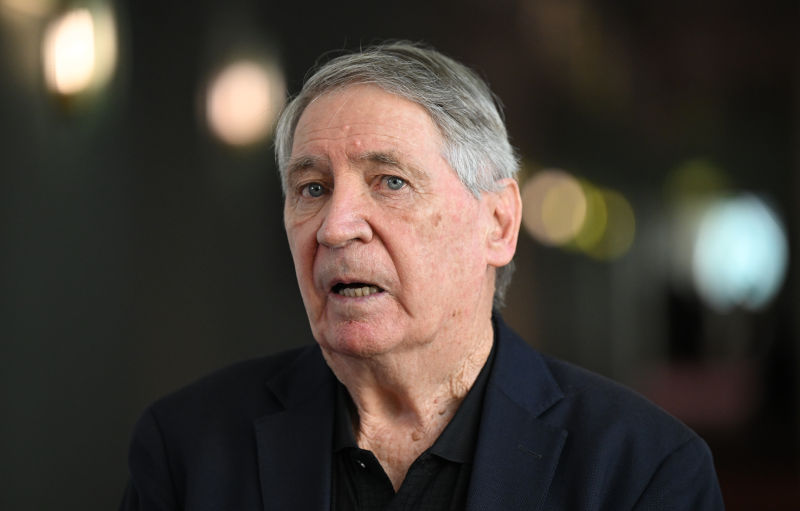
Why did Dennis Richardson walk away from the antisemitism commission?
Dennis Richardson’s resignation from the antisemitism royal commission has been widely portrayed as a setback, but the episode raises deeper questions about the inquiry. (more…)
-

Australia’s fuel security crisis needs less diesel, not more refineries
Australia’s heavy reliance on imported diesel has left the economy exposed to global shocks, highlighting the need to cut demand rather than simply increase supply.
(more…) -

Iran war exposes confusion at the heart of Australia’s foreign policy
Australia’s carefully calibrated but confusing diplomacy has struggled to cope with the political and strategic consequences of the US-Israeli war with Iran. (more…)
-

Freedom at last for the Robodebt Six, thanks to the NACC
New findings from the anti-corruption commission clear several figures of corruption over Robodebt, but the affair still exposes profound failures in public administration. (more…)
-

Frank Brennan on the fog of war
As conflict spreads across the Middle East, the moral test of war returns to first principles – legality, justification and the danger of acting in blindness. (more…)
-

Ministerial responsibilities and Robodebt
The principle of ministerial responsibility means a minister must answer for the policies and advice presented to cabinet – including the flawed Robodebt scheme.
(more…) -

Refreshing the city – rethinking our greatest invention
Cities have shaped human life, yet rapid growth, changing work patterns and new expectations about community are forcing a rethink of how they function. (more…)
-

Sanctioned Rubio to take part in Trump’s China trip
The US secretary of state, previously sanctioned by Beijing, is expected to accompany Donald Trump on a visit to China as both sides prepare for high-level talks. (more…)
-

Five years after March 4 Justice, women are still being killed
Five years after tens of thousands of women marched across Australia demanding action on gendered violence, the country has changed its language and policies. But the most brutal statistic – women killed by current or former partners – has not declined. (more…)
-

Asia’s energy-reliant economies face ‘existential threat’ from prolonged Iran war
Asian economies heavily dependent on imported oil and gas face higher fuel costs, widening trade deficits and slower growth if disruption to Middle East energy flows persists. (more…)
-

Mearsheimer on Iran: no off-ramp, no clear victory, huge global risk
In this wide-ranging discussion with Chris Hedges, political scientist John J Mearsheimer argues the US and Israel have entered a war of attrition with Iran that risks global economic shock and a strategic defeat for Washington.
(more…) -

Allegra Spender reopens the tax debate – but the real divide is wealth, not generations
Australia’s tax debate often frames reform as a struggle between younger and older generations. But the real divide lies between wage earners and those who derive growing advantage from assets, wealth and capital income.
-
The great discontinuity: the war on Iran marks the end of the world we knew
The war on Iran may trigger economic, geopolitical and energy disruptions that permanently alter the global order – leaving Australia dangerously exposed.
-

Are soil carbon schemes really working?
New research suggests rainfall and climate variability may play a larger role in soil carbon increases than land management, raising questions about carbon credit schemes.
(more…) -

Matt Canavan’s climate scepticism is a policy dead end for the Coalition
The National Party’s new leader has built his politics on climate scepticism. But rising costs, extreme weather and the accelerating energy transition make that stance increasingly difficult to sustain.
(more…) -

After the Iran war, Gulf nations face tough decisions on the US
Iran’s attacks across the Gulf have exposed the limits of the US security umbrella and forced regional leaders to rethink how they balance relations with Washington, Tehran and their own populations.
-

Environment: Carbon credit markets benefit the participants but not the climate
Carbon markets still promise big but deliver little, the Global North’s economic development path will not work for the Global South, an uncontrolled sale of rat poison is needlessly killing native wildlife. (more…)
-

Iran war – controlling the narrative
Claims that groups such as Hamas and Hezbollah are simply terrorist organisations reflect a political narrative that obscures the context of occupation and resistance.
(more…) -

Australia’s multicultural success cannot be taken for granted
Australia’s multicultural project has delivered enormous social and economic benefits, but recent governments have allowed it to drift, weakening social cohesion and leadership when it needs renewed attention most. (more…)
-

Grandstanding government right off-side – Message from the Editor
I have never been cynical about politics. At my 1980s high school, I confused many by having then Prime Minister Bob Hawke plastered across my A4 binder instead of Bruce Springsteen or Boy George. After starting life in journalism, where there were plenty of cynics, I horrified my editor by leaving to work for the Federal ALP. He dubbed the move the worst decision I had ever made. But I was unmoved. (more…)