
I arrived in Australia with my family at the time when Malcolm Fraser was the Prime Minister of Australia. He was preceded by Gough Whitlam and succeeded by Bob Hawke and Paul Keating. They were all intellectual, individualistic and humane leaders. I had never felt more secure and proud to be Australian. (more…)
Category: Health
-
In God we trust
The following words are from Canadian Dr. Yasser Khan (Eye-Facial Plastic Trauma Surgeon) who returned from a humanitarian surgical mission at the European Hospital in Khan Younis, Gaza. (more…)
-

Government’s response to Long Covid inquiry an exercise in sophistry
Preparing government responses to reports from Parliamentary inquiries often involves finding a plausible excuse to reject a perfectly sensible suggestion. The Department of Health and Aged Care failed this task in its response to the House of Representatives Long COVID inquiry. (more…)
-

Charging for aged care at home – splitting hairs and shifting loads
A number of commentators have proposed that the Aged Care Funding Taskforce would, and indeed should, recommend increasing user charges. With particular reference to services delivered through Commonwealth Home Care Program (CHSP), this step would be achieved by splitting care services and ordinary daily living supports; the former would be subsidised and clients would pay for the latter if delivered through CHSP or turn to the market. Seems simple? A closer look at CHSP suggests any attempt to increase revenue from client contributions might not be worth the effort and give rise to several policy and practical contradictions. (more…)
-

E-cigarettes are not the solution to the tobacco pandemic
A landmark event in global public health is taking place in Panama City on Feb 5-10: the 10th Conference of Parties (COP10) of the World Health Organisation (WHO) Framework Convention on Tobacco Control (FCTC). Since 2003, the FCTC has been ratified by 183 countries, and all of them, including China, have made steady progress in monitoring tobacco use, smoke-free areas, quitting, health education, raising tobacco taxes, and bans on promotion. (more…)
-

Environment: Humans don’t make history – we play host
How germs made history. Greenhouse gas emissions keep rising but USA and Europe are still the major causes of global warming.
-
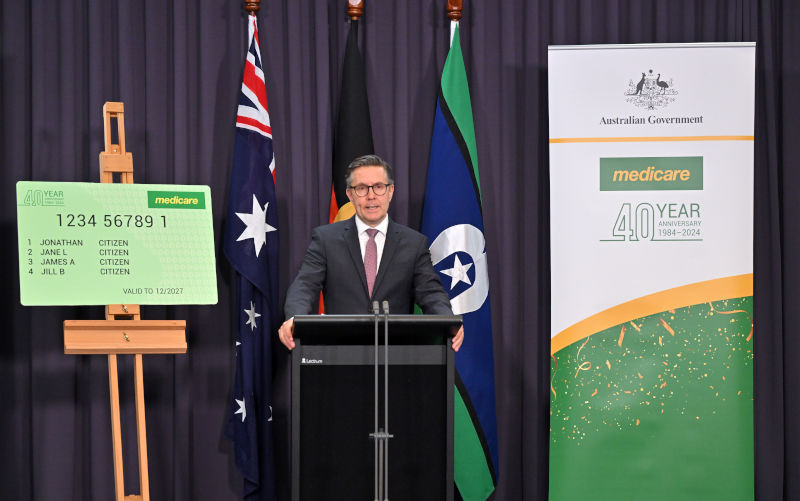
Medicare: Taking a history, making a diagnosis, and prescribing some reforms
Former Prime Minister Gough Whitlam was a man with a mission. Many missions, obviously. But one maybe stood out above all others: the creation of a universal national healthcare system. (more…)
-

Mid term Aged Care Report card: 5/10 – must try harder
The election of the Albanese Labor government was met with a strong sense of optimism among people who had been lobbying for aged care reform for years. Finally, a government prepared to address the systemic issues that had plagued the sector since the Howard government neo-liberal reforms decades before. Alas, it was not to be. (more…)
-

The silence of the damned
Our leading humanitarian and civic institutions, including major medical institutions, refuse to denounce Israel’s genocide in Gaza. This exposes their hypocrisy and complicity. (more…)
-

Medicare turns 40: since 1984 our health needs have changed but the system hasn’t. 3 reforms to update it
Forty years ago, Medicare as we know it today was born. It was the reincarnation of the Whitlam government’s Medibank, introduced in 1975 but dismantled in stages by the Fraser Liberal government. (more…)
-

How labelling is concealing common ground on climate, COVID and indigenous issues
You’re either a climate realist or you’re a climate sceptic. You’re either pro COVID vaccines or you’re a vaccine sceptic. You either voted ‘no’ in the recent ‘indigenous voice to parliament’ or ‘yes’. On too many issues, the labels that Australians are using are confrontational. Australians are being led to see just two camps and no common ground. (more…)
-

COVID unmasked an unfair health system. Now we can change it
People in the poorest areas of Australia are dying 2.5 times more often from the disease than those in the richest areas. (more…)
-
Unpacking the Jevons Paradox: how effectiveness gains in the NDIS lead to increased demand
Australia has just completed major reviews of two of its largest public expenditures – the NDIS and Employment Services. Each program manifests problems predicted by two lesser-known economic theories: the Jevons Paradox in the case of the NDIS and Goodhart’s Law in the case of employment services. Neither were mentioned in either review. (more…)
-

Professionalism and compassion in healthcare
We don’t have to take off our compassion, or our ability to show it, when we drape a stethoscope around our neck. The need for doctors to be professional is not synonymous with being emotionless. (more…)
-

National Cabinet should fire the starting gun on national health reform
In April, National Cabinet agreed to hold a dedicated meeting on health reform by the end of the year. Based on media coverage this week, it might be a battle about NDIS and GST funding instead. Who pays for what is important, but it will be a missed opportunity if a funding fight displaces discussion of health reform.
National Cabinet’s mandate is to tackle issues of national significance with “genuine partnership”. Health reform certainly fits the bill. The system is groaning under pressure everywhere from GP clinics to emergency departments. And federal and state governments hold different pieces of the puzzle, so they will have to work together to achieve the real change that is needed.
While there have been amazing breakthroughs in treatments and technology in recent decades, the health system itself has remained much the same. The broad outlines were set half a century ago, when Australians were younger and healthier.
Today, half of us have a chronic disease, and about half of those over the age of 65 have two or more. We are living longer, but also living sicker. Of the five years of life the average person has gained since 1990, one will be spent with disease or disability.
Unless Australia makes three long-term reforms to respond to the rise of chronic disease, pressure on the system will eventually reach breaking point. Each require federal and state governments to work together.
First, we need to stop chronic disease before it starts. Our health system is in fact a sickness system, with far too little investment in keeping people healthy – just two cents in every dollar of health spending. Two years ago, Australia’s governments committed to more than doubling that figure. But there’s no sign that they are following through, with Australia still languishing near the bottom of the international pack.
The last national prevention deal was scrapped a decade ago. Federal and state governments should fill the vacuum with a new deal that delivers on their pledge to increase funding. The money should be spent on initiatives recommended by the new Centre for Disease Control, to make sure we get good value for money.
Second, primary care needs to help people with chronic disease to stay as healthy as possible. Even with better prevention and new breakthrough drugs to treat obesity, we can still expect rates of chronic disease to stay high for decades, and chronic disease management is one of the most important roles of primary care.
The federal government has already launched reforms to expand multi-disciplinary teams in GP clinics, which will give patients more support, and to develop a new way to fund ongoing care. But those reforms won’t work in rural and remote parts of Australia that have too few doctors.
Governments should make sure people in those areas can get care. When services in a region fall below an agreed level, that should trigger federal and state governments working together to expand existing clinics, or set up new ones.
National collaboration will be essential. It is wasteful for federal and state systems to work in parallel in rural areas that have too little care. Often, the same doctors, nurses, and allied health professionals could work across state-run rural hospitals and federally funded primary care. By working together, governments can offer the certainty, salaries, and infrastructure needed to attract health workers to where they’re needed most. Decades of experience show that money alone won’t do it.
The third priority should be a strategy to shift care out of hospitals. As chronic disease intensifies, demand for hospital care will keep growing. Spending on hospitals has been surging in recent decades, yet hospitals are still struggling to keep up. With demand predicted to grow further, hospitals will need to change.
The pandemic has shown the benefits of keeping people out of hospital. Telehealth expanded and care was provided in people’s homes using remote monitoring technology. Patients benefited from less travel time and cost, and reduced risk of infection. If these trends continue, government budgets will benefit too, because fewer new hospitals will be needed.
Governments can accelerate the uptake of virtual and in-home care by measuring the care delivered in people’s homes, setting targets, and tweaking funding. Alternatives to hospitals, such as urgent care centres, should be evaluated, improved, and scaled up.
It is the perfect time to lay out how the health system will change. A new national funding deal for health must be agreed in 2025. So far, the goals of the agreement and what it will look like are unclear, with a mid-term review shrouded in secrecy. But If Australia’s leaders set the direction, that agreement can make it happen.
Governments will need to work together on many other things to improve the health system, such as recruiting and retaining health workers, increasing investment, and modernising digital systems. But Australia must address structural problems with the shape of our health system too, to set it up for the future. Let’s hope that National Cabinet takes up the challenge.
-

Australia isn’t giving everyone a fair shot
Giving all adults the chance to get vaccinated should be easy. Vaccines slash the risk of severe illness. They are very safe for people who are recommended to get them. Best of all, compared to other ways to improve our health, vaccination is quick, cheap, and easy. (more…)
-

Environment: 1.5 degrees of warming in 10 years
Not long ago it looked like we’d exceed 1.5oC in 20 years, now it looks like 10. Maybe sooner if politicians keep approving new fossil fuel mines and fields and the logging of native forests. Particulate air pollution kills 9 million a year. (more…)
-

As another workforce review launches, what does the latest OECD health stocktake reveal?
The Federal Government has announced a review of current policies and programs that aim to promote a more equitable distribution of the health workforce. (more…)
-

Domestic and family violence: brave men are vulnerable not violent
Australian national and state governments are very good at holding inquiries and releasing reports aimed at tackling wicked problems. Top of today’s long list is Domestic and Family Violence (DFV), where all governments combined to produce another National Plan last year: (more…)
-

Drugs and alcohol aren’t even half the problem
Australia’s penal colony culture has continued into the fabric of all our public administrations, but most particularly Health, Education, Community Services and Justice. (more…)
-

The care economy: Ageing is not a disease – who knew?
Becoming an Elder in many societies is a process of active shared engagement across the generations, and holding a meaningful and honoured place in one’s community. Sadly, that time-honoured community cultural process has been pretty much eradicated in modern westernised, market-driven systems of ‘Aged Care,’ such as dominate the Australian ‘market.’ (more…)
-

Medicare is changing for the better
Last week another important suite of changes to Medicare came into effect. Since the election of the Albanese government, we have seen a willingness by government to introduce a range of policies designed to update and strengthen Medicare to position it better for the future. (more…)
-

“Consistency” in MBS policy – a further unlevelling of the playing field
Plus ça change, plus c’est la même chose. The Medical Benefits Schedule (MBS) Review Advisory Committee (MRAC) has been tasked with supporting “a continuous review framework that ensures the MBS is contemporary, sustainable, evidence- based, and supports universal access to high value care for all Australians. Good about time.
-

Why does “Mental Health Reform” default to “Compliance and Control”?
‘Mental Health Reform’ has been a phrase bandied about for over 30 years in Australia. And while well intentioned, hopefully expressing the ‘Care and Concern’ felt by politicians, bureaucrats and health practitioners, it has always ended up defaulting to ‘Compliance and Control.’ (more…)
-

New data shows the Commonwealth Government is not pulling its weight on hospital funding
The Australian Institute of Health and Welfare released its latest health expenditure data last week showing the Commonwealth share of government public hospital funding has declined to 41%. This will fuel state anger and make negotiations for a new funding agreement, to take effect in mid-2025, that much harder. (more…)
-

Disability care is still all about us without us
Any talk about disability in Australia is very likely to quickly lead to mention of ‘the System,’ which controls everything in the lives of People With Disability.
-

Crushing the human connection: Managerialism does not deliver good care
Australia began its National Carers Week (15-21 October), poignantly, the very day after the nation voted ‘No’ to a way forward to giving Voice to their communities, which Aboriginal and Torres Strait Islander peoples had asked for in the Uluṟu Statement from the Heart. (more…)
-

Australia’s Covid-19 response inquiry: towards an integrated national disaster strategy?
The terms of reference for the Inquiry into the Commonwealth Government Covid-19 Response were released on the 21 September. Ostensibly the inquiry is “to identify lessons learned to improve Australia’s preparedness for future pandemics”. However, what if the next pandemic is nothing like Covid? And how prepared are we for other potential disasters? (more…)
-

Private health insurance: and the rort goes on
There’s a government review of health insurance. Here’s why you haven’t heard of it … and what needs to change. (more…)
-

Which way for school students with disabilities?
To truly serve all students, we’ll have to rethink how schools ‘do school’. (more…)