The ALP National Conference should have tested the government’s reform record and commitment to international law, but factional control turned it into a managed exercise in avoidance.
The 50th National Conference of the ALP in Adelaide last week should have been a celebration of its foundational role in enhancing Australian democracy and supporting international law, but instead it became a charade of control to manage those responsibilities the Federal Government continues to avoid.
The factional control of delegates left many observers underwhelmed and frustrated as spirited debate is no longer encouraged by a party hierarchy anxious to create a safe policy platform which will not challenge its government. This is Labor Light in action so Australian voters can expect only selective reform from their elected members in lock stepped agreement with a cautious leadership.
It could be so different. The diversity of conference delegates from Labor branches and unions across Australia is impressive with young and old from a variety of backgrounds meeting to focus on future priorities for Australia’s future. There were moments of passion in those debates we were able to hear and clearly a new generation stands ready to govern as their seniors retire to review what might have been achieved had the current majority government been more determined to adopt a reform agenda.
The fringe conference organised by the non-government sector eager to stimulate new ideas, policy reform and debate was a most effective reminder of what was missing from the official conference, with panel discussions like:
- How to grow Australia’s social housing system
- Common wealth, prosperity is created together – rewards should be shared
- An Australian Republic by 2032
- Make child care public and free
- Australia’s role in a world of growing nuclear risks
- A fair go to rebuild – work and study rights for refugees
- Ending violence starts with listening to victim survivors
These and other panel discussions and exhibitions about significant policy reform at the fringe conference served to highlight the gap that exists between government and the non-government /community sectors. There was little opportunity for government policymakers to be questioned, and few federal ministers or parliamentarians were available to explain why the pace of reform has stalled.
The Australian Labor Party Conference itself became the fringe event because it failed to initiate real debate about its achievements and limitations in policy delivery.
All governments will fail to implement some of their goals partly because political leaders make unrealistic promises in the heat of pre-election campaigns. Furthermore, no government can predict all the future needs of its community nor the unexpected global factors that will affect how governments will need to review and respond. The Albanese Government can certainly claim important policy reform domestically, but it must not hide from its responsibilities in maintaining compliance with international law.
A national conference should be the occasion for real dialogue and accountability, yet Labor delegates were kept busy making amendments to existing policy while those community representatives who understand the impact of policy failure were sidelined to a fringe event.
Most debate at the national conference hall was carefully scripted ignoring some of the contradictions and double standards in how policy recognises different groups of Australians. In reality it was the fringe conference which tackled the real issues that are neglected or not yet a priority for government.
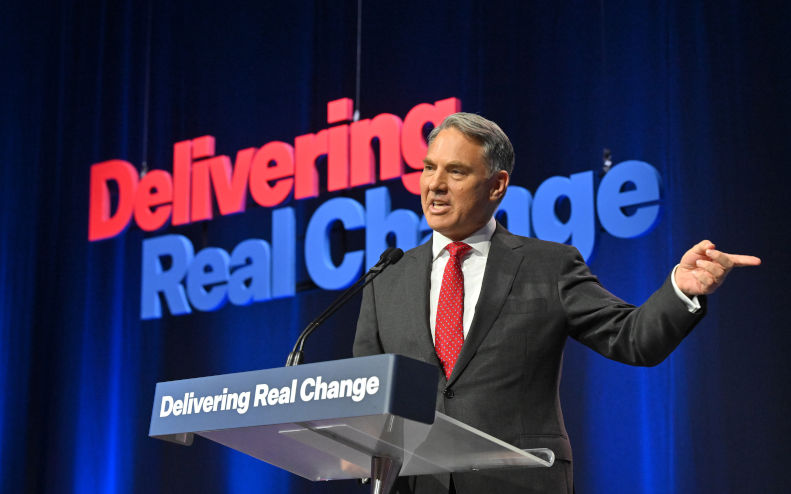
However, it was in the final conference debate on foreign policy where the ALP totally abandoned its proud record as a champion of democracy, human rights and international law. Introducing the debate on Chapter 8 of the platform ‘Australia’s Place in a Changing World’ Deputy Prime Minister Richard Marles’ opening speech reflected his role as Chief Censor determined to avoid any mention of uncomfortable truths about AUKUS and Australian sovereignty or sanctions against the state of Israel. His remarks failed to address the deep concern in Labor branches regularly expressing their fears that Australia is no longer an independent nation committed to protect all humanity by upholding international law.
The Australian Deputy Prime Minister could not speak the language of the Genocide Convention nor Australia’s responsibility to prevent war crimes, ethnic cleansing and repeated atrocities against the people of Palestine. Instead, I watched in disbelief and shame as the political party which has championed the protection of the vulnerable for 135 years gave itself a standing ovation for denying genocide.
Only Ed Husic is brave enough to question why an Australian Labor Government cannot condemn Israel as a state that refuses to abide by international law and uses its military to murder and maim thousands of civilians for political gain. There are some 60 Labor Friends of Palestine groups who do advocate action by the Australian Government, but no conference delegate dared disobey the factional ruling that this issue was not to be discussed.
The ‘Light on the Hill’ may have been extinguished in the midst of self-congratulatory applause as bland word games replaced factual debate, but humanitarian leaders like Ed Husic will continue to demand that the Australian Labor Party act to retrieve its humanity and stop defending the indefensible.

Margaret Reynolds has a long commitment to the peace movement dating back to the Anti-Vietnam Moratorium to current advocacy against militarism as National President of Women’s International League for Peace and Freedom.(Australia )
She was a Labor Senator for Queensland 1983-1999 and a member of Bob Hawke’s Ministry 1987-1990. She taught Human Rights and International Relations at University of Queensland 1999-2004 and has worked with a number of international non-government organisations.