Australia faces a choice between demands for lower taxes, and raising the revenue needed to fund essential services. This article suggests how a plan to increase taxation revenue could be presented at the next election, starting with ditching the Government’s Stage 3 income tax cuts.
Tag: mw
Used to generate feed for posts displayed on MW
-

People movement during Covid and emergence of a growing and permanent underclass
While Prime Minister Morrison initially told temporary entrants in Australia to go home, relatively few followed his instruction. His Government’s new message to these people is to stay and work in largely unskilled jobs. This ignores the long-term consequences of a growing and permanent underclass that will have to be dealt with after the election.
-
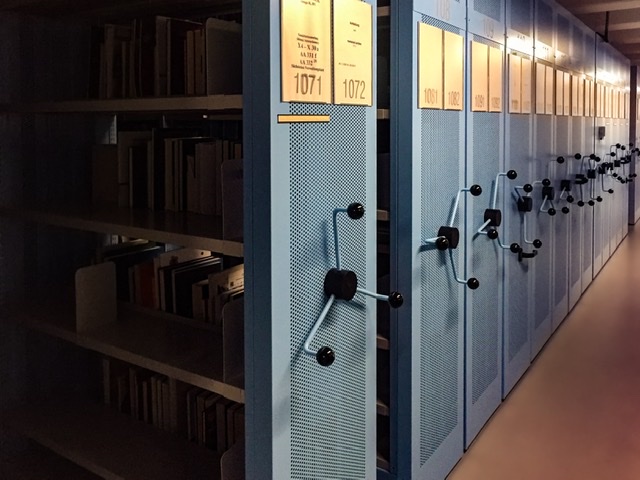
A national disgrace: the National Archives turns to crowdfunding to save irreplaceable historic records
This week marks one year since the High Court handed down its landmark decision in the Palace letters case that letters between the Queen and the Governor-General Sir John Kerr are considered public documents, ending the Queen’s embargo and leading the Archives to release them. In what I described then as a moment of “legal colonial upstart-ery”, the High Court had broken through the barrier of royal secrecy which shields royal actions from public view and from history, something no other Commonwealth nation has yet achieved.
-

Advice being tailored for political, not medical, need
Scott Morrison has repeatedly reiterated that all decisions in relation to Coronavirus public health measures have been taken in accordance with medical advice. But the advice itself has frequently been considerably less than transparent, even as he has had medical officials standing alongside him, giving every appearance of having crafted his words and drafted his decisions. (more…)
-

Radioactive trash – a tale of two Sydney suburbs
Australia is relatively clear of nuclear reprocessing waste problems. But the Sydney suburbs of Hunters Hill and Barden Ridge have radioactive wastes from uranium processing which have been sitting there for decades. A bill is now before the Senate addressing the issue. (more…)
-
Where next for private healthcare?
The future of private health in Australia – both private hospitals and private health insurance – is under challenge. The proportion of the population with insurance has declined over the past decade. The insured population is getting older, which is putting upward pressure on insurance premiums, which leads to more people dropping out, especially younger people, creating a death spiral. Statistics released by the insurance regulator last week confirm that trend continues.
-
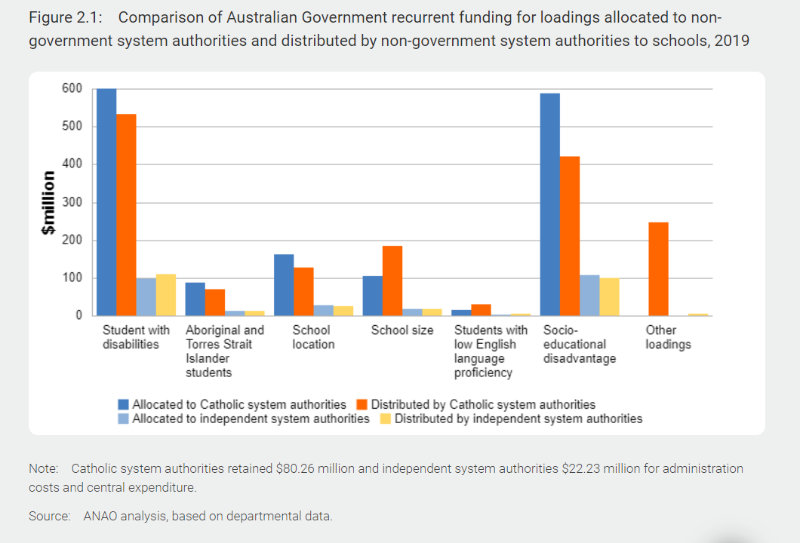
Education department refuses to hold private schools accountable for taxpayer funding
Yet another damning report by the Auditor-General shows that the Commonwealth Department of Education continues to fail to fully hold private school systems accountable for how they distribute taxpayer funding. It also criticises the Minister for Education and the Department for failing to meet their parliamentary reporting obligations.
-
Myopic thinking in Australia on electric vehicles and renewable power
Everyone’s looking at the transition to renewable power but ignoring another massive transition that has huge implications for the grid – the transition to electric vehicles. Looked at together changes the story.
-
Ageism in the time of Covid
The coronavirus pandemic must cause us to re-appraise the value we attach to the lives of others, especially vulnerable people and those who are old.
-
All too convenient to blame the Health bureaucrats
Caroline Edwards, Associate secretary of the Commonwealth Health Department may have seemed churlish in refusing to accept that her department’s efforts in organising coronavirus vaccinations, essentially under her control, had been an abject failure. (more…)
-
Morrison churlishly ignores scientific achievement
Scott Morrison’s churlishness is always on show when some Australian achieves great success in any area when Morrison’s perceived political enemies lurk.
-

Sunday environmental round up.
The International Energy Agency recognises the climate emergency and plots a course to net zero, plus NGOs give world leaders advice on how to ensure Glasgow’s COP26 is a success. An Australian construction company tells a government inquiry that working for Adani is uninsurable. Stunning photo of Earth’s thin, life-preserving air-bag.
-
From multicultural Australia to cosmopolitan Australia?
One of John Howard’s more petty acts was to belime the idea of multiculturalism. Subsequent political leaders have been less cynical about the term. Malcolm Turnbull even boasted that Australia is the most successful multicultural society in the world. However, Howard did succeed in relegating multiculturalism to being a lower order issue on the country’s public policy agenda.
-
Once was a hegemon: Australia and the decline of the US
Australia’s Indo-Pacific obsession hides a radical global geopolitical shift. Australian policymakers will persist in making poor choices unless they accept that the US hegemony has passed a tipping point, and America has already become just one great power among others.
-

When should government debt be repaid and how?
There is no problem financing government debt. As the debt can only be repaid by running budget surpluses, debt reduction should start in mid-2023 when the Treasury is forecasting that economic recovery will be complete and there will be no spare capacity.
-
ASPI has us trapped in the ice
The philosophy and attitudes underpinning and guiding the direction of the Australian Stategic Policy Institute (ASPI) can be traced to the early years of the Howard government. Since that time there has been a steady erosion of core values that might once have been said to constitute the Australian social fabric. (more…)
-

Is the end nigh for the Australian public university?
The Morrison government has declared war on Australia’s public universities. They are accused of being hotbeds of post-modern rabble rousing and an unbearable burden on taxpayers. Government ministers and employers complain that graduates are not “work-ready”. The remarkable thing is the supine response to date from the universities themselves to these baseless and gratuitous insults.
-
People movement implications of deteriorating Australia-China relations
Over the past 35 years, people movement between Australia and China increased at an extraordinary rate. The deterioration of Australia-China relations, which has now been locked in by comments about war with China by new Defence Minister Peter Dutton (as well as the ‘drums of war’ comments by his former Secretary Mike Pezzullo) and China’s indefinite suspension of the China-Australia Strategic Economic Dialogue, will reverse that trend for the foreseeable future.
-
Road pricing must start with electric vehicles
Electric vehicles provide an opportunity to introduce road pricing reforms, but ‘clean air tax’ lobbyists threaten to embed poor road-use habits. (more…)
-

How good is the 2021 Budget?
The 2021 Budget continues the Government’s good work in minimising the impact of the Covid recession and promoting economic recovery. However, the Government could still do better in setting up Australia for the future and guaranteeing essential services.
-

War with China is not inevitable: A revolution in Australian foreign policy should be.
The Government’s warnings that war with China is inevitable are propaganda. There is no such inevitability. A decision to go to war is taken by humans. It is not determined by an iron law of history. Key questions are: why are we being softened up for this war now; has the Morrison Government already decided that we’re to go to war with China? Australian foreign policy needs profound revision. (more…)
-
Imagining an alternative world: Stories for justice*
In the 2019 Australian Federal election, Labor leader Bill Shorten offered diverse policies but never a narrative which could be remembered and shared. To speak about justice, a story could have been more effective than a recitation of policies.
-
Australia and the Israeli-Palestinian conflict – can policy overcome politics?
A new public opinion survey finding that Australians hold surprisingly balanced views about the Israeli-Palestinian conflict offers scope for the government to ditch its short-sighted, partisan approach. But will it? (more…)
-
Washington is playing a losing game with China
America’s latest policies toward China will prove self-defeating. US–China relations now exemplify Freeman’s third law of strategic dynamics: for every hostile act there is a more hostile reaction. (more…)
-
Is News Corp back onto weapons of mass destruction?
Australians born in the last century remember how the ‘war on terror’ began in 2001. The same con trick is being tried on us again, for war with China. (more…)
-
What do we get for the millions spent on COVID consultancies?
Australia’s COVID-19 vaccine rollout is not just a shambles, it’s an expensive shambles. The program is so bad that government has given up on setting meaningful targets and has now redefined target setting to when an activity starts, rather than when it finishes.
-
Anti-China Threat Production in Australia: A redundant, out-of-control industry
Australia cannot lay claim to being the sole, or even senior author of its defence strategies and policies.
-
Sunday environmental round up.
Vast foreign debts hobble the efforts of poor countries to pursue climate action. Ways to reduce the embodied carbon emissions in buildings. Traditional owners fight back against Adani. German court forces government to take stronger climate action.
-
A nearly useless Government budget appeal to women voters!
This year’s budget has been designed to make the government more popular with women. After virtually ignoring our needs in last year’s budget and anger at workplace standards for female workers, it needed to act. With a coming election, this supposed improvement of funding of fee rebates for children’s services is offered as bait. However, the changes are imposed on a service that over the last four decades has shifted from the community-based family support service it was to a limited privatised economic industry, driven by badly designed subsidies targeted at market forces. (more…)
-
Clear skies over Asia’s new foreign investment landscape
Compounding the fallout of the US–China trade war, the global pandemic and recession have caused considerable speculation on the future of foreign investment and global value chains (GVCs). But though there is likely to be some permanent change, it will probably not be as great as politicians expect. (more…)