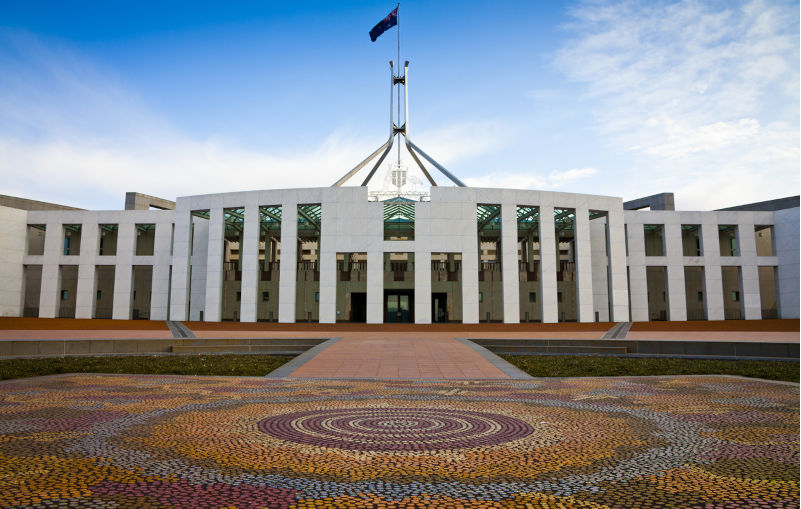
A Teal Party might become what the people want, a combination of grassroots democracy and organisational capacity. No wonder the major parties are nervous.
I was immediately suspicious when the mainstream media began piling on against the Teals forming a political party. My first thought was simple: if the political establishment and media dislike the idea this much, it must be a really good idea!
The critics assume that if the Teals form a party, they must inevitably become just another centrally controlled machine demanding rigid ideological conformity from their MPs. But why should that be inevitable? Why should the deeply flawed structure of the major parties be treated as the only possible model for political organisation?
The defining feature of the Teal movement has been independence. Voters supported Teal candidates precisely because they were not beholden to factional powerbrokers, corporate donors, union blocs or party apparatchiks. They were elected to represent their communities first – not party headquarters.
So why not design a new kind of political party altogether? Imagine a Teal Party whose constitution legally required every MP to consult with and represent the wishes and best interests of their electorate. Such a party could still maintain broad common principles – integrity in government, evidence-based policy, serious climate action, political transparency, democratic reform and economic fairness – while preserving the independence of individual MPs to vote according to the views of their communities.
That would represent something genuinely new in Australian politics: a federation of community independents rather than a traditional top-down political machine. In fact, it could offer the best of both worlds.
The MPs themselves would remain genuinely independent and accountable to their electorates rather than to party factions. Yet a party structure would allow Teal candidates to compete on a more level playing field with the major parties in terms of fundraising and campaign organisation. It would also enable more efficient sharing of policy development, research, campaign infrastructure and branding.
Perhaps the Teals have been too defensive about the accusation that they are ‘really just a party’. The major parties attack the prospect of a Teal Party because it threatens their structural funding advantages, and they attack the Teal label precisely because it resonates with voters. If the branding did not work, they would simply ignore it. Rather than retreating from either the idea of a party or the Teal identity itself, the movement could simply own both – and in doing so strip the criticism of much of its potency.
After all, the term ‘Teal’ has become shorthand for something many Australians increasingly want from politics: community representation, integrity, evidence-based policy and independence from vested interests. That is not a weakness. It is a political strength.
This debate matters because the current political funding system is profoundly distorted. Under electoral funding arrangements stitched together by Labor and the Coalition, community independents face strict donation caps and complex fundraising restrictions that vary between state and federal elections. Meanwhile, registered political parties can access exemptions and funding mechanisms that are unavailable to independents.
The effect is obvious. Wealthy vested interests can pour enormous sums into established political parties, while community-backed independents are forced to rely, simply to remain competitive, on thousands of small donations and volunteer labour.
When parties such as One Nation can reportedly receive massive backing from mining billionaire Gina Rinehart and other wealthy interests without meaningful limits, it becomes difficult to avoid the conclusion that the system is designed to entrench incumbent power. The major parties insist the new funding rules are about ‘integrity’. But many Australians see them as something else entirely: a bipartisan stitch-up intended to stop the rise of successful community independents before it spreads further.
And that is precisely why the reaction to a Teal Party has been so revealing. The media commentary often frames the proposal as some kind of betrayal of independence. But independence is not defined by administrative structure; it is defined by accountability. If MPs remain accountable primarily to their electorates rather than to party headquarters, then the essential democratic value of the Teal movement remains intact. Indeed, one could argue that formalising this principle in a party constitution would create a more democratic model than the major parties themselves currently offer.
The real fear in Canberra may not be that the Teals become ‘just another party’. It may be that they succeed in demonstrating that political parties do not have to operate as rigidly controlled tribal machines at all.
If no Teal Party forms, the movement risks snookering itself. However admirable community fundraising and volunteer activism may be, modern elections are brutally expensive. Funding matters. Organisation matters. Infrastructure matters. The major parties understand this perfectly well — which is why they have worked so hard to preserve their structural advantages.
The Teals now face a strategic choice. They can remain fragmented independents operating under increasingly restrictive funding arrangements, or they can create an entirely new political model – one that combines grassroots democracy with the organisational capacity needed to survive in Australia’s highly unequal electoral system. That possibility may explain why the political establishment appears so nervous about it.

Nigel Howard is an expert in Life Cycle Assessment and Energy Use in Buildings. He is a former Director of the UK Centre for Sustainable Construction and a former Vice President of the US Green Building Council, pioneering environmental rating systems for buildings and communities. He founded the Edge Environment Consultancy in Manly and the convenor of the Northern Beaches Climate Action Network, comprising over 50 climate groups.