
Beneath the current political debates about housing demand lies an unavoidable reality. Empty dwellings sit alongside visible and hidden forms of homelessness, with many people attempting to create homes in inhospitable places rather than submit to overbearing regulation and continual intrusions into their personal lives.
The Victorian government has pledged to build hundreds of thousands of new homes over the coming decade in response to Australia’s growing housing crisis. It’s Housing Statement has sparked fierce political debate, with the Liberals accusing Labor of failing to build enough homes and of falling short of its own targets. Yet both sides have missed a more uncomfortable reality.
In Australia around one million dwellings sit unoccupied. At the same time, more than 120,000 people are homeless. The ratio is striking: roughly one to ten. In inner Melbourne, the same pattern appears: in 2023 around 10,000 vacant or underused dwellings, alongside just over 1,000 people recorded as homeless. Again, one to ten.
These figures are conservative. Homelessness is often hidden, taking the form of people sleeping in cars, couch surfing or moving between temporary arrangements. At the same time, many dwellings sit empty or underused in ways that are not fully captured in official data.
This reality reflects a modern understanding of property that a house is not necessarily a home. This distinction is beginning to appear in the language itself. Those without stable accommodation are increasingly described as ‘houseless’ rather than ‘homeless’ in an attempt to separate the absence of shelter from the deeper idea of home.
A person sleeping rough may come to treat a mattress under an overpass or a tent on the edge of a park as a kind of home. These spaces are often arranged carefully in determined attempts to make a harsh environment more liveable. Yet homeless people are often treated as unsightly garbage by both government authorities and the broader public. This results in ‘homes’ being routinely dismantled, forcing their occupants to move on.
At the same time, many dwellings across Melbourne sit empty. In inner-city areas such as Southbank, entire apartment towers have been described as ‘ghost towers’. For instance, at 18 Moray Street, a 38-level building containing more than 100 furnished apartments has remained entirely vacant for years. These are dwellings, not homes.
This gap between language and lived reality is deeply rooted. Throughout Australia’s colonial history, the law has been used to regulate those who do not take part in accepted forms of work and live in stable housing. While the words have changed, the underlying logic remains. Homelessness continues to be managed through offences such as loitering, trespassing and public nuisance. This criminalises behaviours that become unavoidable in the absence of private space.
A recent national study highlights the gap between institutional responses and lived experience. While policymakers tend to frame homelessness as a problem, many people experiencing it resist this framing. As one participant put it:
You don’t want to be asked questions just because you’re wandering around…the police pull me up and they’ll ask my name and why am I walking? And I feel a little bit annoyed because it’s a free world. I can walk down the street if I want to. There’s no reason to suspect that I was a criminal.
This experience captures the broader sense of suspicion and surveillance that often accompanies homelessness. Constant engagement with authorities feels intrusive and requires people to retell personal histories and comply with rigid expectations. What emerges is not a rejection of help, but an insistence on autonomy.
This tension between autonomy and control is not new. It has long been present at the edges of modern society, where deprivation and freedom sit uneasily together. In America in the 1950s, the Beat Generation were drawn to figures who lived outside the system: hobos, drifters and boxcar riders who moved from place to place, unmoored from work, property and routine. Their lives were often harsh and unstable, but they were also seen as a rebellious rejection of a nine-to-five job and all its material trappings.
Jack Kerouac, Woody Guthrie and later Bob Dylan all saw a certain freedom in living without a permanent place of residence. All three of these seminal counterculture figures slept on people’s couches, in cars and in temporary accommodation, finding this freed them from mortgages, rent, bills and government intervention. More recently in Australia, Cold Chisel’s song from 2012 ‘No Plans’ captures a similar feeling of liberty that comes from living on the streets: “I’m standing in the sun, smoking a cigarette, no plans”. The appeal is not simply romantic; it reflects a deeper tension between security and autonomy, being housed and being governed.
Despite these tensions, the political response to the homeless remains largely the same. The housing crisis is framed as a shortage; the solution is to build more houses. Targets are set, numbers debated, timelines extended. The focus is on quantity, speed and regulation, rather than the qualities that make people feel safe, secure and autonomous in their own homes.
The current glut of unoccupied housing illustrates that a dwelling can operate as an asset or a form of security without ever becoming a home. At the same time, makeshift homes on the streets are dismantled and destroyed, while unoccupied dwellings remain too economically valuable to their owners to function as homes for those unable or unwilling to conform to accepted ways of living.
So what is to be done? I think a solution can only be found by bringing together the public and private sectors. What if property developers were made to set aside a small number of dwellings for the homeless when they create new housing? These new homes could be subsidised by the government, making it attractive to developers through tax incentives and public recognition. This would not only help to house homeless people but would allow them to become part of an existing community.
Of course, many people would resist such proposals. Public perceptions of the homeless as disruptive, unstable and unclean remain widespread. Yet sociological traditions such as labelling theory suggest that the more people are repeatedly defined in a particular way, the harder it will be for them to subvert or transcend these expectations. This becomes a self-perpetuating process in which homeless people are repeatedly displaced, demonised and treated as both invisible – we walk past without seeing them – and highly visible – as a problem that needs to be cleansed. The stress and instability of life on the margins become seemingly inescapable.
By contrast, becoming part of a stable community may allow homeless people to escape the pressures and labels associated with homelessness itself, including continual harassment from authorities, insecurity and social isolation. This in turn may lessen some of the very tensions and behaviours that society fears.
In a land where empty dwellings vastly outnumber the homeless, the solution may not be to build more houses, but to find ways for existing houses to once again function as homes, as places of autonomy, shelter, stability and belonging.
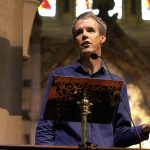
Adrian Rosenfeldt
Dr Adrian Rosenfeldt teaches at Melbourne University. He is a journalist, public speaker and the author of The God Debaters: New Atheist Identity-Making and the Religious Self in the New Millennium (2022).