The government’s Budget reforms on negative gearing and capital gains tax will not solve the housing crisis overnight, but they represent the most ambitious attempt this century to rebalance Australia’s tax system and address intergenerational inequality.
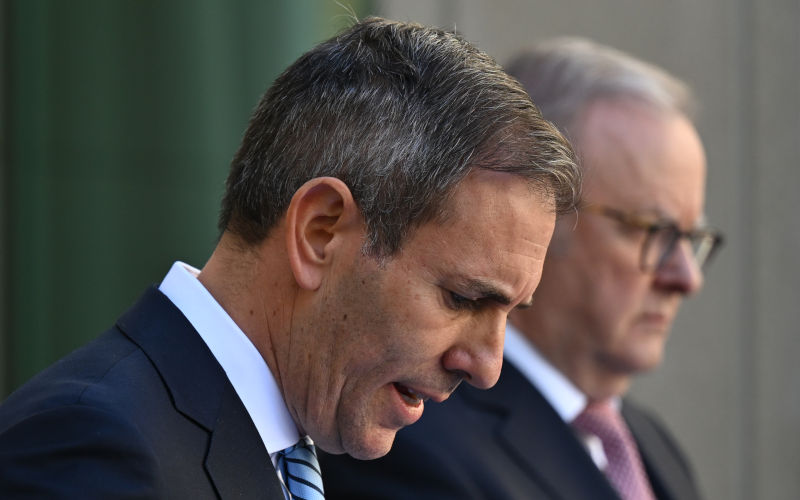
Treasurer Jim Chalmers’ fifth Budget is certainly the most ambitious of the Albanese government’s to date. It is probably the most consequential Budget since the first Budget of the Abbott Government, in 2014 – although, unlike that Budget, most of the measures in this one are likely to pass the Parliament. And although the tax reforms which are the centrepiece of the 2026-27 Budget are nowhere near as comprehensive as those introduced by Bob Hawke and Paul Keating in the mid-1980s, or by John Howard and Peter Costello in 2000, and they don’t involve as many dollars as Scott Morrison’s ‘three stage’ tax reforms of the late 2010s and early 2020s, they represent the most adventurous set of tax reforms seen so far this century.
For all that, there were almost no surprises in the Budget itself. To a greater extent than in any recent Budget, almost all of the ‘announceables’ in Tuesday nights documents had been leaked – intentionally or otherwise – in the weeks leading up to the Treasurer’s Budget Speech. That’s obviously given both supporters and opponents of the major measures in the Budget plenty of time to construct and hone their arguments.
Needless to say the most attention-grabbing elements of the Budget – and rightly so – were the changes to the income taxation system.
As widely foreshadowed, the Government will prevent purchasers of ‘established’ residential properties from being able to offset net losses on their investment against other income for tax purposes (‘negative gearing’) after 1 July next year – whilst retaining it for purchases of new dwellings (and for other assets such as shares), and ‘grandfathering’ existing property investments.
Additionally, the tax treatment of capital gains accruing after 1 July next year will revert from being taxed at half the otherwise applicable marginal rate (as has been the case since 1999) to being taxed at the full marginal rate less an allowance for the impact of CPI inflation on the cost base of the asset (the system which applied between 1985 and 1999).
This change will apply to existing investments (including those acquired before the capital gains tax was first introduced in 1985) – although only to capital gains accruing from July 2027 – but investors in new residential properties will still be able to access the 50 per cent discount on nominal gains if they prefer.
Finally, capital gains will be subject to a minimum tax rate of 30 per cent – in order to prevent investors from reducing their tax liabilities by crystallising gains in years when their marginal rate would otherwise be less than 30 per cent.
The government is presenting these measures as being intended to improve the prospects of younger Australians achieving the aspiration of owning their own home – something which has become substantially more difficult over the past 30 years, as residential property prices have increased at multiples of the growth rate of incomes.
It cites Treasury modelling suggesting that these measures will slow the rate of house price increases by around 2 percentage points a year, and enable around 75,000 more Australians to buy their own home over the next decade than otherwise. But it also suggests that the slower rate of increase in house prices will result in 35,000 fewer homes being built than would otherwise be the case – although it asserts that this will be more than offset by the additional funding the Budget is providing to accelerate the provision of infrastructure in new housing estates.
The Opposition will no doubt seize on this latter element of Treasury’s modelling to support its assertion that “if you tax something more you will get less of it” – in this case, housing supply.
In one sense they’re right – the measures in the Budget do represent an increase in the tax on (prospective) investors in existing residential property. But getting less of that would actually be a good thing. That’s because investments in established properties (which account for over 80 per cent of the money lent to property investors) do nothing to increase the supply of housing. All they do is add to upward pressure on housing prices, and add to the demand for rental housing (by out-bidding would-be home-buyers).
Although it’s not guaranteed, there’s a reasonable chance that restricting tax breaks for (prospective) investors in established housing whilst retaining them for investors in new housing may encourage investors to divert their attention to new builds – which would also be a good thing. And I’m not persuaded that the prospect of slower price appreciation will dampen the demand from owner-occupiers – who account for almost 60 per cent of lending for new builds – in the way that Treasury seems to assume.
So although the tax changes contained in this week’s Budget won’t solve Australia’s housing crisis on their own, they will over time make a meaningful contribution towards solving it.
Combined with the proposed 30 per cent minimum tax to be imposed on distributions from discretionary trusts, there is also an ‘inter-generational’ dimension to the tax changes in the Budget.
According to the latest available statistics from the Australian Taxation Office, only 4.4 per cent of taxpayers under the age of 35 report capital gains, compared with 8.6 per cent of those aged between 55 and 65, and 14.3 per cent of those aged 65 or over. And people aged 65 or over account for 62 per cent of all capital gains, compared with only 4.2 per cent for those aged under 35. And only 3 per cent of taxpayers aged under 35 are negatively-geared property investors, compared with 10 per cent of those aged between 45 and 65, who account for almost half of all reported net rental losses. And almost 19 per cent of taxpayers in the top tax bracket are negatively-geared property investors, compared with just over 6 per cent of those who are not in the top tax bracket.
The Budget also introduces two small tax breaks directed at people earning wages and salaries – the Working Australians Tax Offset and the $1,000 Instant Tax Deduction (in lieu of documented claims for work-related expenses). In no way do these represent a substitute for the indexation of tax thresholds for inflation – although the first of these measures is likely to be the primary vehicle for delivering future income tax cuts. But they do represent an attempt to narrow the differences between the way income from labour and from capital are taxed.
The government may well pay a political price for breaking the promises they made ahead of the past two elections not to make changes to negative gearing or capital gains tax provisions. However, if they can convincingly articulate the arguments which are there to be made for these changes – as they did for ‘re-jigging’ the Morrison Government’s ‘stage three’ tax cuts in the previous Parliament despite having promised at the 2022 election to ‘deliver them in full’ – then that price may turn out to be both small and ephemeral.
If that turns out to be the case, then I’d like to think the Government will feel emboldened to break another promise which they should never have made – to keep giving Western Australia $6½-$7 billion a year of GST revenue that it doesn’t need in order to provide its population with the average level of public services whilst levying on them the average level of state taxes. That’s something that a government which professes a commitment to equity, and which claims to be a ‘responsible’ fiscal manager, shouldn’t be doing.
The one thing that did surprise me about this week’s Budget was how little it did by way of conscious policy decisions to ameliorate upward pressure on inflation and reduce the risk of further increases in interest rates.
Yes, the government ‘banked’ all of the $41 billion of windfall revenue gains generated by higher inflation and commodity prices than had been assumed last December.
But the ‘policy decisions’ which it took between last December’s Mid-Year Economic and Fiscal Outlook and Tuesday’s Budget only improved the ‘bottom line’ by $8.2 billion over the five years to 2029-30 (less than 5 per cent of the deficits otherwise in prospect over that interval).
And those policy-driven improvements in the ‘bottom line’ are entirely in the two ‘out-years’ (2028-29 and 2029-30) – and are particularly dependent on the mooted savings from the National Disability Insurance Scheme (amounting to $36 billion over the Forward Estimates period – but with $28 billion of that coming in 2028-29 and 2029-30).
For the three years 2025-26 through 2027-28, ‘policy decisions’ actually worsen the ‘bottom line’ by more than $14 billion – including through almost $9 billion in net additional spending in 2026-27 alone. That’s the year in which the risks associated with on-going inflationary pressures are greatest – and the Budget does nothing to alleviate them.
The Budget assumes that the annual ‘headline’ inflation rate will come down from a peak of 5 per cent in the current quarter, to 2½ per cent by the June quarter of next year, on the assumption that oil prices fall from current levels to around US$80 per barrel over that interval. But it may not do so given that the Federal Government – along with the three state and territory governments which presented their budgets last week – are pumping billions of dollars back into the economy. So the risk of further increases in interest rates has not diminished.

Saul Eslake worked as an economist in the Australian financial markets for more than 25 years, including as Chief Economist at McIntosh Securities (a stockbroking firm) in the late 1980s, Chief Economist (International) at National Mutual Funds Management in the early 1990s, as Chief Economist at the Australia & New Zealand Banking Group (ANZ) from 1995 to 2009, and as Chief Economist (Australia & New Zealand) for Bank of America Merrill Lynch from 2011 until June 2015.