Housing tax reform shows how strongly tax settings shape behaviour. Australia should now shift more of the tax burden from work and employment towards consumption. (more…)
Category: Economy
-
A higher GST could strengthen state budgets – and leave poorer Australians better off
Australia’s GST is raising less as a share of the economy while state budgets deteriorate. A higher, broader GST could fund income-tax cuts, stronger welfare and more sustainable state finances. (more…)
-

Can Mariana Mazzucato’s ‘common good economy’ reshape capitalism?
In her new book, The Common Good Economy, Mariana Mazzucato argues governments should stop merely fixing market failures and start actively shaping economies around public purpose, shared rewards and the common good. (more…)
-

When Indonesia’s forests burn, what counts as wealth?
Indonesia’s economic rise has lifted millions from poverty, but wildfires, deforestation and resource extraction reveal the danger of measuring prosperity while ignoring the depletion of the natural assets that sustain it. (more…)
-

The thirty years that were never normal
The post-war decades created an extraordinary period of rising wages, affordable homes and economic security. Those conditions are gone. Politics must stop promising their return and start deciding how prosperity is shared in a slower-growth world. (more…)
-

Cutting migration won’t fix Australia’s housing problem
Australia’s housing crisis is the result of failing to build enough well-located homes, not excessive migration. Cutting migration instead risks weakening the economy while leaving the real problem untouched. (more…)
-

The great credit card surcharge swindle
The new card rules do not stop businesses passing on transaction costs. They simply require the advertised price to be the price customers actually pay. (more…)
-

If AI saves us time, workers should get some of it back
AI could transform productivity, but its greatest social benefit may be the chance to reduce working hours and return more time to people for family, health, recovery and community. (more…)
-

Australia is building AI capacity without the ecosystem to use it
AI delivers productivity gains only when firms have the skills, management capability, infrastructure and industrial networks to put it to work. Australia’s weakness lies less in the technology than in the ecosystem around it. (more…)
-

Want affordable housing? Build up, not out
Home ownership has become increasingly unaffordable because land prices have increased so much under population pressure. The only way to restore affordable housing is to increase urban density. (more…)
-

Aged care is turning the family home into an entry fee
Scarce aged care places increasingly favour families able to pay large accommodation deposits, drawing on housing wealth that may be the only debt-free asset shared across three generations. (more…)
-
Using interest rates to fight inflation is dumb, unfair and overdue for a rethink
Higher interest rates hit younger mortgage holders far harder than everyone else, making monetary policy both inequitable and inefficient. Inflation control should be spread more fairly across the economy. (more…)
-

Inflation and interest rates up. Who’s to blame?
The RBA has lifted rates to 4.6 per cent, concentrating much of the pain of fighting inflation on younger households with mortgages. A tighter budget could spread the burden more fairly, but serious spending cuts would mean poorer services. (more…)
-
The price of pork has hit $23 billion
The WA GST deal has cost almost $23 billion and left other states short. Political convenience is overriding fairness, independent advice and the national interest. (more…)
-
Interest rates: fighting inflation by punishing mortgage holders is not enough
Rate rises hit mortgage holders, first-home buyers and jobs, while doing nothing to fix many of the supply shocks driving prices higher. Governments need to carry more of the burden through taxation and responsible budgets. (more…)
-

Who says economic growth and social justice can’t go together?
Brazil and Spain’s finance ministers reject the idea that economic growth, fiscal responsibility and social investment must compete. They point to their governments’ records to make the case for an economic model that puts people’s lives at its centre. (more…)
-

What if we’re going to the shops for the people, not the shopping?
We go to shopping centres for more than the shops. They offer somewhere to meet, wander, sit or simply be among other people. What can these commercial spaces teach us about the places we need to feel connected? (more…)
-
The Intergenerational Report’s rosy outlook hides some hard budget choices
Australia’s 40-year economic outlook rests on a productivity rebound that may never arrive. Without it, governments face bigger deficits and harder choices about funding the services Australians need. (more…)
-

Could industrial AI be the answer to Australia’s productivity problem?
Australia’s biggest AI opportunity may lie not in building ever-larger language models, but in transforming manufacturing and industrial systems. Realising that potential will require investment in skills, research and access to computing power. (more…)
-

Preventing homelessness: pay the small bill before the big crisis
Sometimes preventing homelessness is as simple as clearing a rent debt or arranging housing before someone leaves hospital. While Australia tackles its housing shortage, practical early interventions could stop people losing their homes tomorrow. (more…)
-
Three reforms the IMF needs to make its lending work
As the IMF reviews how it designs lending programs, reforms to policy conditions, contingency planning and country ownership could better support economic recovery, development and democratic accountability. (more…)
-

Tech Bros: Making a fortune, finding fame and falling out
Atlassian’s rise made its founders Australian tech icons. ‘Tech Bros’ charts the company’s extraordinary success, immense wealth and the tensions now reshaping the relationship at its heart. (more…)
-
Power in Numbers: recovering the hidden history of Australia’s female economists
‘Power in Numbers’ tells the stories of 16 women who helped shape Australian economics, while raising questions about why the profession remains so male-dominated. (more…)
-
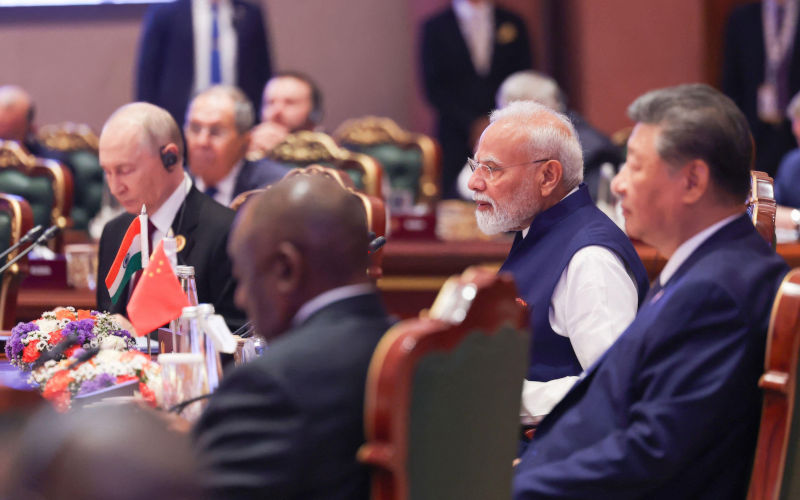
BRICS builds alternatives as Washington turns up the pressure
BRICS emerged from New Delhi with plans to deepen financial and technological cooperation, as US tariffs and sanctions push the expanded bloc towards practical alternatives to Western-dominated systems. (more…)
-
Australians want capable government – not simply smaller government
Australians still expect government to solve big problems and provide universal services, and evidence suggests they will pay more tax if it is fair and well spent. (more…)
-
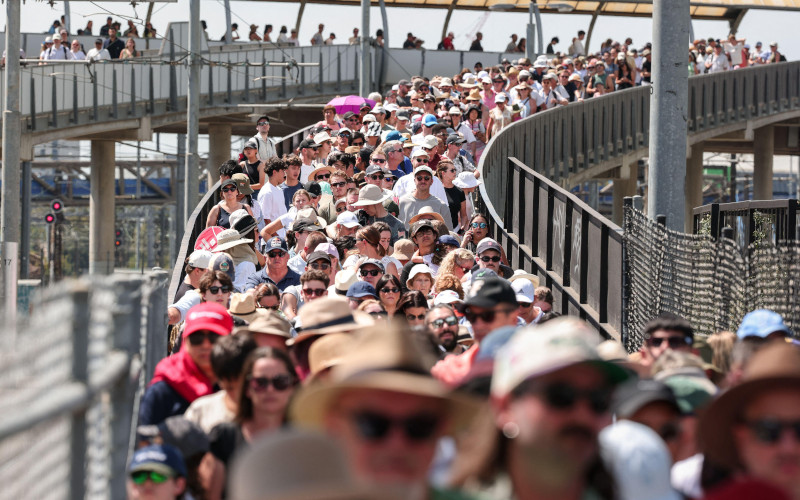
Population growth, environment and Australia’s economy
Australia’s population debate cannot be separated from environmental decline, inequality and economic wellbeing. With continued growth adding pressure, zero population growth deserves a serious place in the national conversation. (more…)
-

Both opposition parties have superannuation in their sights
The Coalition and One Nation are again targeting Australia’s superannuation system, despite evidence it has reduced pension reliance and warnings that early withdrawals could fuel inflation and weaken retirement savings. (more…)
-
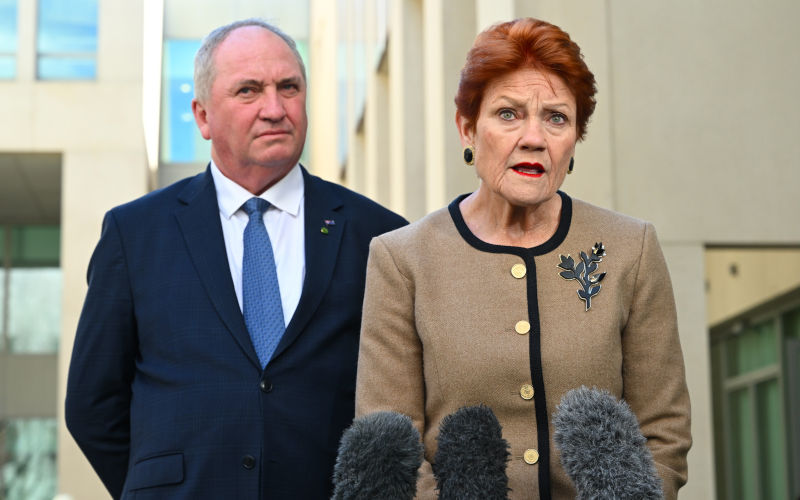
Work longer, wait longer, now borrow your own retirement back
One Nation’s super-for-housing plan offers immediate relief, but risks repeating a message its new midlife voters know well: solve the problem with your own money. (more…)
-

A visit to the West Bank: economic apartheid – part one
Israel’s tightening restrictions are deepening the West Bank’s economic crisis. In part one of a four-part series, Jeremy Webb’s first-hand account examines unemployment, movement controls and mounting Palestinian economic hardship. (more…)
-

Lower house prices should be welcomed
Restoring home ownership requires substantially lower house prices – and for most existing homeowners, falling property values need not leave them materially worse off. (more…)