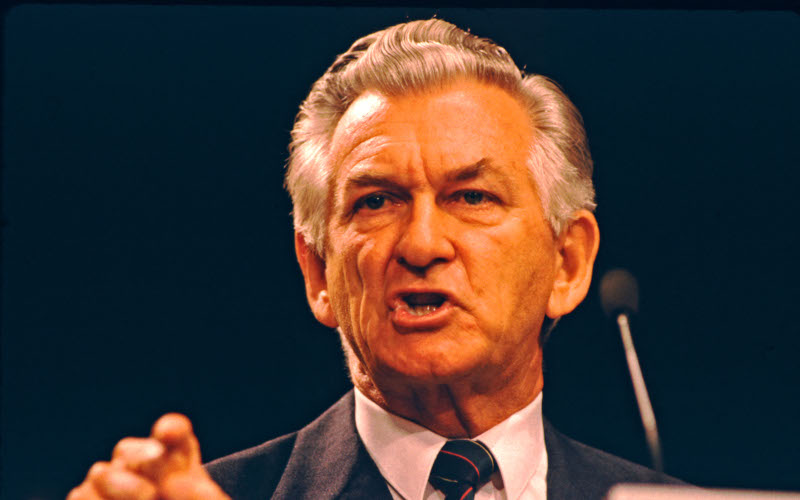
A new collection of essays on the Hawke government shows why its reform legacy rested not only on policy ambition, but on evidence, public service advice, Cabinet debate, consultation and disciplined political communication.
Was the Hawke government (1983 to 1991) the ‘gold standard’ in governance, as Gareth Evans, a minister in that government, contended in the introduction to his Cabinet diary (2014)?
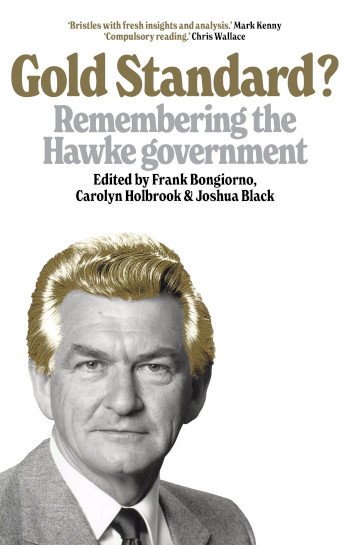 That was the question posed at a gathering of former ministers, advisers, scholars, journalists and policy analysts in Old Parliament House in 2023. Their discussions are reproduced in Gold Standard? Remembering the Hawke Government, edited by Frank Bongiorno, Carolyn Holbrook and Joshua Black.
Sixteen essays in this collection illustrate the strengths of the Hawke government and answer the question. Yes, it did set the gold standard because it mastered the art of combining politics and administration, which entails drawing on the evidence, trusting public service advice and consulting outside experts; allowing debate; and communicating the government’s philosophy, goals and policies.
This approach was fashioned from the top, by Bob Hawke, who had the leadership style, intelligence and diligence to prevail, and the nous to trust his colleagues and listen to their views. While the split with Keating gets plenty of airtime, in part because this has coloured so much of subsequent appraisals of the Hawke era, the Hawke-Keating partnership during most of the 1980s is mentioned over and over as key to the government’s success.
What was the government’s philosophy? Its signature was economic reforms – some in the book dub them ‘neo-liberal’, though that tainted term is misleading in this context – which opened the country to international competition. The success of these reforms relied on an accord with workers that produced wage restraint in return for a social wage (Medicare, education subsidies, social security).
These policies are the most discussed in the book, even though when Hawke looked back on his legacy, he said he was proudest of his environmental achievements (saving Tasmanian forests; World Heritage listings for Kakadu, the Daintree and Cape York’s Shelbourne Bay). He most regretted lack of progress on Indigenous reconciliation. Peter Yu discusses the latter in his essay.
Readers get various flavours of the Hawke years in the individual essays, written in a range of styles mostly by people who were involved at the time. Andrew Podger draws on his deep knowledge of public administration; Bruce Chapman displays his economist’s mind; Marion Sawyer adopts the language of feminism. A later chapter offers the conversational style of journalist Barrie Cassidy talking with Craig Emerson, both who worked in Hawke’s office.
Missing is a dedicated chapter on foreign policy. This is an oversight in a book produced to inform contemporary public administration, which is nowadays even more entangled in global trends than in the 1980s. Then, the Department of Foreign Affairs had much to learn about engaging with domestic policy and politics. It got a rude shock when it was amalgamated with the Department of Trade and became part of the economic reform agenda, which in turn drove the government’s internationalist outlook and attention to Asia.
A few international efforts get quick references – Bob Hawke’s determination to fight against the odds on the issues of apartheid and mining in Antarctica. How he won both campaigns makes fascinating reading in the book. However, almost nothing is said about Hawke and China beyond that he shed tears after Tiananmen, nor about his commitment to Israel.
In his conversation with Emerson, Cassidy observes the 24-hour news cycle that prioritises winning each day’s political stoush means policy is no longer centre stage in Parliament House. That said, he says politics started losing its way earlier, when governments abandoned having senior public servants running ministerial offices.
We need to be careful looking back. Frank Bongiorno reminds us to take heed of memory and nostalgia. We must also be wary of imposing the lens of the present on analysis of the past, even when we are looking for guidance. Carolyn Holbrook suggests the green and gold Medicare card may be on the way to being ‘a signifier of national values’. She cites Anthony Albanese’s use of the card during the 2025 election to support this view. But in the 1980s the Medicare policy was squarely part of the economic and social policy agenda: cheaper, simpler, fairer health insurance.
Life in the corridors of power during the Hawke years was blokey and intense. As Emerson recounts, his Saturdays were taken up supporting the PM’s passion for horse racing. Workplace standards have changed since then – and since the Brittany Higgins incident, practice too. This more regulated environment should still have room for a real partnership between politics and policy, which was at the heart of the Hawke government’s success. The challenge will be to reduce the influence of daily polls and well-heeled lobby groups and rebuild the public service.
What is more difficult to bake into any standard are the personal qualities of a leader. These essays all confirm that Hawke’s combination of intellect, charisma, people and communication skills, not to mention hard work, were integral to achieving Labor’s reform agenda.

Francesca Beddie is a former diplomat. She was general manager research at the National Centre for Vocational Education Research from 2007 to 2013. She is editor of Australian Garden History and co-editor of Circa, the journal of Professional Historians Australia. She is the author of A differentiated model for tertiary education: past ideas, contemporary policy and future possibilities.