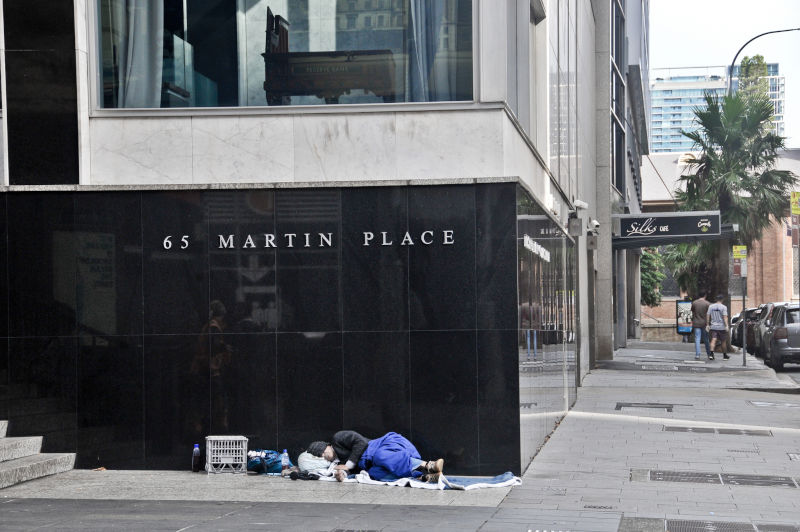
Australia has widespread public concern about homelessness, but reducing it at scale requires turning charitable support into organised advocacy for housing policy, social housing investment and systemic reform.
Every year, Australians donate millions of dollars to homelessness organisations. They attend fundraising events, sponsor sleepouts, buy tickets and give generously when asked. The public, by any reasonable measure, cares about homelessness.
And yet homelessness continues to rise. More people are sleeping rough, living in cars, or cycling through temporary accommodation with no clear path to anything permanent. Social housing waiting lists keep growing while rents outpace wages across much of the country.
This creates a genuinely uncomfortable question: if public concern is so widespread, why has it not translated into the political action needed to reduce homelessness at scale?
The answer is not that people don’t care. It is that we have built a system that channels their care toward actions unlikely to produce structural change. We ask people to donate, to volunteer, to attend events. We rarely ask them to become advocates, to contact their representatives, engage with housing policy, or help build the political will that addressing homelessness actually requires.
In effect, we have separated fundraising from advocacy. And in doing so, we have fragmented one of the most powerful assets the sector possesses: public support.
Many of the most effective social movements of the past half-century understood that money matters, but constituency matters more. The environmental movement asked people to campaign and contact elected representatives. The marriage equality movement built a constituency capable of shifting both public opinion and political calculations simultaneously. The HIV/AIDS movement combined service delivery with relentless demands for government action.
These movements understood that fundraising and advocacy were not separate activities, they were different expressions of the same strategy. The objective was never simply to fund a response to the problem. It was to change the conditions producing it.
By contrast, much of the homelessness sector continues to operate as though these functions occupy separate worlds: fundraising teams raise revenue, advocacy teams pursue policy reform, communications teams manage awareness. Each performs a valuable function. But collectively they often pursue parallel objectives rather than a shared theory of change.
The cost of keeping them apart
A donor gives money to a homelessness service and receives updates about meals served and crisis beds filled. What they rarely receive is a clear explanation of why homelessness exists, what policy changes would reduce it, and how they might help bring those changes about. The result is donors who understand homelessness services but not homelessness systems, the symptoms, but not the causes.
This matters because governments remain the only actors capable of reducing homelessness at scale. Only governments can meaningfully expand social housing, reform income support or reshape planning frameworks. If public concern never translates into political pressure, governments face little incentive to act proportionately. People may care deeply. But caring and acting are not the same thing.
A different theory of change
Communities that have achieved measurable reductions in homelessness have generally done two things at once: delivered high-quality services and deliberately worked to shift housing systems, policy settings and public investment. Housing First approaches, Advance to Zero communities and integrated prevention systems share this characteristic, they focus not only on responding to homelessness but on changing the conditions that produce it.
A more complete theory of change therefore looks like this: raise money, build public understanding, create political constituency, influence policy, expand housing solutions, reduce homelessness. Fundraising remains part of the equation. It is no longer the whole of it.
What this looks like in practice
Consider a simple change: every fundraising campaign includes two asks instead of one. The first is familiar, make a donation. The second is equally simple, take a political action. Write to your local representative. Support a housing policy reform. Attend a consultation. Encourage your council to prioritise affordable housing.
This is not partisan politics. It is democratic participation. Elected representatives respond to organised constituencies, and a donor has already demonstrated they care enough to act. The question is whether we are willing to invite them into the broader work of solving the problem.
The same logic applies to corporate partnerships and philanthropy. Too often, corporate involvement is structured around symbolic participation – a sponsored event, a photo opportunity, a feel-good outcome with no structural change. Too often, foundations fund excellent programs but invest little in the advocacy and systems coordination required to reduce homelessness at scale. Both can do more.
From empathy to action
The homelessness sector possesses something many social movements spend years trying to build: genuine public goodwill. Most Australians believe homelessness is a problem worth solving and want action taken. The challenge is not generating concern. It is directing it.
For too long, the sector has directed that concern almost exclusively toward charitable action. Charitable action matters. But homelessness is not primarily a charitable problem. It is a housing problem, a policy problem, a systems problem – and ultimately, a political one. Political problems require political solutions.
Australia already has the evidence, the expertise and the public support needed to make serious progress on homelessness. What remains is the willingness to align those assets behind a single, clear objective.
Not managing homelessness more effectively. Reducing it.
That is the difference between empathy and action. And it may well be the difference between a sector that responds to homelessness indefinitely and one that ultimately helps bring it to an end.

Fabian Webber
Fabian Webber is a community-sector leader dedicated to driving systemic change across housing, health, and homelessness in Central Queensland. As Program Development Manager at Roseberry Qld and Project Lead for the region’s CQ Zero initiative, he champions data-driven, person-centred approaches to ending homelessness, integrating Advance to Zero methodology with strong place-based collaboration. Fabian also serves as Chair of the CQ Housing & Homelessness Alliance, working closely with local councils, health services, and government partners to strengthen coordination, influence policy, and expand regional housing solutions.