More can be done in the way of disaster mitigation in Australia but the country cannot be proofed against floods, droughts and bushfires.
There is in Australia a widespread public belief that mitigation efforts can ‘proof’ the country against the impacts of floods, droughts and bushfires. The reality is that mitigation cannot achieve the complete result many wish to see.
A recent CSIRO study of the Richmond River system, where Lismore and several other communities were devastated by a huge flood in 2022, gives us clues as to why this is so. Extreme events in nature inevitably overwhelm the capacity of our efforts to ‘control’ them by using devices like levees and detention basins. Structures like those can ‘mitigate’, but they can’t prevent or solve the problem that flooding causes, especially in the context of extreme events that are usually rare in particular locations but nevertheless inevitable at some stage.
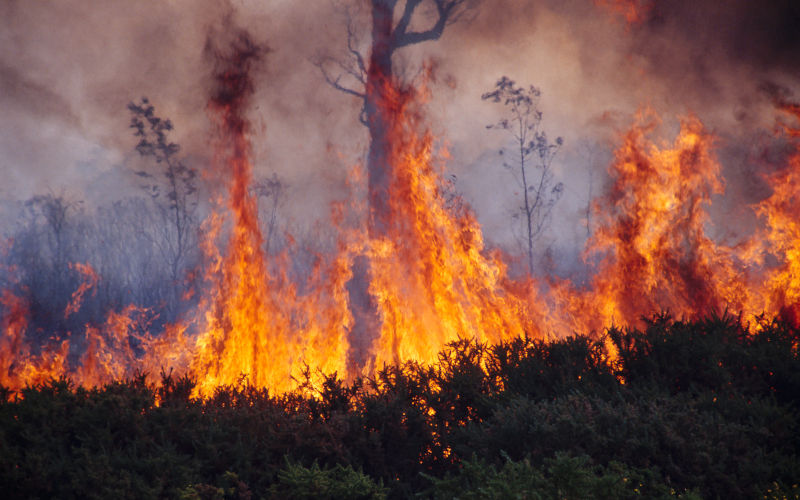
It’s the same with droughts and bush fires. There have been many schemes promoted to bring water south from tropical Australia to ‘fix’ droughts, and some advocate a much greater scale of hazard reduction burning to deal with the problem of bushfires.
The lesson is that we have to live with nature and what it brings. We can use the devices of ‘mitigation’ to reduce the impacts of potentially harmful events, but we cannot eliminate those impacts. To seek elimination distracts us from other things we can and should do – like taking care in how we use land itself or helping people to understand what they as individuals can do to manage events in their own best interests.
The CSIRO study of the Richmond Valley examined the potential for various mitigation devices to deal effectively with floods. Ten flood detention basins (created in effect by building small dams on several Richmond River tributaries) were considered, along with the restoration of the long-ago-drained 6,000-hectare Tuckean Swamp wetlands and the construction of an additional outlet of the river to the sea via a man-made canal.
The study assessed the impact of all of these measures, taken together, on the size of the 2022 flood at various locations. At Lismore, the flood’s peak would have been reduced by about two metres, at other locations like Kyogle, Casino and Coraki the peaks would also have been lower. To put the reduction at Lismore in context, the 2022 flood peaked at 14.4 metres on the local gauge next to the CBD and overtopped the nearby levee by more than four metres. The flood exceeded the previous Lismore record, established over 150 years of measurement, by more than two metres.
Clearly, Lismore’s levee would still have been overtopped in 2022 and the CBD and nearby residential areas would still have been flooded had all the measures proposed been in place. The problem would not have been fully overcome.
Any reduction in flood impacts is welcome. The identified measures for the Richmond River valley would clearly mitigate (that is, reduce) the problems, but they would not remove them entirely. And one has to consider the other implications of the measures. The detention basins would inevitably have negative impacts of their own – the loss of productive farmland, for example, and some disfiguration as a result of the construction of several concrete dams up to nearly 40 metres in height. The ‘canal’ to the sea would also mean farmland being sacrificed. And this is without factoring in the financial cost of the work needed: the cost-benefit studies have yet to be undertaken.
Much the same goes for drought mitigation, periodically touted in the media. The cost of giant schemes to bring water from northern Australia to the agricultural areas of the south would be colossal, which is part of the reason they have never been forthcoming. And to render bushfires harmless to human interests would require the virtual removal of Australia’s forests, and thus the habitat of its many unique and iconic animal species.
The costs of mitigation, financial and environmental, become prohibitive if we push the mitigating effort too far, and the benefits are never complete. Better to accept that mitigation is about reduction, not prevention. Even after these efforts have been undertaken, there remain problems to be dealt with.
This is where the responsibility of individuals comes in. For decades the Bureau of Meteorology has provided predictions of the heights floods are likely to reach at particular locations (such as Lismore) but there is much evidence that people fail to understand the warnings or the potential of a coming flood to affect them. More needs to be done by way of public engagement to help people comprehend the meaning of flood warnings, the ways in which a coming flood could affect them and what they can themselves do to limit those impacts. Nowhere has this challenge been met to the extent possible or desirable.
Then there is the issue of future development and the responsibility of councils in relation to residential and other development on flood-liable land. Floods have few impacts if there is no development but problems are guaranteed if development is permitted.
The Productivity Commission repeatedly points out the need to invest more on mitigating floods so as to have to spend less on flood recovery – but mitigation cannot carry the whole load. Councils have responsibilities, too, as do people in the path of floods. They need to do more, just as we need not to expect more of mitigation than it can deliver.

Chas Keys is a former academic and Deputy Director General of the NSW State Emergency Service. He writes about floodplain management, climate change, the culture, ethics and politics of cricket and other matters. He is a member of the Emergency Leaders for Climate Action (ELCA)