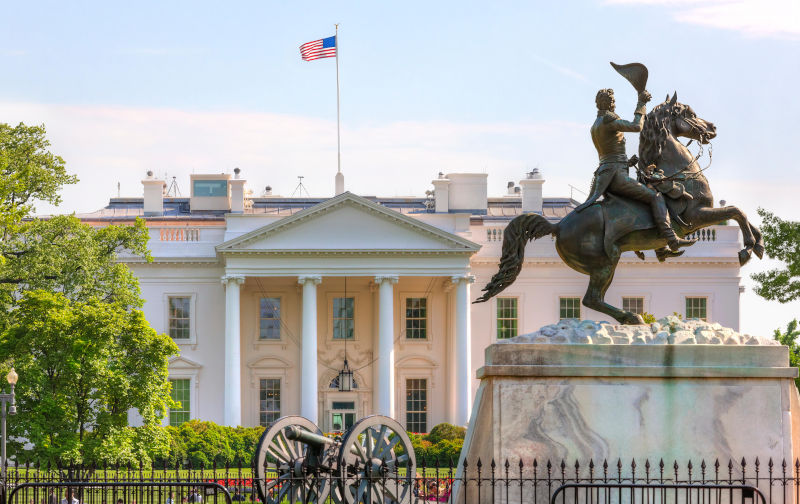
US foreign policy under Trump calls for bipartisan reaffirmation of Australian values and national interests.
Since 2016, Australia’s policy establishment has tried to square the circle between security and economic priorities. China’s status as an important trading partner could not be easily reconciled with support for US as Australia’s “best ally” in the effort to contain Chinese influence. This stubborn dilemma has become even more vexing. Australia now has to maintain its own values and interests while coping with US “regime change”.
Between 65 to 69 per cent of Americans now worry about their country’s future. The Lowy 2026 poll reports a freefall in Australians’ trust in the US to 31 per cent. The Swan/Halberman new bestseller book, Regime Change, concludes that the second Trump administration has wrought an unprecedented structural anomaly that constitutes nothing less than de facto “regime change”.
The disturbing list of American domestic institutional anomalies includes not only hogtying Congress and directly pressuring the Supreme Court, thus prejudicing basic constitutional checks and balances. Also on the list is politically differentiated punitive treatment of “sanctuary cities”; the president’s personal colonisation of professional agencies such as the Department of Justice, the Reserve Bank and the IRS; loyalty purges in the “War Department” and military brass; gerrymandering and interference with the states’ regulation of national elections. More than the American liberty bell is cracked.
“Regime change” is deeply impacting US international relations. How is Trump leading “the free world”? Displaying unqualified exceptionalism, he hails the US as “the greatest country in human history”. His polarised America, however, is not living up to the generous welcoming spirit that animates the Statue of Liberty. Allies in democracy are belittled. Autocrats are patronised. The Peace President threatens the annexation and extermination of other sovereign states. Indeed, he would claim the right to change state regimes.
His imperial executive authority extends beyond international law on political non-interference, non-aggression and invasion. Trump’s 38-minute 4 July 250th anniversary speech descended into his usual volatile mix of love and hate, heroism and villainy, but then he went further. While having insisted communism “never works”, he summoned communism from the dead, claiming that it threatens America, the “greatest force for peace and justice on earth”.
In the Cold War, Asia Pacific, British, Dutch, French and American imperialisms flagrantly disregarded national self-determination and the legal international legal equality of states. States were press-ganged into separate ideological camps. Alliances were justified on the basis of “regime”.
However, contrary principles of non-interference and non-alignment grew out of the extraordinary rejection of colonialism. Asia-Pacific states value their national independence. Do they want to be told who they engage with diplomatically, economically and culturally? Do they require that their partners have precisely the same “regime”? Must they always choose Australia as America’s ally to serve as “partner of first choice”?
What are the implications of US “regime change” for Australian values and national interests? Australia must clearly follow up on Paul Keating’s view that the country’s future must be outward facing and fully engaged in Asia.
Speeches by Foreign Minister Penny Wong at the Australian Institute of National Affairs on 17 November 2025 and Shadow Foreign Minister Ted O‘Brien at the National Press Club on 24 June 2026 suggest they both recognise regional geopolitical change. Neither, however, responded head-on to the US “regime change” thesis. They agreed “decoupling” from China is not in Australia’s national interest but there were crucial differences.
Wong endorsed a “new architecture”, claiming to “prioritise dialogue with China at every level” but she worried lest the threat to democracy by unnamed others “tear at the fabric of our cohesion”.
As a “practical businessman” with years of on-the-ground Asia-Pacific experience, including in China, Japan and Taiwan, O’Brien may have moved closer to Whitlam and Keating than Wong. He would excise ideology from Australia’s relationship with China. He urged a less confrontational approach to US–China regional rivalry and called for enhancing the correlation of economy and security in a rational way. Ignoring the history of prickly Liberal-National animus towards China, his analysis downgraded regime difference.
O’Brien eulogised Australian “convict roots” that dislike “vanity”, aristocracy and repressive authority, and praised the native predisposition to plain speaking and a “principled pragmatism”, which sees the world as it really is. He keenly asserted Australia’s independence as a middle power that must exercise its diversified options. States are “states”. No matter what the regime they will pursue the national interest. Different regimes claim peaceful intentions while relying on deterrence as a “margin of force”, yet state regimes with different ideologies can focus on a cooperative framework, seeking security and economic success, based on equality, reciprocity and mutual benefit. Peaceful cooperation is not exclusively a liberal democratic option.
Today’s geopolitical context requires a wise fortitude, predicated in patience and alacrity. Imprudent recitation of Cold War ideology and regime difference should not be allowed to confound healthy cooperation. Policy must maximise the sweet spot between the competing priorities of security and economy. Australian values and national interests must be re-affirmed in plain language.
In 1996, after Pauline Hanson was dis-endorsed by the Liberal Party, she went on to campaign against “Asians swamping Australia”, handily winning the seat of Oxley. Paul Keating caricatured her rise as that of “a very ugly, resentful, xenophobic cat that has been let out of a bag”. Hanson now trades on a contrived national crisis due to the “utterly flawed policy of multilateralism”.
Given the US regime change and developments in the Asia Pacific region, Hanson has remarkably pulled ahead of the LNP even as her “monoculture” creates such perverse negativity. Genuine Australian values and interests need to be asserted against a retrograde return to White Australia. Who will put the cat back in the bag? Angus Taylor, the Rhode Island scholar, the Oxford DPhil in Economics and acclaimed policy wizard, should not have pussy-footed around “monoculture”. It is a devolved pernicious patriotism. Albanese now lumps together right-wing Liberals, Nationals and One Nation as a collective “axis of grievance”.
It would be more gratifying if the two established parties cooperated in a full-on bipartisan repudiation of “monoculture”, particularly given US regime change and the possibility of diversified opportunities to progressively engage China in the Asia-Pacific.

Ronald C. Keith received his PhD in Politics at the School of Oriental and African Studies, University of London. He retired as Head and Professor of Political Science in 2006 at the University Calgary where had taught courses on China and international relations for more than 25 years. He retired a second time as Professor of China Studies at the Department of International Business and Asian Studies, Griffith University, 2015. He has published 17 books and 48 articles in major refereed journals, focusing on China. The present article especially draws on his books, The Diplomacy of Zhou Enlai, The Foreign Policy of Deng Xiaopingand China Change and Confucian Benevolence.