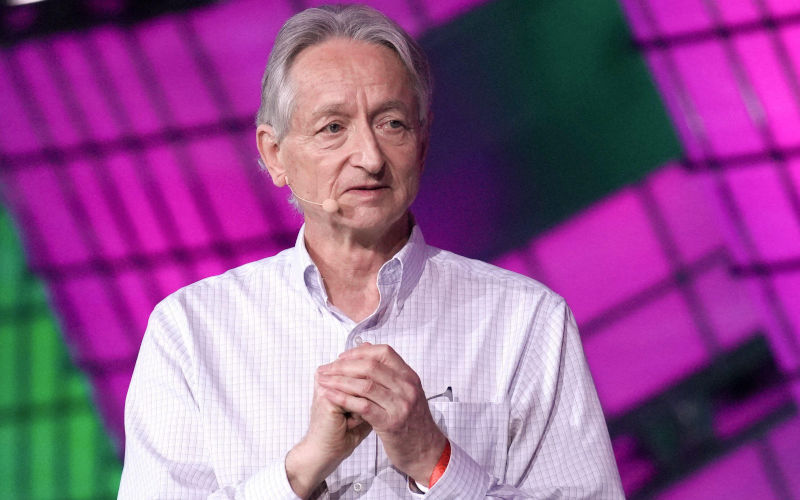
Warnings from AI pioneer Geoffrey Hinton make the risks of artificial intelligence harder to dismiss – and the case for robust controls much harder to postpone.
I don’t know about you, but I need help sorting through all the existential threats facing us right now to work out which ones I really need to worry about.
Until this week, AI had been firmly in the ‘need to know a lot more but no need to panic’ part of my brain. Perhaps this was just an overload response, but I found the ‘every new technology has its enemies’ line pretty convincing.
And besides, for every bad story there seemed to be a good one: job losses versus life-saving health applications, university essays by ChatGPT versus an invaluable research tool. AI is a wickedly complex topic with shades of grey like every complex topic.
But this week, one casual line, ironically found in a social media post, that AI just might wipe out the entire human race, ignited global angst. Apparently, this has been a matter of water cooler chat among tech bros for some time, but to the rest of us it seemed a little more important.
But even then, it wasn’t until I heard a man they call the godfather of AI – Geoffrey Hinton – on the radio telling us exactly what AI can already do, that I was worried. It was late in the interview; the Nobel laureate in physics (2024) had already said it was not unreasonable to put the chance of AI wiping out humanity at 10 per cent, and explained exactly how it would be able to do it. It was the actual examples of what AI could already do that pulled me up. Not stuff it might be able to do, but stuff it could already do.
“We’ve seen them [AI] threatening to blackmail people if they’re turned off…”
“They … develop deception. They develop all the kind of weaselly things that nasty people develop.”
There were plenty of ways that the AI apocalypse could take place, but that was beside the point, he said. The man who pioneered the neural network methods behind modern AI and left his job at Google so he could talk openly about this said:
“The point is, we have to figure out how it never wants to.”
So if we really are smarter than AI, we need to act before it gets smarter – and nastier – just like some of us.
And by ‘we’, I mean government, community and industry working together to establish robust controls. Surely we are smart and determined enough to do that?
In much better news, it has been a delight to report this week that the long-running case against journalist Mary Kostakidis has been discontinued. John outlined the case, calling it a victory for free speech, something the mainstream failed to do. Mary told us, in her own words, of the silencing effect this kind of action inevitably has on even the bravest advocates. Gabriel Shipton reminded us of the staunch support Mary gave his brother Julian Assange, and how important this kind of courage is to democracy.
Finally this week, we enter the final fortnight of our fundraising campaign. Remember, our independence depends on you. Become a regular supporter if you can.

Catriona Jackson is the Chief Executive and Editor of Pearls and Irritations.