Drawing on a submission to the Royal Commission on Antisemitism and Social Cohesion from the Group of Six, Vasiliki Nihas Bogiatzis argues Australia needs a broader understanding of social cohesion grounded in fairness, rights, belonging and democratic trust.
It is rare to hear a Treasurer speak of “social cohesion” on Budget night, rarer still to hear one confess it keeps him awake because we’ve lost sight of its connection to the “fair go.” Jim Chalmers did both on the ABC’s 7.30 after delivering Australia’s 2026 Budget.
He is right to be troubled. “Social cohesion” is a limited, contentious term that falls short of speaking to our better natures. It inadequately addresses structural inequity, human connectedness, fair access, dignity, belonging, diversity, human rights, and political trust. Nor does it place Indigenous Australia at the forefront of our national identity. To be fair, it’s a big ask.
We are asking a great deal of two words. As well as fairness they must now encompass national identity and address the “we” rather than the “me” of our nation. This is why definitions matter, why they must be challenged, and why robust legal and parliamentary institutions remain critical. The law is society’s final arbiter and it does the heavy lifting to protect citizens from harm.
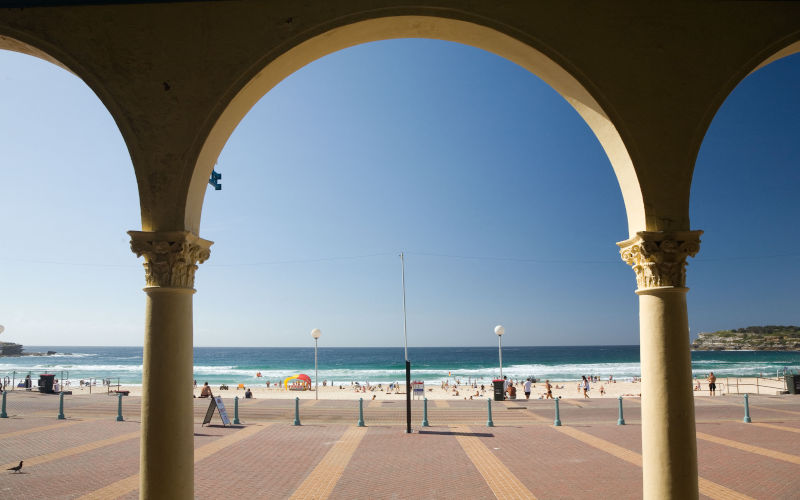
The antisemitic terrorist attack at Bondi Beach during Hanukkah on 14 December 2025, claiming 15 innocent lives, thrust “social cohesion” into urgent public discourse, proving it is sometimes easier to define in the negative.
The term appears in the Royal Commission on Antisemitism and Social Cohesion, residing near de-radicalisation. This coupling of terminology, configured almost as problem and solution, prompted us, as a Group of Six (GOS) former senior public servants and community activists, to offer a submission in deep respect for the gravity of the Commission’s work. In brief, we seek reconsideration of the definitions of “antisemitism” and “social cohesion,” and identify similarities across communities that could forge strong alliances against radicalisation and extremism.
Defining antisemitism: Our submission contends that the International Holocaust Remembrance Alliance (IHRA) Working Definition, adopted by the Australian Government and invoked in the Commission’s opening proceedings, warrants reconsideration. The Jerusalem Declaration on Antisemitism (JDA) offers a clearer, more legally defensible framework, better suited to Australia’s multicultural context.
A definition too narrow risks leaving hatred unchecked; one too broad risks suppressing legitimate speech, political protest and academic inquiry thereby undermining the very social cohesion the Commission is charged with strengthening.
Strengthening social cohesion: The Commission’s dual mandate is achievable, but only if its definitional framework serves both goals simultaneously. “Social cohesion” is more accurately expressed through social connectedness, engagement, belonging, fairness, resilience and trust. These values require genuine engagement with “otherness” at individual and collective levels.
Shared drivers of radicalisation: We contend that a broader, inclusive conceptual approach will strengthen rather than dilute the focus on antisemitism. Radicalisation pathways are broadly consistent regardless of the group targeted; Jewish, Muslim or Indigenous Australians and others. Left unchecked, antisemitism normalises racial hatred and extremism across diverse platforms.
Recommendations
Informed by Australian and international evidence, including case studies in interfaith dialogue, community relations and facilitated dialogue, the submission urges the Commission to consider:
Defining antisemitism
1.That the Commission decline to recommend the IHRA Working Definition of Antisemitism as the sole or primary definitional framework for Australian law, policy, institutional practice, or funding decisions relating to antisemitism.
IHRA definition:
“Antisemitism is a certain perception of Jews, which may be expressed as hatred towards Jews. Rhetorical and physical manifestations of antisemitism are directed towards Jewish and non-Jewish individuals and/or their property, towards Jewish community institutions and religious facilities.”
2.That the Commission recommend the adoption of the Jerusalem Declaration on Antisemitism (JDA) as the primary working definition for Australian institutions, or at minimum, as a companion framework to guide and constrain the application of the IHRA definition.
JDA definition:
“Antisemitism is discrimination, prejudice, hostility or violence against Jews as Jews (or Jewish institutions as Jewish).”
3.That any definition of antisemitism adopted in Australia be accompanied by explicit protections for freedom of expression, including lawful political protest, artistic expression and academic inquiry relating to Israeli state conduct and the Israel-Palestine conflict, consistent with Australia’s obligations under international human rights law.
4.That funding decisions relating to universities, arts organisations, media and cultural institutions not be made by reference to the IHRA definition without clear, independently reviewed guidelines that safeguard free expression and academic and artistic freedom.
Strengthening social cohesion
1.That the Commission support a broad government led discussion clarifying and updating terminology around “social cohesion” and “multiculturalism.”
2.That this include community facilitated dialogue forums using inter community techniques as pioneered by Emeritus Professor Joe Lo Bianco, University of Melbourne.
3.That the Commission support full implementation of the 2024 Multicultural Framework Review, Towards Fairness: A Multicultural Australia for All, including its 29 recommendations.
4.That the Commission support development and enactment of a Multicultural legislative framework codifying the rights and responsibilities of all citizens in a multicultural Australia.
5.That the Commission recommend legislating a Human Rights Act as a central structural reform, addressing systemic gaps in rights protection and strengthening what Human Rights Commission President Hugh de Kretser described as “fraying social cohesion,” with consideration given to incorporating a Multicultural Act within it.
6.That the study of Multiculturalism in Australia be incorporated within the school civics curriculum.
Bondi continues to confront our sense of national identity. Yet it also produced a powerful symbol of multicultural success. Ahmed al Ahmed, a 43-year-old Syrian Muslim, wrestled a weapon from one of the gunmen, was shot twice, and likely saved countless lives.
Our capacity to prioritise shared humanity above religious difference and ideology speaks to who we are as Australians.
You are welcome to read the full submission here. If you wish to endorse or comment on the GOS submission please log on at: Submissions | Royal Commission on Antisemitism and Social Cohesion
Group of Six
Vasiliki Nihas Bogiatzis OAM
Marie Coleman AO PSM
Helen L’Orange AM
Steve Mark AM
Christopher Scarf,
Jozefa Sobski AM