The new national framework for AI is all about infrastructure. Where are the guardrails to protect citizens?
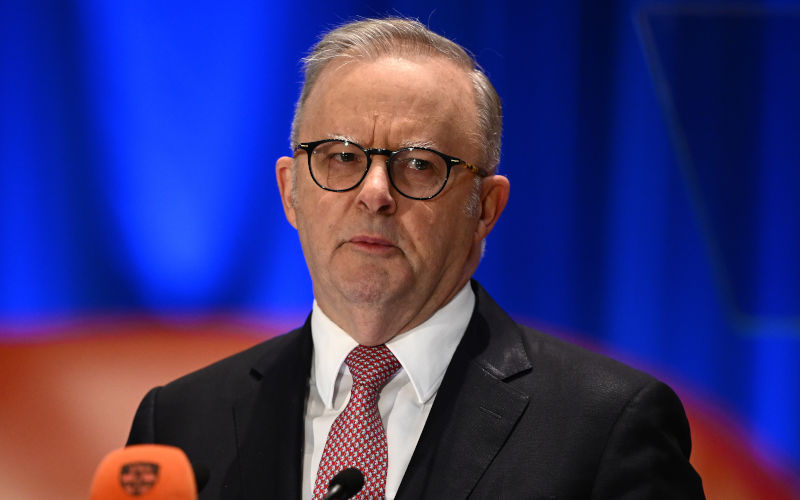
On 15 July 2026, the Prime Minister stood at the University of Sydney and announced a new national framework for artificial intelligence, a new Office of AI, mandatory standards for data centres, and a renewed pledge that creators keep control over their work. Legislation is promised for 2027.
This was presented as a government finally getting serious about AI. But look at what came before it and a different picture forms: a government that has spent 18 months quietly retreating from the one part of AI regulation that was actually about protecting people, while dressing the retreat up as progress.
In September 2024, then Industry Minister Ed Husic proposed 10 mandatory guardrails for high-risk AI. Two of them mattered more than the rest: a requirement for meaningful human oversight of AI decisions, and a right for anyone affected by an AI decision to challenge it. Alongside them sat requirements for testing, risk management, transparency for end users and a certified assessment of compliance. This was, whatever its flaws, a genuine attempt at citizen-facing regulation.
It did not survive contact with the review process that followed. In August 2025, the Productivity Commission’s interim report recommended AI regulation be treated as a last resort and that work on the guardrails be paused, citing a projected $116 billion economic benefit. By December 2025, the guardrails were shelved for good, replaced by a National AI Plan that leaned on existing law instead.
None of this happened in a vacuum. A disclosed ministerial meeting brief reveals the current Industry Minister, Tim Ayres, and his assistant minister met Tech Council of Australia chair Scott Farquhar in May 2025. The Council argued existing regulation was sufficient. The industry group DIGI, representing Meta, Google, Microsoft and Apple, made the same case publicly. This does not prove the meeting decided the outcome. It does confirm that industry had access to government when the citizen-facing guardrails were being wound back but when no equivalent forum existed for the people those guardrails were designed to protect.
Set the 15 July 2026 announcement against what was lost in December and the substitution becomes obvious. The new Australian Standards for AI address data centre energy supply, water use, connection costs and investment approval speed. They restate copyright protections for creators. All worthwhile. None of it is what the 2024 guardrails were built to do.
There is nothing in the July announcement giving a person the right to know when an automated system made a decision about them, or a process to contest that decision, or any guarantee that a human remained meaningfully in the loop. The government’s own release says AI consumer safety priorities will be outlined “in coming weeks”. No date attached, no detail offered 18 months after the mechanism that would have delivered exactly that was shelved.
It is also worth being precise about what was actually announced. Legislation is not due until 2027. Until a bill is drafted, debated and passed, the framework described on 15 July is a statement of intent, not an enforceable rule. That is a meaningful gap. Reporting that treats an announcement as though it were already law does readers no favours.
Criticism of the government’s approach has come from opposite directions, which is itself revealing. The Coalition dismissed the new Office of AI as unnecessary bureaucracy. Greenpeace Australia called the delay to 2027 a betrayal that leaves data centres with a free pass in the meantime. Both cannot be right in the way each intends, but both confirm that the substance of AI regulation, whatever it should look like, has not yet been settled, and will not be settled by an announcement alone.
None of this means the AI standards are worthless. Data centre energy and water obligations matter, particularly as demand scales up with the government’s stated enthusiasm for AI-driven productivity. Copyright protection for creators matters too, and the government deserves credit for holding that line against industry pressure for a training-data exemption in October 2025.
However, a national AI framework that regulates infrastructure and content while leaving citizens without a right to know about, or challenge, automated decisions made about them is not a completed project. It is half of one. The public consultation on the 2027 legislation has not yet opened. When it does, whether the guardrails abandoned in 2025 make a reappearance, in substance rather than announcement, will be the real measure of whether this government intends AI regulation to protect the public, or simply to manage the industry building it.

Sue Barrett
Sue Barrett is a business leader and community activist based in Goldstein, committed to fostering dialogue and fairness in Australian democracy.