
The very modest superannuation changes have been well received by most people, but the worry is the unwillingness of the Government to acknowledge, let alone tackle, the much bigger fiscal challenges that lie ahead. (more…)
Michael Keating
-
A sovereign SSN capability and Australia’s national security strategy
There is no way that the UK or the US would ever contemplate surrendering sovereignty over the control of its military operations to any other power. Australia should not either. If Australia is to acquire a fleet of SSNs, the government needs to negotiate an agreement that avoids counter-productive short cuts and ensures sovereign control of what would be an immensely valuable capability for the Royal Australian Navy. (more…)
-

Hard power and Australia’s national security strategy
The previous two parts in this series addressed soft power and Australia’s alliances respectively. The focus of Part 3 is hard power and a discussion of self-reliance and Australia’s evolving military strategy. (more…)
-

The role of alliances in Australia’s national security strategy
While alliances and treaties offer some protection against an aggressor, they cannot be counted upon. Australia needs to maintain an independent military capability to deter possible future threats to our independence – not least because we cannot rely on the US in all possible future circumstances. (more…)
-

Australia’s National Security Strategy
To paraphrase former US President, Theodore Roosevelt, Australia’s national security is best achieved by talking softly while carrying a formidable stick as a deterrent. (more…)
-
Jim Chalmers’ manifesto in favour of values-based capitalism
The Treasurer, Jim Chalmers’, recent essay in The Monthly explores the relationship between the state and the private sector, and how that matters for the problems of our time. (more…)
-

Economic growth and our environmental future
A spate of articles have argued protection of the environment is incompatible with population and economic growth. But they do not address how to stop this growth and its public acceptability, nor how more determined efforts to protect the environment can succeed. (more…)
-
What does Robodebt say about the APS policy advising capability?
The Royal Commission has focused on the legality of the Robodebt scheme, but the failure of policy judgment and advice seems at least as damaging. (more…)
-

Facing a global economic slowdown, the Labor government will need a new strategy to rise to the economic challenges ahead
The Albanese Labor Government has had a very good first six months, however the challenges that lie ahead will be much more demanding. The Government needs to articulate its vision of how our social cohesion depends upon creating an Australian society that is caring and with reasonable equality of opportunity as the foundation for why public expenditure and additional tax revenue is necessary. (more…)
-
Morrison’s self-appointment to administer six departments
Morrison’s self-appointment to six portfolios says a lot about his contempt for the quality and integrity of decision making under his government. The response by PM&C officers, who were in the know, also raises questions about how adequately they exercised their responsibility for good government. (more…)
-

Employers cry wolf once again
Low wage growth has held the Australian economy back. Contrary to the employer’s scare campaign, the Government’s proposal to facilitate multi-employer bargaining offers the prospect of some improvement, especially for those employees whose bargaining position is weakest. (more…)
-

Budget Repair: Tax increases or expenditure cuts?
The Treasurer wants a national conversation about how best to repair the Budget. But that conversation will only help if it is based on a realistic analysis of the difficulties involved in achieving lower spending and therefore why tax increases must be on the agenda. (more…)
-
The Albanese Government’s first budget: so far so good
As best can be judged at this point of time, this Budget gets the balance right between the need to bring inflation down while avoiding a recession. But many difficult decisions lie ahead. (more…)
-

What do we need from next week’s Budget? An increase in tax revenue
The biggest budgetary challenge is to correct the inadequate funding of essential services. Hopefully this Budget will help initiate the necessary national conversation to correct this fundamental defect. In short, a significant increase in tax revenue is required. (more…)
-

What can we expect following the Jobs and Skills Summit?
In contrast to the policy vacuum left by the previous Morrison Government, Labor’s Jobs and Skills Summit has paved the way for Australians to work constructively together on the challenges facing the labour market and the economy. For reasons of space, this present review focuses on the major policies announced at the Summit and their likely impact. (more…)
-

Many jobs summit ideas for lifting wages don’t make sense – upskilling does
Treasury’s issues paper for the jobs summit says fair pay and job security “strengthen communities, promote attractive careers and contribute to broad-based prosperity”. (more…)
-

Monetary Policy: How far will interest rates need to rise and how fast?
In response to higher inflation since the beginning of May the Reserve Bank has aggressively increased interest rates, albeit from an exceptionally low level. From here on, however, a more cautious approach is needed. (more…)
-

A way forward with Labor’s climate change legislation
Effective action against climate change requires Labor’s legislation. Hopefully the compromise necessary to pass this legislation can be achieved if the target set is for the minimum reduction in carbon emissions required. (more…)
-
Rising interest rates – will there be a soft landing?
Inflation is outside the target zone in all developed economies. Central banks are responding by increasing interest rates. But the critical question is whether monetary policy can bring inflation down without causing a recession. (more…)
-

The Outlook for Living Standards: Part 3
Previously Part 1 of this article assessed the impact on living standards from surging prices relative to wage growth, and rising interest rates. Yesterday, Part 2 considered what the new Labor Government can do to lift the rate of wage growth relative to prices. Today, Part 3 discusses how best to respond to the two principal drivers of the increased cost of living – fuel and energy costs and housing costs. (more…)
-
The Outlook for Living Standards: Part 2
Yesterday Part 1 of this article assessed the impact on living standards from surging prices relative to wage growth, and rising interest rates. Today, Part 2 will consider what the new Labor Government can do to lift the rate of wage growth relative to prices, and tomorrow Part 3 will consider how best to respond to the two principal drivers of the increased cost of living – fuel and energy costs and housing costs. (more…)
-

Michael Keating-The Outlook for Living Standards: Part 1
A critical challenge facing the new Labor Government is its response to the upsurge in inflation and the threat to living standards. In Part 1 today this article discusses the dimensions of this challenge. Parts 2 and 3, tomorrow and the next day, will consider possible government responses. (more…)
-

The future budget outlook
As the Treasury Secretary, Steven Kennedy, made clear last week the future Budget outlook is exceptionally difficult. He noted the “pressures to raise more revenue over time” and saw no scope to lower taxes in future. (more…)
-

A comparison of Labor and the Coalition’s policies to assist first home buyers
Australia has a problem of housing affordability, but it is mainly concentrated among the poorest young families. Labor’s housing policies are better directed to improving their equality of access, but neither of the major political parties’ policies are adequate to the task. (more…)
-

Why this election campaign is so disappointing
Proposals for policy reforms in this country are most often hamstrung by the lack of government revenue required to implement them. Unless this impediment is overcome, many very worthwhile proposals for reform will continue to be ignored. (more…)
-
Wages and the cost of living
An increase in the wages of the lowest paid employees, so that they can keep pace with the cost of living, is unlikely to lead to higher unemployment. Instead, it may well help improve overall economic outcomes. (more…)
-
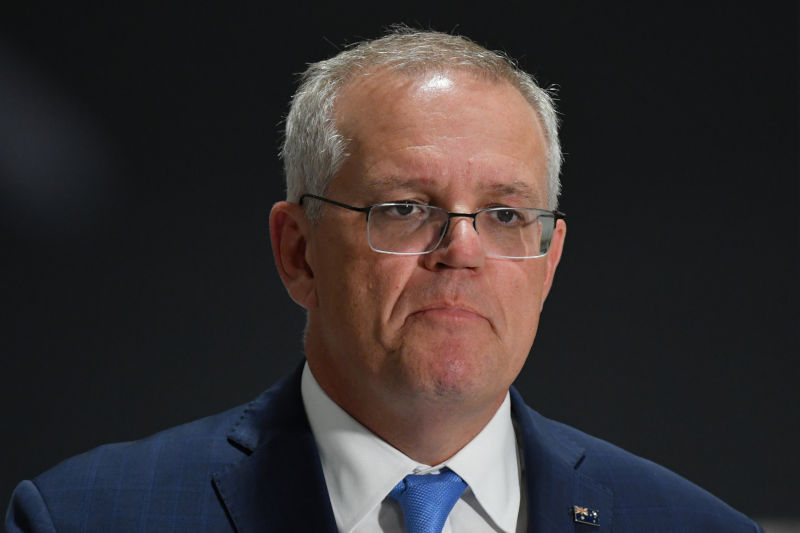
Government Integrity and an ICAC
There is a legislated process prescribing how government grants should be administered, but it clearly is not being followed and we need an integrity commission to enforce it. (more…)
-

The Coalition is guaranteeing essential services and lower tax. We can’t have both
In the midst of Labor’s campaign about the cost of living, the Coalition has zeroed in on one of those costs – taxes – and guaranteed to stop them rising. (more…)
-

The funding of essential services
The key purpose of a government’s budget is to propose the spending on essential government services and how that spending will be financed. Judged by this standard, the latest Budget is completely inadequate and belies the claims of the Morrison Government to be competent economic managers. (more…)
-
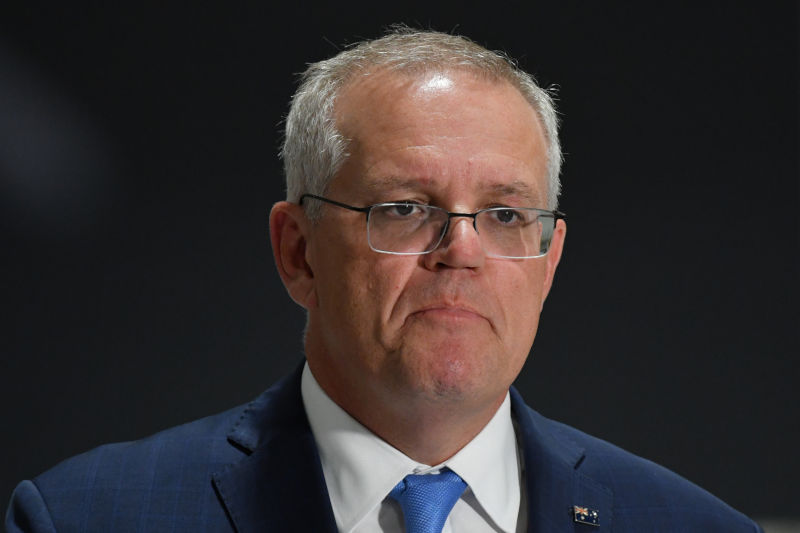
How competent is Scott Morrison as a manager of government business?
Scott Morrison wants the election to be about competence, but an examination of his record suggests that he is not capable of delivering good government. (more…)