South Australia underwent a significant renewables transition under successive ALP governments from 2002 until 2018. In 2002 SA generated its electricity locally from brown coal and gas and imported around 30% of its annual needs from Victoria where brown coal production dominated. There was no production from renewables. Jump to 2018, when the ALP lost office after 16 years, and the state was generating 52% of its electricity from renewables with the remainder from natural gas, with 3% of net annual production being exported east. (more…)
Category: Climate
-
Sunday environmental round up.
Greta Thunberg accuses world leaders of pretending to tackle climate change. Ecocide gets a legal definition – President Bolsonaro beware! Economic viability of gas power plants justified on false assumptions and lots of reasons why nuclear isn’t the answer either. Australia’s emissions per person not as praiseworthy as the government would have us believe.
-
Carbon Offsets are a Delusion
Any government, corporation, industry or nation, that is relying on carbon offsets to justify claims to be “Net Zero” is relying on bogus accounting – looking at the credits whilst sweeping the debits under the carpet. -
A choice between national happiness – and national misery
Australia treats its environment with indifference. Yet the evidence is mounting that the environment is at the heart of national wellbeing. One country is showing the way.
-
Sunday environmental round up.
Marine algal blooms are increasing but not everywhere, while bottom trawling fishing releases vast amounts of CO2. Earth is trapping even more solar energy than expected: anthropogenic or meteorological? Whichever, every fraction of a degree of global warming wipes out another glacier. Lessons from wartime Canada.
-
Australia ranked dead last in world for climate action in latest UN report
Australia has been ranked dead last for climate action in the latest Sustainable Development Report, which assesses the progress of countries towards achieving the Sustainable Development Goals. (more…)
-
Carbon Leakage: the Achilles heel of climate change
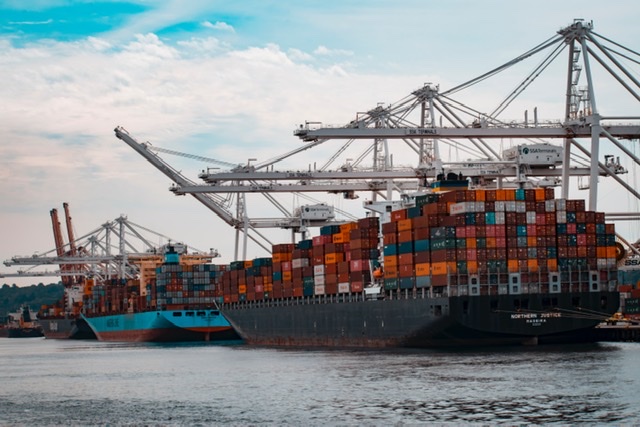
Not dealing with “carbon leakage” has plagued emission reduction negotiations since the United Nations Climate Change Convention of 1994. It led to the failure of the US to ratify the 1997 Kyoto Protocol, then the Protocol itself, and may well lead to the demise of not only the 2015 Paris Accord but the WTO.
-
Sunday environmental round up.
Food farming is an important source of air pollution, no matter how much the industry denies it. Urgent measures needed to ensure that the energy transition has the metals it needs. Thirty years of climate change diplomacy doesn’t seem to have achieved much.
-

The Senate’s nuclear waste dilemma
The Australian Senate is poised to vote on a controversial nuclear waste dump plan. It is an issue of national concern, but it has been pitched by the government as a matter only for the 824 eligible voters of the Kimba Shire. (more…)
-
The curse of coal and government health malfeasance
Policies which prolong the life of coal shorten the lives of many Australians and must be confronted – they are preventable deaths. It is distressing that ideology and ignorance have come to this. (more…)
-
Outcomes of the ‘Biodiversity, Natural Capital and the Economy’ Report at the G7 Summit
Following Australia’s extravagant claims to climate leadership at the G7, hopes for a more diplomatic approach were dashed by a Prime Ministerial statement claiming that “Australia is a frontrunner when it comes to taking action to conserve our biodiversity…” (more…)
-
The Great Barrier Reef in danger. But is there a China conspiracy afoot?
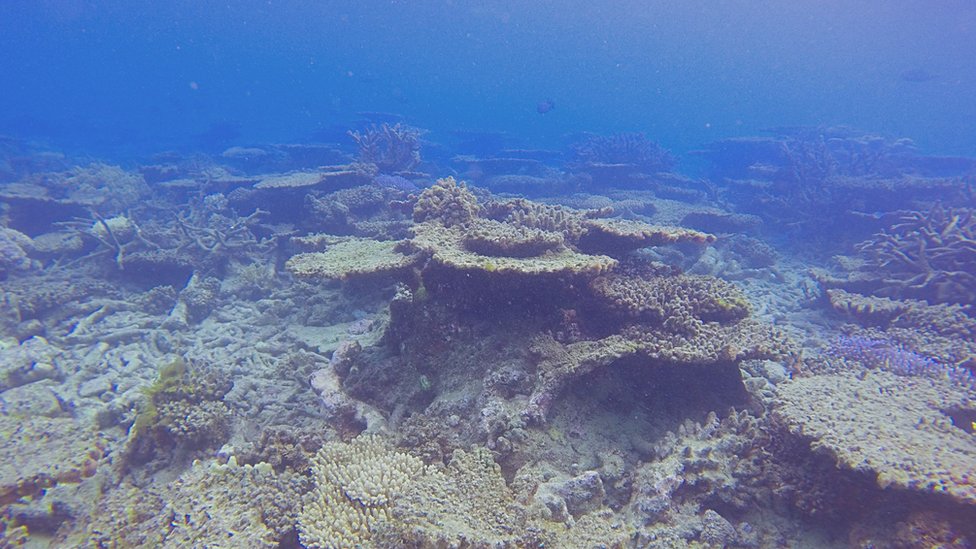
The Government deliberately fuelled a conspiracy theory that China must have been involved in the UNESCO report. It is alleged that the Prime Minister’s Office backgrounded journalists along these lines for the first 24 hours of the release. The Australian ran a story, China-led ‘ambush’ on health of the Reef. This was a complete fabrication to deflect from the substance of report.
-
The climate change runaway chain reaction process
Amplifying feedbacks are leading to runaway global warming. (more…)
-

Sunday environmental round up, 20 June 2021
The harmful health effects of climate change are under-recognised. Calls for a socio-ecological approach to tackling climate change and biodiversity loss together. Trends in the reporting of climate science. ‘Zombie’ fires in northern boreal forests, and LGBQTI+ activists stand up for climate change and human rights.
-
Solving the mega-risks
The world is awash with literature describing the deepening self-inflicted crisis into which humanity is pitching. I am frequently asked how we can solve it, presuming we wish to do so. Here, briefly, are the ten most urgent solutions.
-
Sunday environmental round up.
Ecosocialist advice for the G7’s leaders and encouragement to read a recent P&I article on carbon accounting. The price of solar panels is rising slightly and our sylvan friends are emitting ‘treethane’. Finally, a plea to dog owners.
-
Carbon border adjustments: what are they and how will they affect Australia?
Australia cannot continue to stand apart from other wealthy countries, free riding on their emission reduction efforts. Sooner rather than later, we will need to set commensurate targets under the Paris Agreement and implement policies to achieve them. (more…)
-
Climate tipping point looms
It is ironic that the most successful film – in box office terms – about climate change and dramatic changes to the earth was made by Rupert Murdoch’s 20th Century Fox. (more…)
-
Jobs versus climate
A debate between having a job and acting on climate change is painful for everyone involved and will not end well. Yet the absence of a clear narrative from our political leaders to clarify the issue is leaving many Australian communities in exactly that position. (more…)
-
After the G7, the G20 and COP 26 in Glasgow, what might be real progress on the climate crisis by the end of the year?
We’ve had President Biden’s ‘zoom’ climate Summit. The G7 meeting in Cornwall this week is looking to ramp up ambition on climate response. And the most significant UN meeting on climate change since Paris is taking place in Glasgow in November. Expectations are high. But with intense geo-political tensions and covid response concentrating attention, what progress might we realistically anticipate on climate change by the end of this year?
-
Atmospheric carbon dioxide hits highest level in more than 4 million years
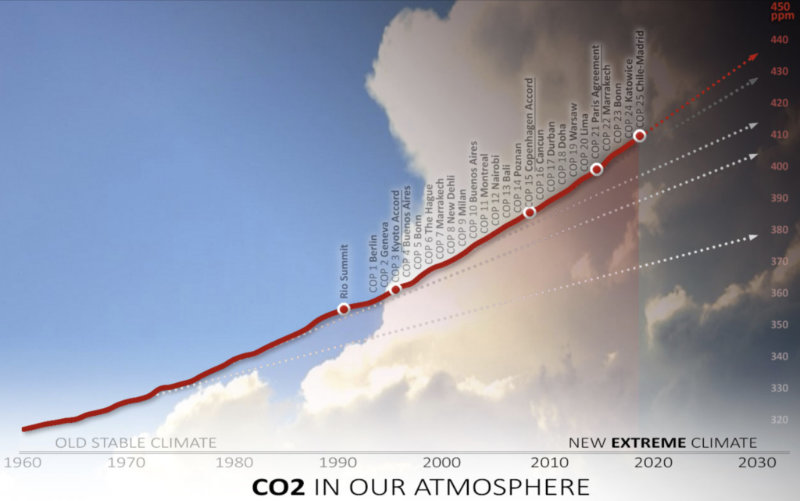
New data released on Monday showed atmospheric carbon dioxide reached a monthly average level of 419 parts per million in May, which is not only the maximum reading ever recorded since accurate measurements began 63 years ago but also the highest level the planet has experienced in more than four million years.
-
The politics of reaching net-zero
Rapid technological change is necessary but not sufficient to avoid dangerous climate change. Policies to encourage selective consumption and reduced total consumption are also needed.
-
Sunday environmental round up.
Chemical pollution is an under-appreciated threat to our oceans. China and the OECD are now running neck-and-neck on greenhouse gas emissions but Australia’s major overseas coal and gas customers place their bets elsewhere as ‘Net Zero’ starts to make a strong run in the 2050 Survival Stakes.
-
Wind and solar help Australia slash emissions, but no credit to Coalition
Strong investment in new wind and solar projects, the effects of Covid-19 and the ongoing decline of the coal sector helped to drive Australia’s greenhouse gas emissions lower in 2020 – but the early signs of a Covid-19 recovery bounce-back are already starting to show.
-
Mice and men: the mouse plague and aggressive land clearing
Over the years, Australian authorities have made many poor decisions about allowing the introduction of biocidal agents into the environment. In most cases, such decisions have been based on the demands of powerful minorities with no responsibility to the general community. The Berejiklian-Barilaro government looks set to outdo them all by authorising the use of the bromadiolone rodenticide. -
Sunday environmental round up.
Only a quarter of Earth’s land was ‘wild’ 12,000 years ago. Tropical deforestation increases despite international agreements to stop it by 2030. Plans to save Australia’s 50 most threatened plants, six unburnt forests on the east coast, and WA’s native vegetation.
-
Climate Change and ‘The Australian’s’ Graham Lloyd
For years I have marvelled at the way The Australian’s Graham Lloyd has spun climate science research to boost scepticism about global warming and the need for action. (more…)
-
‘Gas-led recovery’: methane and the risk of mass extinction
“The smart way to keep people passive and obedient is to strictly limit the spectrum of acceptable opinion, but allow very lively debate within that spectrum” – Noam Chomsky (1998). (more…)
-
Tracing the carbon loophole and other trade secrets that lead to unaccounted emissions
As rich countries develop they cast a shadow over their poorer trading partners. Australian research is exposing these hidden ecological and social costs. Around the world, unaccounted emissions in internationally traded goods and services are estimated at over a quarter of global CO2. This undermines the Kyoto Protocol and threatens the future of the Paris Agreement. (more…)
-
Myopic thinking in Australia on electric vehicles and renewable power
Everyone’s looking at the transition to renewable power but ignoring another massive transition that has huge implications for the grid – the transition to electric vehicles. Looked at together changes the story.