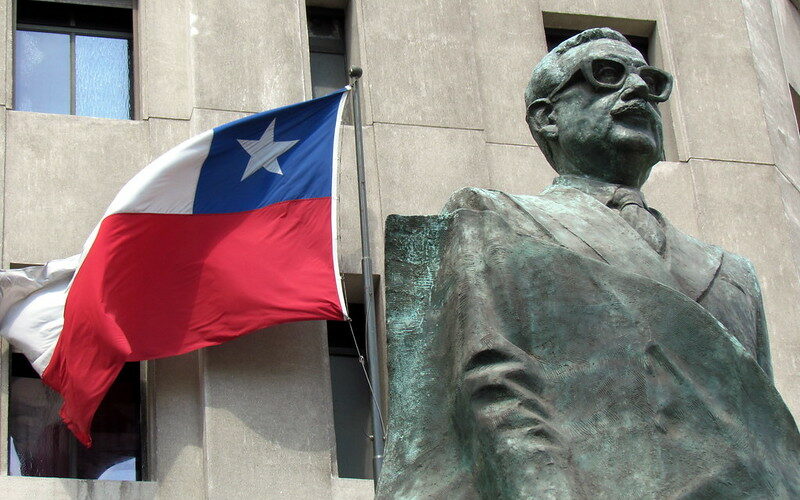
National Archives documents released last week revealed how closely Australia’s overseas spy agency worked with the CIA in the lead-up to the 1973 coup in Chile. Former diplomat Cavan Hogue reflects on the political and social environment at the time.
Category: Defence
-
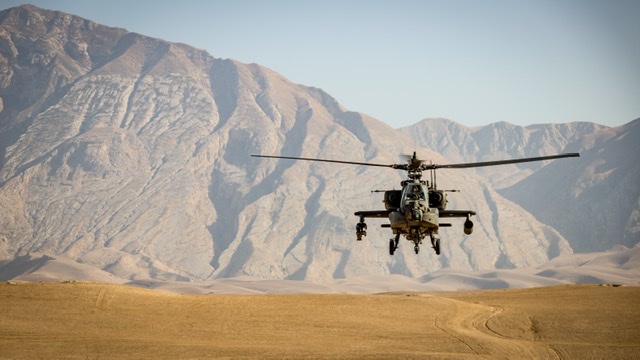
Five Eyes intelligence failure in Afghanistan, or something worse?
If corruption was central to the Taliban’s takeover of Afghanistan, and US intelligence ignored it, what should become of the Five Eyes alliance?
-
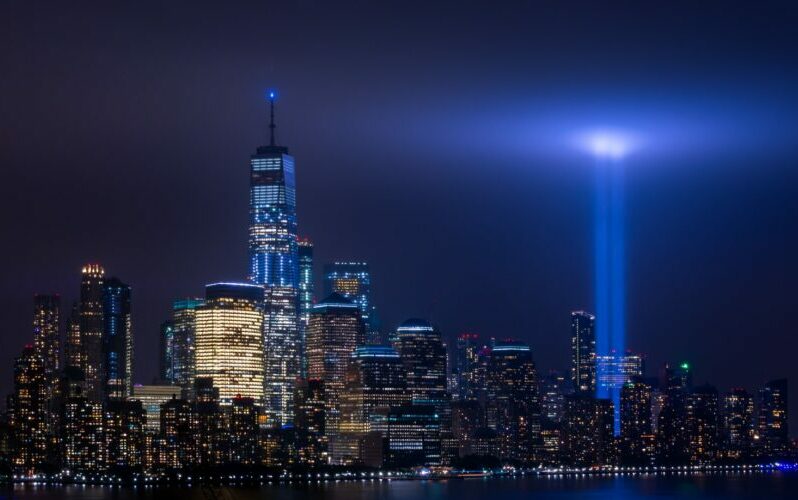
America’s wars in revenge for 9/11 caused nearly a million deaths
Countless innocent people died in the 20 years of war the United States launched in the name of its 9/11 dead. Tens of millions of innocent people were displaced.
-
Coalition’s game of chicken with China for political advantage
Does Australia continue to provoke and insult China not so much to hurt our biggest trading partner as to motivate our most important ally – the United States – to maintain a strong economic and military presence in the area?
-
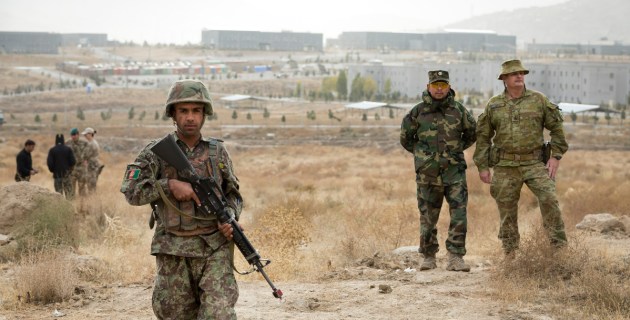
ASPI complicit in US and Australia’s Afghanistan deceit
The Taliban victory in Afghanistan and the ensuing debacle of the Western withdrawal from Kabul was always going to test the conscience of the Australian Strategic Policy Institute (ASPI).
-

Australian government’s secrecy obsession and the role of ASIS in the overthrow of Chile’s Allende
Freshly declassified National Archives documents show just how closely the Australian Secret Intelligence Service (ASIS) worked with the CIA in the lead-up to the coup-d’état in Chile in September 1973. (more…)
-
Afghanistan intervention marks the beginning of the US’ decline
It is time to forget the idea that the whole world should conform to the principles and values for which America alone stands, no matter how admirable they may appear to be. It was never feasible and it is conducive of conflict.
-
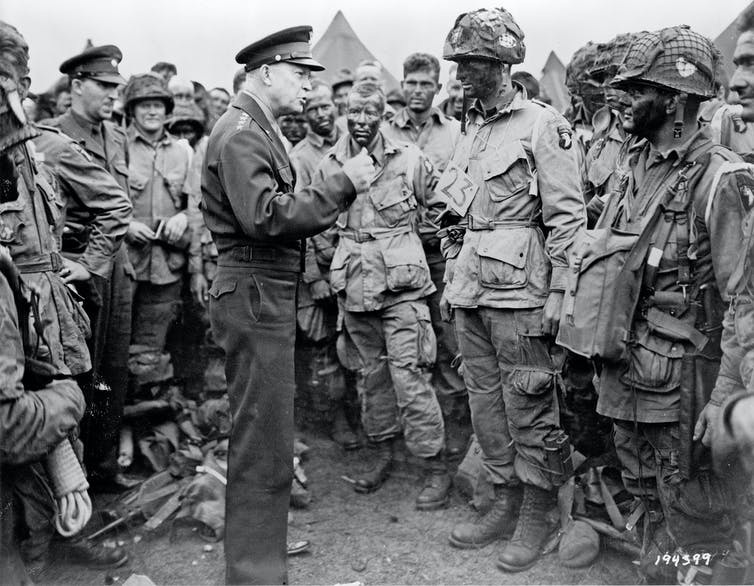
‘Fortress USA’: How the September 11 terror attacks produced a military industrial juggernaut
The best chance to reverse the militarisation of the US state is policy guided by the radical proposal that life is indeed precious.
-
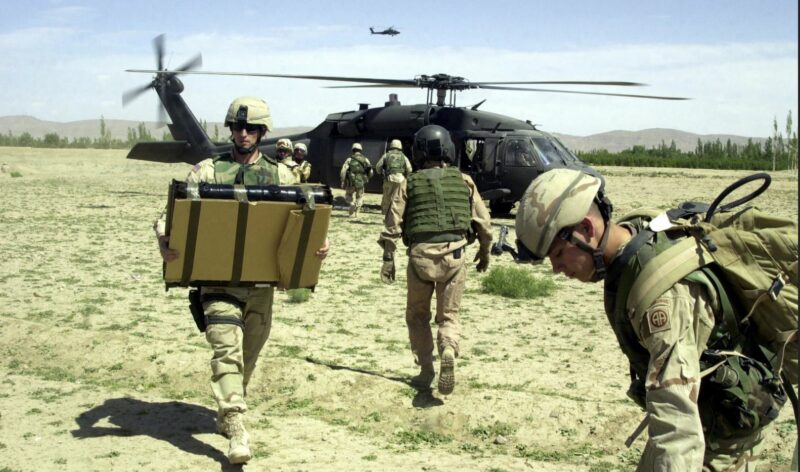
Five Eyes on the Afghan collapse-one eyed or blind?
The catastrophic failure of US and coalition intelligence in Afghanistan offers serious food for thought about the extent to which Australia relies on the vaunted Five Eyes arrangements.
-
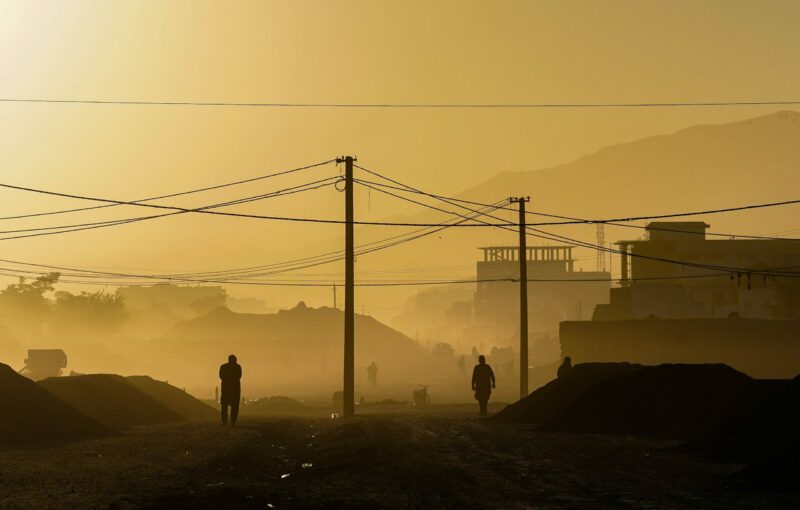
Afghanistan, the aftermath: Recognition or engagement?
What are the options for states, including Australia, in their dealings with Afghanistan following the retreat of the previous government and the assumption of power by the Taliban?
-

Australia’s government scares me more than the Saudi government
I left Saudi Arabia, one of the world’s most oppressive regimes. But the Australian government’s recent draconian rules remind me so much of home. (more…)
-
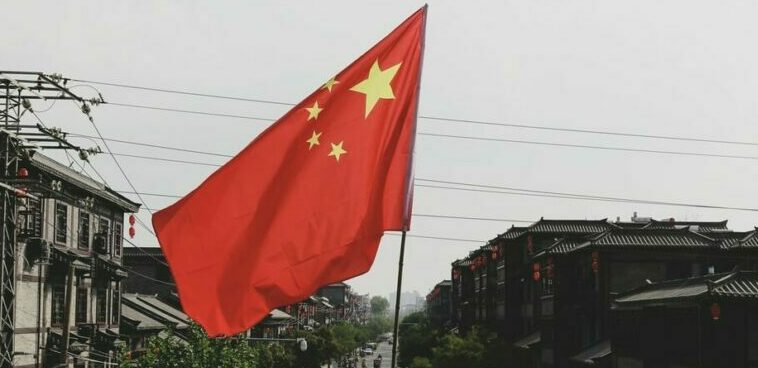
Dungeons and dragons: The China threat fiction
China is an increasingly authoritarian state, actively asserting its will regionally and within its own borders giving rise to a dangerous fiction.
-
The terrible effects and disastrous consequences of war. But we keep doing it.
The chaotic end to the war in Afghanistan coincides with a debate in the Senate on a bill which would curtail the unrestrained power of the executive to take the country to war.
-
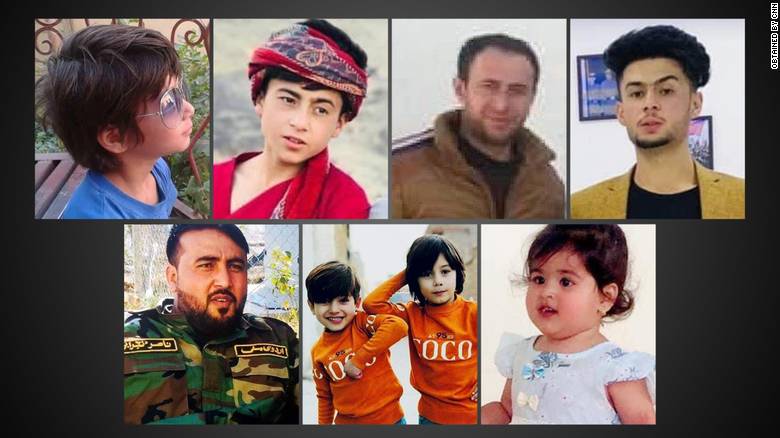
Cowardly acts by both ISIS-K with its suicide bombers and the US with its drone strikes
ISIS-K uses human suicide bombers to personally assassinate targets and murder civilians. The Americans use mechanical drones piloted from Langley, Virginia to do the same. (more…)
-
Australian Strategic Policy Institute rorts Wikipedia
In an important but shocking article in Michael West Media (MWM) on 21 August, journalist Marcus Reubenstein has exposed a pernicious practice by which supporters of the Australian Strategic Policy Institute (ASPI) have assiduously removed all negative criticism of ASPI from Wikipedia’s ASPI page, and added fawning praise of ASPI which renders the page, in Wikipedia’s judgment, to be “ranked ‘C’ on the Quality Scale, which is the lowest ranking for an established Wikipedia page.”
-
“No Australian who has ever fallen in our uniform has ever died in vain, ever” The PM and the AWM
Prime Minister Morrison’s recent statement to the ABC that “No Australian who has ever fallen in our uniform has ever died in vain, ever” is glib, facile, devoid of any content and oblivious to the catastrophe in Afghanistan and to Australia’s role. It is little more than an arbitrary assertion – that Australia’s wars, by definition, bring good outcomes – that would absolve our leaders of any responsibility and accountability for disastrous outcomes from these wars.
-
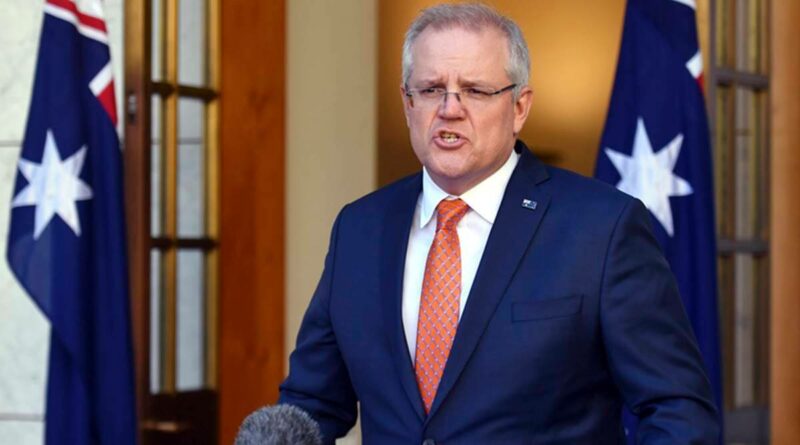
Crocodile tears by Morrison over plight of Afghans
The Taliban advance was swift; that was the point at which the Australian evacuation of at-risk personnel and their families should have begun. . Hiding behind ‘intelligence’ is a poor excuse. US intelligence relating to Afghanistan has been as bad as their intelligence on Vietnam. (more…)
-
The United State’s use of Australia in the race to weaponise space
The militarisation and weaponisation of space highlight Australia’s integration in the US military-industrial-surveillance complex and the continuation of the US war for planetary hegemony against China and Russia.
-
Easy Lies & Influence in the $90b submarine boondoggle
No-one knew what the evaluation process involved, but it was clear the decision was political, not driven by the obligation of government to spend public funds for the best product and the best price. (more…)
-
Best we don’t ask why we go to war.
Australia seems to hold more inquiries into itself than almost any other country. We inquire into everything, from Indigenous deaths in custody, child sexual abuse, and same sex marriage to bank misdemeanours, casino operations, pandemic responses, and alleged war crimes. There’s one exception to our obsession with self-scrutiny: Australia’s wars.
-
Afghanistan- of course it was about oil.
The Afghanistan war disaster raises questions about the ANZUS treaty and what we were really fighting for. (more…)
-
The Great Game of smashing countries
As a tsunami of crocodile tears engulfs Western politicians, history is suppressed. More than a generation ago, Afghanistan won its freedom, which the United States, Britain and their “allies” destroyed.
-
Afghanistan: Was September 11 the only reason for the attack on Afghanistan?
In one of his latest statements, Joe Biden reiterated the US states mission in Afghanistan, “America went to Afghanistan 20 years ago to defeat the forces that attacked this country on September 11th. That mission resulted in the death of Osama bin Laden over a decade ago and the degradation of al Qaeda.” (more…)
-
Making sense of Afghanistan in fragments: part 2: the present and the future
The deluge of images carried by the mass media are in realty merely an overburden of a disaster foretold. Their precedents were freely available long before the Western forces entered Afghanistan but they were brought into sharp relief as soon as that happened. Albeit less drastically, the documentation since then – specifically, the voluminous, now declassified reports detailing the dimensions of already existing and future failure – underscored not only the inevitability of the eventual debacle, but also the probability that it will extend for some time to come.
-
Making sense of Afghanistan: If any question why we died, Tell them because our fathers lied.Part 1
Whatever took place in the last several days in Afghanistan, be it the Taliban’s victory as insurgency or counter-counter-insurgency, it is a development that will not disclose its full consequences for some time. (more…)
-
The All-American Base World
According to our list, American military bases overseas are now scattered across 81 countries, colonies, or territories on every continent except Antarctica. And while their total numbers may be down, their reach has only continued to expand. Between 1989 and today, in fact, the military has more than doubled the number of places in which it has bases from 40 to 81.
-
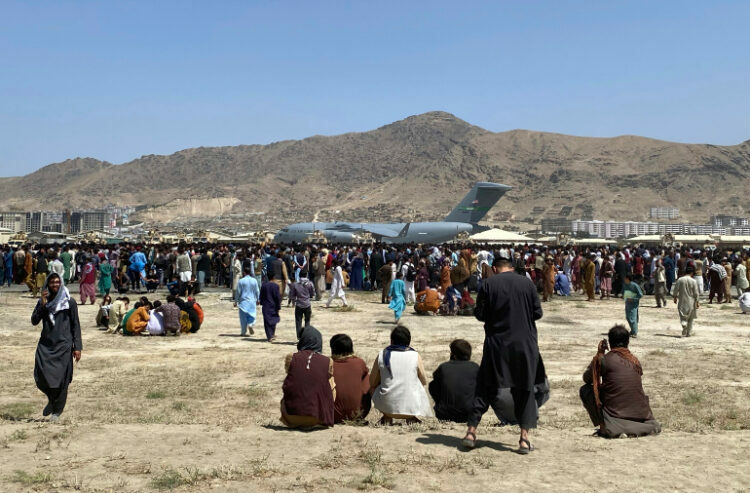
The fall of Kabul: false friends for over sixty four years
On hearing of the fall of Kabul a few days ago on 15 August, I recalled how shocked I had been by the fall of Saigon on 30 April 1975. As an Australian soldier who served in the Vietnam War between September 1972 and March 1973, I was an adviser to the old Army of the Republic of Vietnam and commanded the Australian Embassy Guard in Saigon. Since 1975, I’ve also spent a lot of time thinking and writing about the nature and outcome of the Vietnam War. So it is that, as the fall of Kabul has come to pass, I find myself more saddened than shocked by that event.
-
Full time in Afghanistan. The captains and the kings have departed- again.
And there’s the final whistle! What a disappointment for team USA. They began superbly, bigger, fitter and stronger, and made some lovely attacking moves. In the opening stanza, they sliced the opposition defence to ribbons. All around me the crowd was on their feet, roaring their team on, confident this was going to be a slaughter. It was an odd game, being played without a referee, but a ref would have just slowed things down.
-
A new game in a new era: China is playing it right, the US is not
China and the United States are in a different game than the rising power/established power conflicts of the past. Most analyses of such rivalries are based on pre–World War II history and fail to notice that the game changed radically after World War II. Sometimes when alterations are made in the rules or implements of a game, the risks and the optimal strategies change.
-
Afghanistan: the graveyard of empires and the opium poppy (Repost from May 9, 2018)
They have all failed to conquer Afghanistan – the Greeks, Indians and more recently, the British in the mid 19th Century and the Soviets in the late 20th Century. And now the US empire is failing to subdue the tribes of Afghanistan despite enormous cost of people and treasure. What has not received much attention is that the Taliban depends very heavily on the opium trade which finds its market in the US and other developed countries. That opium trade determines what happens in Afghanistan and not military intervention.