A Chinese travel program following encounters with Māori culture shows how ritual, food, performance and shared participation can deepen curiosity and cross-cultural understanding.
As a Chinese viewer, after watching the latest season, I became deeply interested in Wow the World 2, a Chinese travel and food reality show. What began as simple curiosity soon turned into something more profound. As the program unfolded, scenes transcended the usual travel documentary format.
In Rotorua, New Zealand, Chinese actors Sun Honglei and Li Naiwen, along with their companions, stood solemnly during a Māori pōwhiri, the traditional welcome ceremony. Their respectful demeanour – attentive, restrained, and sincere – struck me deeply. As a cultural observer, I recognised this not as performative politeness but as a quiet acknowledgment that true engagement begins with deference to another way of life.
The program follows the Chinese guests as they immerse themselves in Māori culture. They watched the haka, feeling the ground shake under the collective stomps and experiencing the surge of power in the chants. They wore traditional garments woven by their hosts as a mark of honour and shared hāngī meals cooked slowly in the earth. These moments carried a particular resonance. China’s own culture also places great value on ritual and respect for hosts; seeing them instinctively apply this principle abroad felt both familiar and affirming.
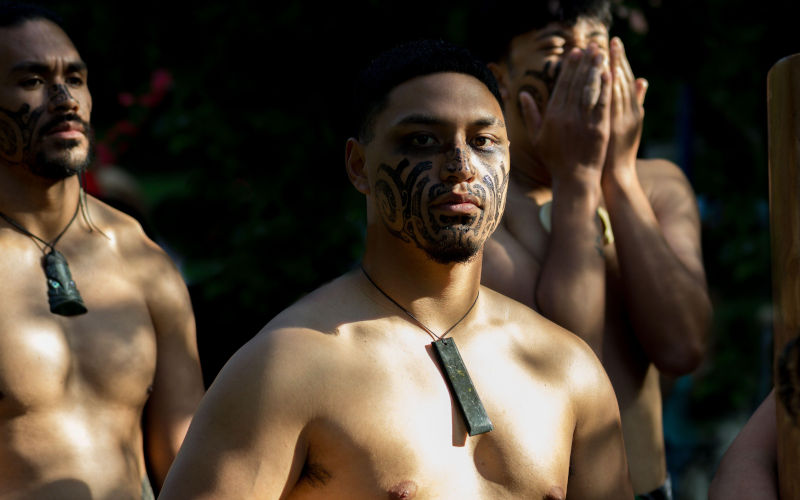
The series sent its guests into Māori homelands; in echoed response, Māori paddlers made their way to Guangdong during the Dragon Boat Festival in June. In Foshan’s narrow, winding Diejiao waterways, known locally as the “F1 of water sports”, 37 Māori members from the Ngā Hau e Whā (The Four Winds) team performed the haka on the riverbank. Their powerful presence, with rhythmic footfalls and resounding calls, blended strikingly with the excited shouts of Guangdong villagers.
I was struck by the natural symmetry. Both Māori and Chinese civilisations have long been shaped by water. The Māori waka embodies ancestral voyages across the Pacific, while Chinese dragon boats carry memories of Qu Yuan and thousands of years of riverside communities. When one Māori team member described the experience as a kind of “spiritual return”, it felt authentic rather than rhetorical.
I see here a rare alignment: two traditions meeting not in abstract dialogue, but through sweat, rhythm and shared physical endeavour. The haka’s raw energy and unyielding spirit seem to find an echo in the hard-fought discipline of dragon boating, particularly in Diejiao’s challenging S-bends. The Māori participants throw themselves into the races with the same intensity they bring to their war dance.
For me, observing from a Chinese lens, this fusion highlighted something essential: cultural exchange gains depth when both sides move beyond observation to active participation. In an era when international narratives often focus on friction or competition, this cross-equatorial exchange offers a more hopeful counterpoint.
I note that such encounters do not erase differences; they illuminate them. The haka and the dragon boat ritual serve different historical purposes, yet both channel collective strength, ancestral memory and communal resilience. Bringing them together creates something new without diminishing either’s original tradition.
The program also prompted reflection on how we present ourselves abroad and receive others at home. The respect shown by the Chinese guests in New Zealand mirrored the warmth extended to Māori visitors in Foshan. These small but significant acts of reciprocity help build genuine understanding. They remind us that cultural confidence does not require defensiveness; it can flourish through openness.
Of course, television programs like Wow the World 2 are edited to capture the most compelling moments. They cannot fully convey the complexities of historical context or everyday cultural realities. Nevertheless, they play a valuable role in broadening horizons for audiences in China and beyond. For many Chinese viewers, witnessing Māori culture in such vivid detail – and seeing it interact dynamically with our own – fosters curiosity and reduces the sense of distance.
As global connections intensify, initiatives that facilitate direct, respectful encounters between different traditions become increasingly important. This “two-way rush” across the equator demonstrates that even ancient practices can find fresh relevance when shared. The image of Māori warriors paddling dragon boats alongside Chinese teams, and Chinese visitors joining in the haka, lingers long after the credits roll.
Inspired by these vibrant exchanges, I have decided to embark on my own journey. I will travel to New Zealand, drawn not merely as a tourist but as a pilgrim of shared waters – to stand where the haka echoes through geothermal mists, to feel the spirit of the waka on ancient shores, and to carry back the rhythm of distant drums to the rivers of home. In the meeting of paddle and whenua, perhaps the truest dialogues are written not in words alone, but in the footsteps we dare to take across the equator.
Republished from The Global Times

Xu LiuLiu
Xu LiuLiu is director of the Culture Desk with the Global Times, a leading English-language newspaper in China.