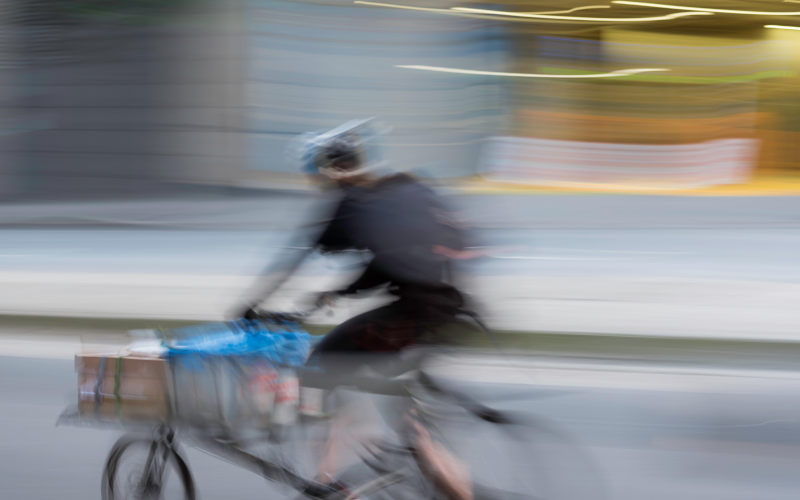
A new minimum hourly rate is a major improvement for delivery riders, but platform incentives still reward speed, dangerous conditions and risk-taking.
It’s the lunch rush in Sydney’s CBD on a putrid summer day, and I’m hurtling along the George Street light rail tracks with $188 worth of Chinese cheese tea wobbling on the back of my second-hand pushbike.
No, I’m not an elite athlete with an eccentric training regimen. I’m a delivery rider for HungryPanda, one of the major online food delivery services operating in Sydney, specialising in Asian cuisine. Each morning when I get out of bed, HungryPanda sends me an inspirational quote. Today’s is “To defeat oneself is the most precious victory.”
When people ask why I became a delivery rider, I tell them it’s because I graduated with an arts degree. People laugh, but it’s true – stumbling out from university and barely able to cover rent with the income from my part-time admin job, I started delivering for HungryPanda.
I’m on my last order for the day. I’ve spent the last few hours delivering food for about $5 per order, but now I’m racing from Annandale in Sydney’s inner west to George Street, lured by the promise of a whopping $3 bonus.
The 20 cheese teas are heavy and I have to overload my delivery bag, but I don’t consider cancelling – doing so would hurt my rider rating. That choice catches up with me five minutes later, when my front wheel snags the light rail tracks and I fly over the handlebars, breaking my collarbone and ripping open a gash above my left eye as I crash into the concrete.
Lying in the middle of the light rail tracks, my first thought isn’t for my pain, or the oncoming tram, or even for the small crowd of people forming around me, one of whom has already dialled an ambulance.
It’s for whether I’d be liable for damaging this enormous delivery. How would it make that final 50 metres to the young corporate types who had placed the order? As I’m loaded into the ambulance, I’m begging a passer-by to wait with the tea for the woman who placed the order to come and collect it.
Delivery riders are no strangers to injuries. Surveys suggest that one in four riders have been in an accident while working, with one in eight suffering injuries including concussions, broken bones and more.
As of last month, delivery riders are finally earning a minimum hourly pay rate. The changes, announced by the Fair Work Commission after an application by the Transport Workers’ Union and delivery giants DoorDash and Uber, represent a real step forward.
A 2020 survey put the average rider rate at just over $10 per hour after costs. In my time as a rider, I’ve typically made about $20 per hour – well below the minimum wage of $26.44 – which tells you just how significant the new rate of $31.30 per hour is. Yet entitlements like superannuation and sick leave still remain out of reach, and platforms continue to reward riders who put themselves at risk.
This is done through the gamified series of rewards and in-app achievements that are almost impossible to achieve if riders follow road safety rules. Riders are measured on how quickly they can deliver orders, with faster riders being offered new orders first, leaving slower riders sometimes waiting an hour to receive an order. Furthermore, continued slow deliveries can result in a permanent ban.
Platforms also incentivise riders to work in dangerous conditions, such as pouring rain, extreme heat and at night, when most accidents happen. These bonuses often amount to about 50 cents per delivery.
I’m very lucky, and not only because I have recovered and am delivering again. I’m a citizen, while 84 per cent of riders are on a temporary visa. I didn’t pay a cent for the 10 hours I spent in the emergency department. A 2022 study found that more than half of delivery riders who were injured were admitted to hospital, with less than half of them having access to Medicare, and only 22.7 per cent eligible for workers’ compensation.
When I was told that I couldn’t cycle for eight weeks, I was still able to earn an income from my other job with my arm in a sling. I could pay for the damage to my bike. While I struggled to claim accident insurance – I completed a form that I was later told was no longer in use – I did not need the money immediately. Not all riders are as privileged.
I hope that the incoming hourly wage will lead to fewer riders putting themselves in danger. But so long as we are rewarded for taking risks and penalised for riding safely, the injuries will continue.

Luke Mesterovic
Luke Mesterovic is a writer, activist and delivery rider living on unceded Wangal Land.