
Markets are often treated as if they naturally maximise public benefit, but they can just as easily reward speculation, weak care, low wages and ecological destruction.
Mark Diesendorf recently recounted eight economic myths that are helping to destroy our future. Here are some more.
In his list of economic myths, Diesendorf noted that we treat the planet as an infinite resource and an infinite waste dump, that we pursue endless economic growth, we pretend wealth trickles down to the poor, that the national budget must be balanced, that GDP is a measure of wellbeing, that market price measures the value of things to society, that the market should rule politics, and that the only alternative to neoliberalism is communism.
To continue the analysis: markets are claimed to maximise benefit to society, in fact they simply go where the profit is. Economist John Quiggin has highlighted the problem with privatised aged care and childcare, which have starkly illustrated what happens when financial incentives are diametrically opposed to what we want: costs, and therefore care, are minimised in pursuit of short-term profit. He notes comparable problems with privatised prisons, hospitals and vocational education, among many other sectors.
The source of the myth that markets optimise investment is an abstract theory based on patently absurd assumptions, such as that we can all foretell probabilities of future events, there are no economies of scale and there are no social interactions. Central to that theory is that we are, or should be, selfish competitors. In truth, we human beings are highly social and we cooperate spontaneously and pervasively, as a few moments reflection should confirm. Rutger Bregman, in Humankind, gives an in-depth account of our kindness.
It is not a wonder that our society has become increasingly riven and our economy increasingly anaemic. Deregulated financial markets are dominated by unproductive speculation and arbitrage. They trade perhaps fifty times faster than would be necessary to keep capital usefully invested, and compared with trading rates before deregulation. This means only about two per cent of trading is potentially beneficial, the rest is parasitic. Not only that but their relentless pursuit of advantage through betting on trends destabilises financial markets, and the whole economy. This makes our economy very wasteful and inefficient.
Private banks are incentivised to maximise our debt, by pushing more and bigger loans upon us. The result is the boom-and-bust cycle and the astronomical price of housing.
Big business loves to hear mainstream economists say markets should rule, because that implies they should just keep making money as fast as they can. One way they do this is to keep pushing wages lower. But suppose workers were paid two dollars a day: they would not be able to afford consumer goods, or much of anything except insufficient food, and the economy would collapse.
There is an optimum level of wages that balances the need for some profits with the need to keep the economy ticking along. The 2021 Nobel prize was awarded in part for revealing this in the real world. Apparently, we had a better balance in the prosperous post-war years, when unions were strong and there was a serious contest for the wealth jointly created by workers and bosses. Bob Menzies is reported to have regarded industrial unions as legitimate and necessary, though he readily joined the arm wrestle for dividing the spoils.
There are still other false beliefs that pervade the management of our economy and our society, as I have written in The Little Green Economics Book and A New Australia.
If we abandoned those false beliefs we would find we could have a much more efficient economy that was not destroying our life-support system, the Earth’s biosphere. Investment and effort could be more fruitfully directed. We could aim to produce a sufficiency rather than endlessly rising excess, and aim to bring that sufficiency into balance with what our abundant planet can reasonably provide. We could aim to ensure a dignified livelihood for everyone, instead of creating a few grossly over-provided individuals, leaving many battling or impoverished.
There is a great opportunity for the Greens and independents here, should they choose to move beyond current myths. There will never be a better time than this moment of political upheaval, as I have written in Pearls and Irritations regarding the Greens. The so-called teals and some other progressive independents are more inclined to private enterprise, but presumably they are admirers of Sir Robert Menzies, who presided over a mixed economy with strong public provision of services and strong unions. The economy of that time was far stronger than it has been in the neoliberal era since 1983. Even in the United States a moderate form of democratic socialism is suddenly rising in popularity – for the good reason that it more fairly and usefully distributes wealth.
Traditional societies chose to moderate their appetites. They made the health of their world an essential part of their way of life. If any did not, they did not survive. We can live by that creed again. Many people are re-inventing healthy, sufficient living, and we can re-arrange our society to support those efforts and make them normal and pervasive. If we do not, we will not survive.
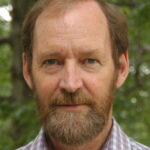
Dr. Geoff Davies is an author, commentator and scientist. He is the author of A New Australia: Discarding Delusions and Organising for the Wellbeing of All (2023, https://betternaturebooks.net/my-books/regenoz/). He blogs at Thrival Economics https://thrivaleconomics.blog/.