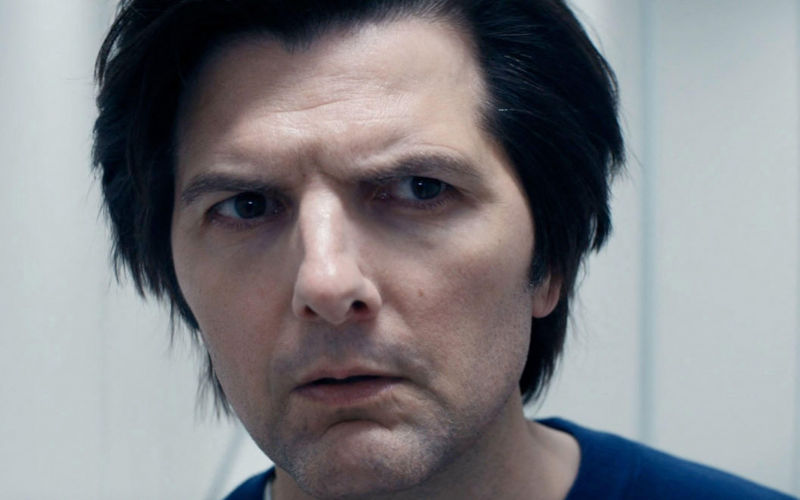
Whether you’re an ‘innie’ or an ‘outie’, the television series Severance resonates so deeply because its vision of fragmented identity, emotional suppression and corporate control no longer feels futuristic. It feels uncomfortably familiar.
Bubbling beneath the surface of popular television series lie the cultural dreams, desires and disappointments of our time. In this way, culture is not a relic of the past but something alive in the present, offering glimpses of where we are heading. This is the power of art: it transcends the linear rational mindset often associated with modern western culture and taps into the instinctual realm that Carl Jung called ‘the collective unconscious’. From this vast, subterranean reservoir emerge signs, portents, and warnings, which manifest as imaginings of the future.
With the rise of streaming, modern television series have not only adapted to technological advancements but also delved into existential questions, challenging our collective cultural ideals, autonomy and sense of identity. Although the most recent season of the TV series Severance aired just over a year ago, its depiction of technological alienation and fragmented identity now feels less like speculative fiction than an unsettling portrait of contemporary life.
Created by Dan Erickson, Severance imagines a dystopian future where employees at Lumon Industries undergo a surgical procedure that splits their consciousness into two distinct selves. Their “innie” spends all their time in the sterile, featureless office and hallways of Lumon, with no awareness of their personal life, while their “outie” experiences the world outside, free from work-related concerns.
The procedure initially appears liberating. Workers leave all stress and emotional burdens behind when they enter the office. Employers benefit from total productivity and control. The separation between personal life and labour is perfected. Yet Severance gradually reveals the terrifying implications of this arrangement. The fragmentation designed to eliminate suffering also eliminates something essential to what it is to be a human being: meaning and wholeness.
The protagonist Mark Scout best illustrates this fragmentation when he undergoes severance after the death of his wife. His outie continues to grieve while his innie remains entirely unaware of the trauma. The procedure allows Mark to avoid emotional pain during work hours, but it also prevents genuine healing. Grief cannot be integrated because Mark’s inner and outer selves have been divided against one another.
British psychiatrist and philosopher Iain McGilchrist argues that modern western culture increasingly privileges the fragmented, analytical attention associated with the left hemisphere of the brain over the right hemisphere’s capacity to perceive interconnected wholes. This fragmented mode of attention obstructs the integration necessary for true healing and fulfilment, preventing individuals from fully embracing the emotional and spiritual dimensions of life. Severance dramatises this condition in extreme form. The human person becomes divided into manageable functions, stripped of continuity and depth.
The demand in Severance to “turn off” parts of oneself to succeed reflects broader cultural conditions of modern life, where neoliberalism, individualism, and secularism converge to shape the way we engage with work and identity.
Neoliberalism increasingly encourages individuals to understand themselves through the language of productivity and personal responsibility. This is manifested in algorithmic management systems, smartphone notifications, and workplace surveillance that blur the distinction between professional and personal existence.
At the same time, individualism isolates people and subtly encourages them to regulate themselves so that they are more efficient workers.
Lastly, secularism strips grief and suffering of deeper spiritual meaning, encouraging individuals to approach emotional pain as something to be managed rather than experienced.
The severed employees of Lumon Industries represent the endpoint of these broader cultural conditions. Their inner selves exist solely to work. They possess no families, no history, no future, and no meaningful autonomy beyond the tasks assigned to them. Even their emotional lives are manipulated through corporate incentives and carefully managed rituals designed to maintain compliance.
What makes Severance especially powerful is that its dystopian vision does not feel entirely implausible. While few people will literally divide their consciousness surgically, many already experience forms of psychological severance in everyday life. Social media encourages the performance of curated identities. Professional culture rewards emotional suppression and constant self-management. Digital technologies mediate relationships, attention and grief. The result is a culture of fragmentation in which people struggle to experience themselves as integrated human beings.
Severance may be presented as science-fiction, but the disturbing reality it portrays is all too familiar, illustrating what happens when culture and technology feed on each other.

Adrian Rosenfeldt
Dr Adrian Rosenfeldt teaches at Melbourne University. He is a journalist, public speaker and the author of The God Debaters: New Atheist Identity-Making and the Religious Self in the New Millennium (2022).