The world could be different if we were governed by a different breed of humans who understood that politics require morals and imagination.
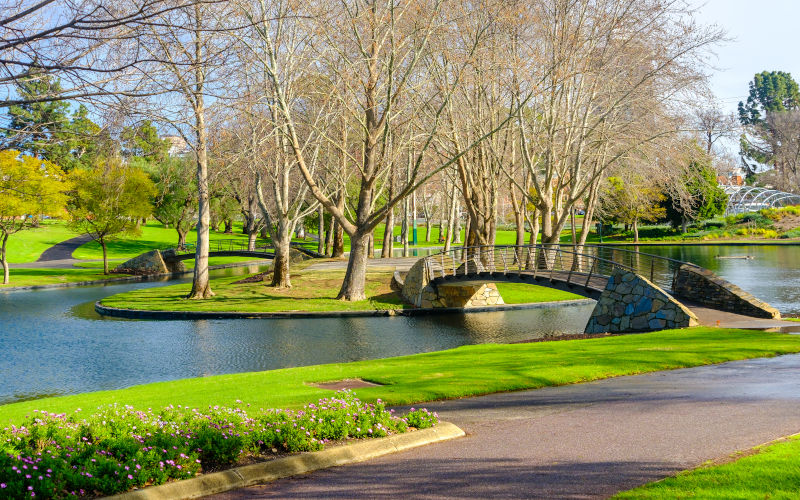
The Adelaide Parklands, a unique belt of approximately 930 ha of public land surrounding Adelaide and North Adelaide, were set aside by Colonel William Light as part of his plan for Adelaide. This was a radical initiative at a time when parklands were the exclusive domain of royalty and wealthy landowners.
Encroachment began almost immediately. Large areas were gradually given over to public facilities until the 1980s when commercial entities – the Adelaide Casino, the Hyatt/Intercontinental Hotel and the Convention Centre – were granted long-term leases.
In May 2026, a $45 million redevelopment of the existing North Adelaide golf course was legislated for by the Malinauskas Government. This encroachment meant the removal of nearly 600 trees.
Following the slaughter of these parklands on the altar of golf and event tourism, I have been wondering how different things might have been if the South Australian Parliament had a few more poets and philosophers and a few fewer lawyers, unionists and ex-staffers drawn from the ranks of Young Labor and Young Liberal undergraduates.
Imagine eight to 10 poets and philosophers, people trained to think and write about the human condition, reminding their colleagues that governing is a moral and imaginative practice, not just administrative one.
This is not to suggest that poets and philosophers are inherently wiser or more virtuous than lawyers. Perish that thought. God knows there are plenty of vain, petty egotists lurking in every humanities cloister. But their disciplines pull them in different directions. Poets are professionally suspicious of euphemism; philosophers allergic to shoddy logic. Put a few of them in the Parliament and suddenly it becomes much harder to pretend that a ‘world‑class facility’ automatically equates to the public good.
The fiasco that is the destruction of the Adelaide parklands shows what happens when we leave politics to lawyers and factional tacticians. The Malinauskas government’s decision to carve a prestige golf complex out of common green space is not just a planning error. It is a lamentable failure of morality and imagination that a different mix of voices in the Parliament might have averted.
Aristotle thought the point of politics was to enable citizens to live well, not merely to live. The virtues he cared about – courage, justice, temperance – are nowhere to be found in the speeches and media releases presumably drafted by ambitious young party apparatchiks.
What would Aristotle have said about a government that strips the Adelaide City Council of control over the North Adelaide parklands and hands sweeping powers to a minister so a golf tournament can be locked in on time?
I wonder what Immanuel Kant, that dour Prussian and the bane of first-year philosophy students, would have said about a law that deliberately narrows ordinary avenues of appeal so that residents, Kaurna custodians and parklands defenders are sidelined in their own city?
Even John Stuart Mill’s utilitarianism, so often pressed into the service of arguments for ‘economic benefits’, cuts the other way if you do away with the sophistry. Mill held that actions should be judged by the happiness they promote. I’m sure any halfway decent utilitarian would be able to distinguish between the daily, unspectacular happiness enjoyed by thousands of people using a green belt freely and a week of corporate hospitality in a VIP marquee.
As a phrase, the conduct of our national affairs is grandiloquent to a fault. In practice, it is often decided in quite small ways: a cross-bencher being dissuaded from moving an amendment, the backbencher who dares not clear his or her throat and the activist who leaves the chamber early because it feels pointless standing in front of yet another tree the government has already marked for death.
Poets and philosophers in parliament, in South Australia and elsewhere, would not magically fix that. But they might, at crucial moments, break the spell of inevitability. A philosopher might well have named the recent SA legislation for what it is: An Act To Betray Public Trust and Facilitate a Land Grab. One’s wilting courage might even be screwed to the sticking place upon recalling William Blake’s Jerusalem:
Bring me my Bow of burning gold:
Bring me my arrows of desire:
Bring me my Spear: O clouds unfold!
Bring me my Chariot of fire!
I will not cease from Mental Fight,
Nor shall my sword sleep in my hand.
Imagine a poet after the style of Judith Wright debating Malinauskas when the North Adelaide Public Golf Course Act 2025 was introduced:
So, Madam Speaker, our once impossibly popular Premier now proposes to cut down almost 600 mature trees, including hundreds of significant ones, in a historically mandated green belt, on land explicitly set aside for public recreation. In doing so, his government has aside its obligation to preserve places of ‘special status, attributes and character’ for future generations. At the risk of channelling Pauline Hanson, I’m keen to hear Premier Malinauskas again explain why. Slowly.
An Aristotelian ethicist on the crossbench might have asked for a proper, virtues‑based impact statement from a newly elected government with a thumping majority given to overriding pesky checks and balances in pursuit of the next, shiny ‘jobs created/GDP uplift’ bauble.
A Kantian might have insisted on sunset clauses and meaningful avenues of appeal, on the grounds that a law that cannot be challenged is, by definition, a law that risks treating its subjects as means rather than ends.
A serious devotee of John Stuart Mill might have demanded that Treasury and the Environment Department put a dollar value on the cooling effect of an urban canopy, health portfolio savings because of people walking in green spaces and the tourism value of the city beautiful enough that people would want to visit it, regardless of whether the golf is on or not.
Until we elect a few such people, the rest of us have to do the job from the cheap seats. It is left to parklands advocates, ordinary citizens, writers and musicians – even geriatric extremists – to stand alongside threatened trees with homemade signs.
The North Adelaide golf course saga – and an upcoming fight over the motorbike circuit – should stiffen our resolve to change who we send into that big echoing chamber. The conduct of our political affairs is too important to be left to those who see the world only in terms of contracts and caucus numbers. It needs, at the very least, a handful of voices who can stand up and say, in language clear enough for any passer‑by on the parklands path: this is not what a city is for.

John Schumann
John Schumann is a writer and musician, perhaps best known for his Vietnam veterans anthem “I Was Only 19“. He hastens to add that he has written many other songs. He lives in Adelaide, from where he continues to upset the bunyip aristocracy and all those who believe that they are more important than the rest of us.