
Treating everyone the same doesn’t necessarily add up to fairness or national unity. What makes a difference is finding the best way to overcome disadvantage.
Recent calls by Pauline Hanson and others to wind back multiculturalism and question Indigenous-specific policies have reminded me of a conversation with a Cairns Uber driver. He recognised me from the many African and multicultural festivals where we had crossed paths over the years. Then he surprised me.
“I don’t go anymore,” he said. “Not to the multicultural festivals. Not to Indigenous events either.” He explained that Australia had become too preoccupied with treating some groups differently.
“If we’re all Australians,” he asked gently, “shouldn’t we all be treated the same?”
There was nothing hostile in his voice. He sounded thoughtful rather than angry. By then we had reached my destination, so neither of us tried to persuade the other. Yet the conversation stayed with me.
It reminded me of countless taxi journeys over more than three decades. Different cities. Different drivers. Remarkably similar conversations. Almost everyone seemed to know what Indigenous Australians should do. Very few ever asked what decades of research might have taught us instead.
Looking back, I realise I developed three ways of responding.
Sometimes I simply lacked the energy. A taxi ride is not always the place for a conversation shaped by decades of research and relationships.
Sometimes I sensed the driver’s views were already settled. Then I would smile, explain that the journey was too short for such a large question and return to my reading.
But when curiosity remained open, I usually shared two stories. One came from the country where I was born. The other from the country that became my home. Together they taught me that societies become more equal not by pretending everyone starts in the same place, but by recognising when history leaves some communities carrying heavier burdens than others.
The first story begins in Ghana.
When the British established colonial rule, they deepened an already unequal relationship between the richer forest regions of southern Ghana and the drier northern savannah. Missionaries were discouraged from establishing schools across much of the north, which instead became a labour reserve supplying workers to the mines, cocoa farms and towns of the south.
By independence in 1957, although northern Ghana accounted for roughly one-third of the population, it reportedly had only three university graduates. My own small southern village had already produced two.
Kwame Nkrumah’s government concluded that treating every region identically would simply preserve those inherited inequalities. Students from the north therefore received additional educational assistance, including free boarding, to overcome disadvantages they had not created. Within a generation educational opportunities had expanded dramatically. More importantly, attitudes began to change. The north went on to produce national leaders, including presidents. Political scientists have argued that these policies contributed to Ghana’s relative political stability compared with several neighbouring countries.
The lesson was simple. Equal citizenship sometimes requires targeted investment if societies are to arrive at a genuinely fair starting point.
The second story began after I arrived in Australia.
Like many public health researchers of my generation, I had been influenced by the World Health Organization’s Alma-Ata Declaration, which argued that lasting improvements in health required prevention, community participation and action on the social determinants of health.
When I began working in Central Australia more than 30 years ago, I encountered another story that rarely entered public debate. Aboriginal people had built one of the world’s most successful community-controlled primary health systems. Reading the recent Making History review of 50 years of the Central Australian Aboriginal Congress was deeply gratifying because it confirmed what many of us witnessed firsthand. Since the Congress was established in 1973, life expectancy for Aboriginal men in Central Australia has increased by more than 18 years. Infant mortality has fallen dramatically, low birthweight has halved and childhood health has improved markedly, despite housing, income and many other social determinants changing far less than anyone would have wished. These were not miracles. They were the result of Aboriginal people exercising responsibility for their own health.
What also impressed me was how these organisations transformed the way research itself was conducted. Indigenous research increasingly moved from being undertaken on Aboriginal people towards research led with and by them through institutions such as the Cooperative Research Centre for Aboriginal Health and now the Lowitja Institute.
That was when I began to understand that self-determination is not the opposite of national unity. Sometimes it is one of the ways nations strengthen unity.
None of this means my taxi drivers are imagining the problems they describe. They point to visible alcohol abuse, unemployment, imprisonment and too many Aboriginal children entering out-of-home care. Those realities are painfully real.
The evidence, however, tells a more complicated story than either side of our political debates often admits. Indigenous Australians remain dramatically over-represented in prisons and child protection systems. Research also points to the continuing effects of racism, together with deep intergenerational trauma requiring sustained prevention, early intervention and culturally informed support. These are not competing explanations. They reinforce one another.
That is why, despite everything, I remain cautiously optimistic. For more than 30 years I have been privileged to work alongside Aboriginal colleagues involved in the Family Wellbeing program. I have watched people regain confidence, families rebuild relationships and communities develop new leaders. Progress has never been fast enough for newspaper headlines or election cycles, but it has been real.
If I meet that Uber driver again, I doubt I will try to win the argument. I will simply tell him two stories. Because history has taught me that treating Australians identically is not always the same as treating them fairly. Sometimes the surest path to a stronger, more united Australia is recognising that different histories sometimes require different responses.
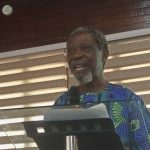
Komla Tsey
Komla Tsey is a Ghanaian–Australian writer, retired Professor of Education for Social Sustainability, and part-time Professorial Research Fellow at the Jawun Research Institute, Central Queensland University. His writing explores education, democratic culture, identity, Indigenous empowerment, colonial legacies and the moral certainties that shape public life. His forthcoming memoir, Botoku Child, traces a journey from a small village in Ghana to universities and communities across the world, examining how inherited beliefs, curiosity and lived experience shape both personal lives and democratic societies.