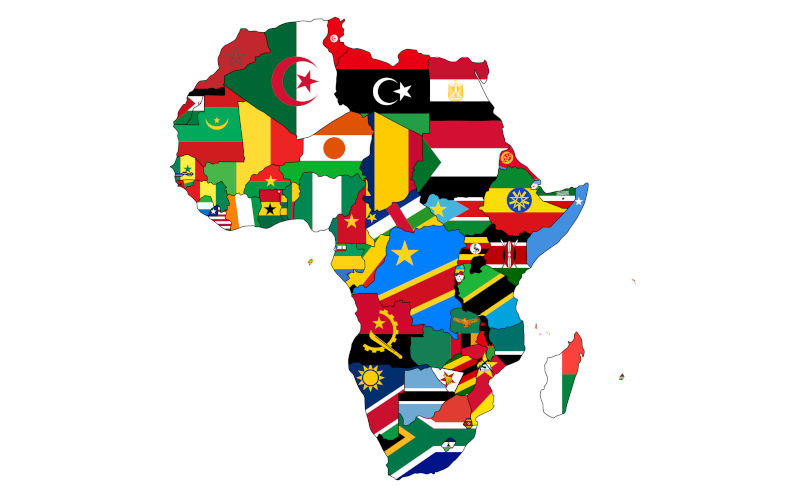
Africa could account for more than one-third of humanity by 2064. Australia should build deeper relationships based on skills, mobility and two-way learning, not simply recruitment.
Much migration debate begins with what people might cost: pressure on housing, competition for jobs, demands on services or risks to security. Even welcoming arguments often describe migrants chiefly as workers who can fill our shortages.
Both approaches leave too little room for people’s ambitions and the societies to which they already contribute. A changing global population calls for policy built around developing human strengths, with practical agreements that share the benefits across borders.
Julian Cribb’s discussion in P&I of the Lancet Commission on 21st-century global threats to health brings this longer horizon into view. He reports a forecast in which global population peaks at 9.5 billion in 2064, with Africa accounting for about 36 per cent of humanity: more than one person in every three.
Projections are not destiny. But the prospect should change how Australia thinks about its future relationships. African countries will help shape the knowledge, labour markets, institutions and responses to global threats on which everyone’s wellbeing depends.
I write as a Ghanaian–Australian whose education and working life have crossed both worlds. What troubles me is how readily migration debate turns people into problems to manage, or resources to acquire.
A strengths-based approach begins with a fuller picture. People bring knowledge, skills, relationships, initiative and the capacity to learn. Policy should ask how these strengths can develop, what prevents their contribution and how opportunities can expand for those who move and those who remain.
This does not make housing shortages, exploitation or pressure on services disappear. It requires governments to plan for them while recognising migrants as participants in building solutions. Nor should people’s dignity depend on proving their economic usefulness.
For Australia’s relationships with African countries, three commitments would give this approach substance.
First, help expand the skills Australia hopes to recruit.
International recruitment can connect people with worthwhile opportunities. But recruiting trained workers without contributing to their education can transfer the benefits of another country’s investment while leaving its services stretched.
Australia could negotiate training partnerships with interested African governments, vocational institutions and employers. These should fund additional teachers, training places, equipment and recognised qualifications for employment in both countries.
The Global Skill Partnership model described by the World Bank offers a starting point: countries cooperate to train workers for opportunities at home and abroad. It is a framework to adapt carefully, rather than a guarantee of success.
An agreement involving care workers, for example, should increase training capacity beyond the number Australia recruits. Participants who remain need qualifications relevant to local services and realistic employment prospects. Those preparing to migrate need clear information about language requirements, registration, costs and available jobs.
Training alone cannot create those jobs. Agreements must connect education with employers, adequately financed services and the facilities needed for practical learning.
African countries have different economies, institutions and workforce needs. Partnerships should begin with specific occupations and willing institutions, rather than treating a continent as one recruitment pool.
Second, make mobility a genuine choice.
An opportunity loses much of its promise if taking it means unmanageable debt, misleading recruitment or dependence on an abusive employer.
Agreements should provide fair wages, transparent recruitment costs, independent advice, accessible complaints procedures and workable routes to change employers. Qualification recognition should be settled early enough to prevent trained people arriving only to discover that their skills cannot be used.
Safeguards also matter for countries of origin. World Health Organization guidance on health-worker mobility places health-system priorities alongside workers’ rights and welfare in negotiating international agreements.
People should retain the freedom to seek better lives abroad. Wealthier countries should also help strengthen the services from which they recruit. These responsibilities can coexist.
Development cooperation should not become payment for preventing migration. Better education and incomes may give people greater means to move. The purpose is to widen worthwhile choices, including the choice to stay.
Third, make learning travel in both directions.
Strengths-based policy must recognise African institutions as knowledge producers, challenging the assumption that wealthy countries supply expertise while African countries supply workers.
Zimbabwe’s Friendship Bench shows why. A randomised trial across 24 clinics found that problem-solving therapy delivered by trained, supervised lay health workers reduced mental-health symptoms at six months compared with enhanced usual care.
Australian universities, TAFEs and health services could learn from such approaches through reciprocal staff exchanges, joint teaching and research into where they might work elsewhere, guided by both partners’ priorities.
Agreements should publish concrete results: additional training places, completion rates, employment outcomes, recruitment costs and effects on services in participating countries. Counting arrivals alone cannot establish shared benefit.
Australia still needs decisions about migration numbers, housing and infrastructure. But annual border decisions cannot substitute for relationships built over decades. With Africa projected to account for more than one-third of humanity by 2064, those relationships deserve far greater attention.
If Australia expects to benefit from international skills mobility, it should help expand opportunities and services where it recruits. A strengths-based migration policy would develop people’s capabilities and share the benefits across borders, preparing Australia for a future African societies will increasingly help shape.

Komla Tsey
Komla Tsey is a Ghanaian–Australian writer, retired Professor of Education for Social Sustainability, and part-time Professorial Research Fellow at the Jawun Research Institute, Central Queensland University. His writing explores education, democratic culture, identity, Indigenous empowerment, colonial legacies and the moral certainties that shape public life. His forthcoming memoir, Botoku Child, traces a journey from a small village in Ghana to universities and communities across the world, examining how inherited beliefs, curiosity and lived experience shape both personal lives and democratic societies.