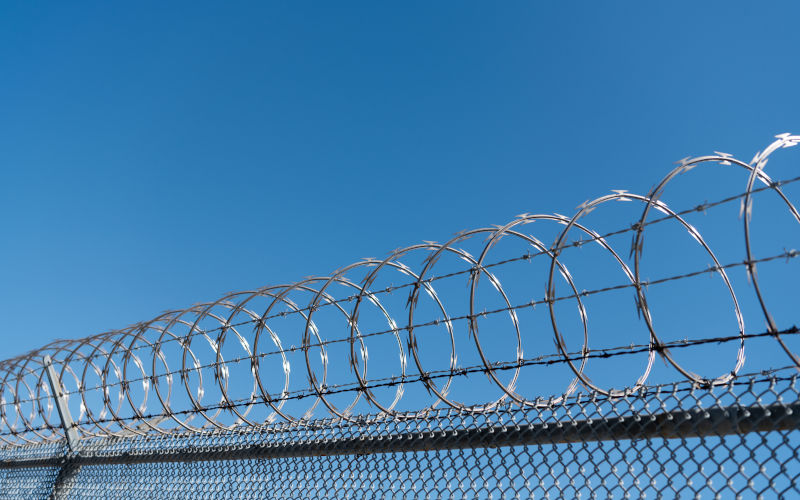
After being found to have breached prisoners’ rights to one hour of fresh air a day, the Victorian Government is looking to remove that right in the name of operational flexibility.
Everyone deserves to see the sky.
That shouldn’t be controversial, yet the Victorian Government is pushing legislation through parliament to remove the requirement that Victorians in prison get at least one hour of fresh air each day.
They are framing the Corrections Amendment Bill 2026 as a debate about prison management, staffing and operations. But there is a bigger question at stake here: what should happen when a court finds a government has broken its own laws, caused harm and breached the human rights of its own citizens?
The Victorian Supreme Court found that some people in prison were not receiving the open-air access required by law. The court also found that this treatment was incompatible with the right to humane treatment when deprived of liberty.
That should have led the Victorian Government to act swiftly to fix the problem. Instead, the Government wants to change the law. They cite the need for operational flexibility in the prison system.
Operational flexibility is important, of course, and it is true that Victoria’s prison system is under crushing pressure because of policy choices that have increased imprisonment at the expense of prevention, diversion and rehabilitation.
Nevertheless, human rights protections exist to limit powerful institutions when dealing with people who have little power of their own – and there are few people with as little power as those in prison.
The government lost in court and now wants to change the rules instead of fixing the problem. A prison sentence deprives a person of their liberty. It does not remove their dignity.
And fresh air is not a luxury. It isn’t a ‘nice-to-have’ or optional extra. It is one of the most basic conditions of human wellbeing. Australia’s National Preventive Mechanism framework, established under the Optional Protocol to the Convention against Torture, names access to fresh air as a fundamental right in places of detention. The state representatives of the National Preventative Mechanism have collectively raised their concerns with this bill, noting that it breaches the United Nations Minimum Rules for the Treatment of Prisoners (the Nelson Mandela Rules). Victoria has not nominated a representative to the NPM.
For people in highly restrictive environments, access to fresh air and outdoor space is one of the few protective factors against physical and psychological harm. It supports rehabilitation and reintegration into the community. We all know that reduced access to natural light, outdoor activity and the outside environment can worsen stress, anxiety and isolation. For people already living with trauma, disability or mental health issues, the damage is even greater.
First Nations people, who remain drastically overrepresented in Victoria’s prison system, will bear a disproportionate share of this harm. Young people from diverse cultural and faith communities will as well. Victorians who are homeless or who are living in poverty or who live with disability will join them.
This bill does more than reduce access to fresh air. After being found to have breached rights protections, instead of meeting them the government is disabling those protections. Once governments get used to exempting themselves from rights protections in one area, it becomes easier to do it again…and again…and again. That should ring alarm bells.
This is not simply a prison policy debate. It is a test of our commitment to government accountability and the kind of community we want to live in.
Nearly every Victorian in prison will be living back in the community in the future. When governments create trauma in prison today, they release it into the community tomorrow. That does not make any of us safer.
This bill matters because it will harm people.
It matters because it changes the rules of the game when governments are found to have caused harm. Rather than fixing the problem, the Victorian Government wants to lower the standard and jump the guardrails.
The Allan Government still has a choice. It can proceed with legislation that legitimises its own inhumane treatment of Victorians. Or it can accept the court’s findings and ensure the state meets its basic obligations and duty of care. That should not be a difficult choice for a government to make.

Daniel Scoullar
Daniel is Director of Policy and Advocacy for the Federation of Community Legal Centres Victoria.