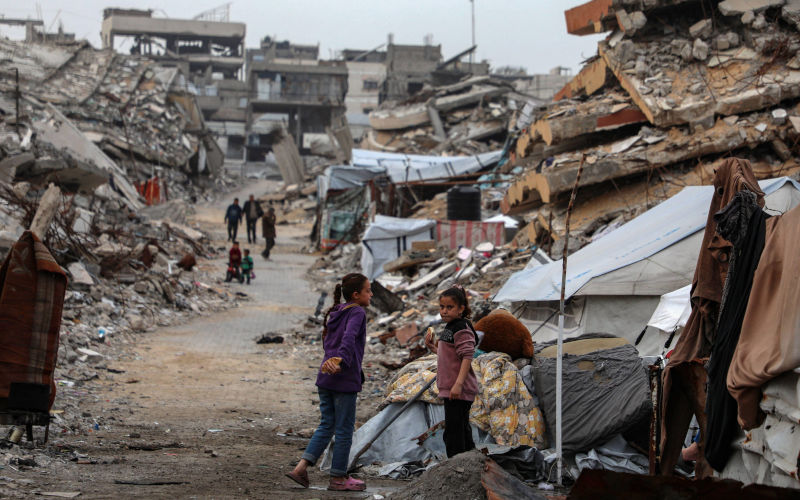
A personal reflection on Nakba Day, intergenerational trauma, exile and the experience of carrying Palestinian identity and grief while living in the Australian diaspora.
My father was born in Jerusalem in 1947 – the year that the ethnic cleansing of Palestine began in full force. Three Zionist terror groups – the Haganah, the Irgun and the Stern Gang (Lehi) – bombed and raped their way across Palestine, committing massacres and forcing people out of their homes at gunpoint.
When my father was one year old, he and his family were forced out of their home in West Jerusalem and found refuge in a place in East Jerusalem. Those terror groups took most of Palestine, and when the state of Israel was declared on top of it, they became the Israeli Defence Force and have continued committing acts of terror to this very day.
My parents said there was some denial at the time among many families who had been forced to flee. Many were thinking that the fighting would be over in a few weeks and they could return to their homes. I guess denial is the first stage of grief. But I think their grief morphed, and as anyone who has dealt with grief before, you know that everyone grieves differently and at different stages.
But what does it mean to lose your country? While the land is one tangible thing, it’s so much more than that. It wasn’t just the beauty of the land and what it gave – the orchards, fields and olive groves. Your city or village, work, school, shops, family, friends and neighbours have all either been destroyed or dispersed. A way of life has vanished completely. The nostalgia drills a whole in your heart as you find yourself longing for a time and place that you now realise was paradise.
But I was asked what it’s like to be a Palestinian here on Nakba day. Well, in this particular year, I find being a Palestinian in Australia full of irony due to the rise of One Nation. It’s not just the irony of seeing white migrants telling non-white migrants that they have a right to be here and we don’t, while First Nations people are looking on and saying, “Wake up – none of you have a right to be here.”
Even more than that is the irony that if Pauline Hanson was in front of me now telling me to go back where I came from I would say, “There is nothing I would love more dearly than to go back to where I came from, but the apartheid state whose flag you drape yourself in prevents me from doing that!”
So how does it feel to be a Palestinian in Australia right now? I feel anger, intergenerational trauma and an overwhelming survivor’s guilt borne from watching a genocide and knowing that if I were there, I too would have been killed simply for being Palestinian, and that it is only by dint of historical luck that I happened to be here and not there.
As the “luckiest” sort of Palestinian one can be – one who is not living under occupation, but in the diaspora in a country of relative freedom – I feel the weight of three generations of Palestinian suffering bearing down upon me, urging me to use my privilege to bring human rights, justice and equality to Palestine. But I take great comfort in the knowledge that I am not alone. I am surrounded by comrades of all stripes and colours – because there is no racial gene for moral courage. And you are all fighting alongside me for the same thing.

Tamara Kayali Browne
Dr Tamara Kayali Browne is a Palestinian Australian writer and activist. She is an Adjunct Senior Research Fellow at Charles Sturt University and a member of the Executive Committee of the Australian Friends of Palestine Association. Alongside her academic publications and opinion pieces, she also writes poetry – mostly about Palestine.
Tamara’s Red Pill https://tamarakayalibrowne.substack.com/