Decades of prohibition have failed to stop psychedelic drug use while blocking research and treatment options, raising questions about the basis of current laws.
“Tune in, turn on, and drop out.” Timothy Leary, the Harvard psychologist and champion of psychedelic drugs, first uttered that iconic phrase 60 years ago. A year later California became the first jurisdiction to prohibit LSD. But last Saturday, President Donald Trump (of all people) directed that his administration move quicker to review certain psychedelic drugs.
The global push to criminalise psilocybins, LSD and other similar drugs from the late 1960s onwards was, and still is, based not on public health grounds, but ignorance, prejudice and fear by law makers.
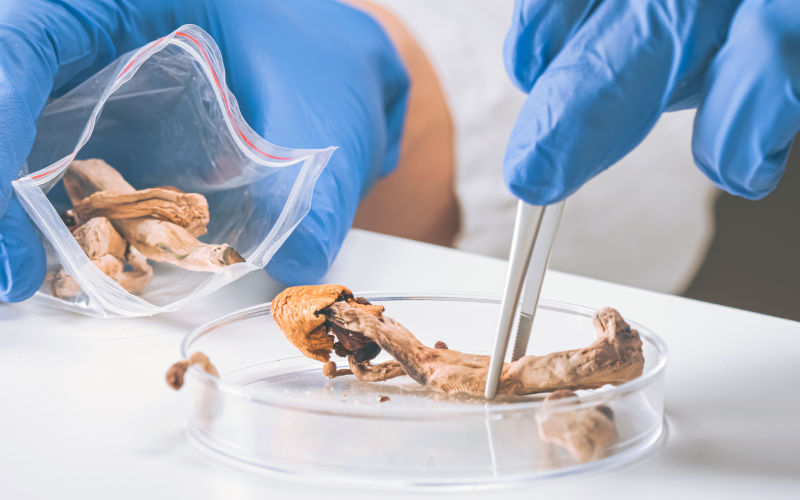
As we now know, Timothy Leary was right. His research at Harvard, with his colleague Richard Alpert that commenced in 1960 was called the Harvard Psilocybin Project. Psilocybin is a hallucinogen found in some species of mushrooms (LSD is a chemical formulation).
Harvard University’s biography of Leary – that they have anything on him is to their credit given US President Richard Nixon called him the “most dangerous man in America” – says the project was seeking to document the effects of psilocybin ‘on human consciousness by administering it to volunteer subjects and recording their real-time descriptions of the experience.’
Leary and Alpert came under fire for sloppy research ethics but they were onto something.
And Leary was blamed for what was said to be a booming drugs culture in the US and elsewhere (including Australia) in the 1960s. Leary was no angel. He was narcissistic by many accounts and took on the guru role with devoted followers. He veered away from serious academic work.
But Dr Rick Doblin, the founder of the Multidisciplinary Association for Psychedelic Studies takes the sort of nuanced view of Leary that the record supports. Doblin, in an interview with Wired said that he thinks “the crackdown on psychedelics happened because psychedelics were going right. They motivated people to get involved in social justice activities, protests. And Tim did a lot of good work generating people to have those kinds of experiences. I think, on balance, he did way more good than harm. Though I fault him for twisting the data in his studies.”
The consequence of the criminalising of LSD, pscilocybins, ketamine and MDMA has, of course, not been to stop people using it, but to handing over the market to the colour black.
More importantly, though, is instead of governments allowing researchers to follow up Leary’s work – and therefore potentially to benefit millions of patients who suffer from mental illness, including veterans of wars who have lived with chronic PTSD often with tragic consequences – the law has been used to treat users of these drugs as criminals.
As we now know these drugs, along with ketamine and MDMA ‘are now being systematically evaluated for their capacity to address treatment-resistant depression, substance use disorders, PTSD, and existential distress’, a recently published article in Progress in Neuro-Psychopharmacology & Biological Psychiatry observes.
To Australia’s credit the Therapeutic Goods Administration in 2023 approved the use of psilocybin for treatment-resistant depression and MDMA for PTSD. A step in the right direction.
These are not the only drugs which have been irrationally banned over the years and which are now being discovered to be of real value in treatment of health conditions. Cannabis is another.
Again, imagine if lawmakers and their friends in the media, religion and the medical profession had seen cannabis for what it was and is – an alleviator of pain and a very pleasurable drug that reduces anxiety. Instead of responding to it in a crazed and utterly irrational manner until recent years (albeit in Australia most politicians still bizarrely buy the ‘gateway drug’ nonsense about cannabis) societies could have been permitting its use through a regulated and taxed market for consumers, as they have been over the past two decades in the US, Canada, Uruguay and elsewhere.
Governments and international bodies misuse the law to enshrine prejudice and because they pander to misplaced fears. There is also the fact that they refuse to respect bodily integrity and privacy in the shape of people being able to have access to mind experiences that enhance their lives.
And what of LSD and pscilocybins as a recreational drug? According to the Alcohol and Drug Foundation, 12.2 per cent of Australians aged 14 years and over have used psychedelics one or more times in their life. That’s around four million people.
Why not legalise then? As the economist David Henderson, a research fellow at the US think tank, the Hoover Institution, argued back in 1991, “Most of the problems that people think of as being caused by drugs are not caused by drugs per se. Rather, they are caused by drug laws.” Regulated access to LSD and pscilocybins for non-medical uses reduces health and crime risks.
But to return to Leary. He once said; “The moment you stop questioning is the moment somebody else starts answering for you.” Amen to that.
The author has previously advised advice to Mind Medicine Australia – a body advocating for use of psilocybins and other drugs.

Greg Barns SC is a former National President of the Australian Lawyers Alliance and Deputy Chair The Information Rights Project