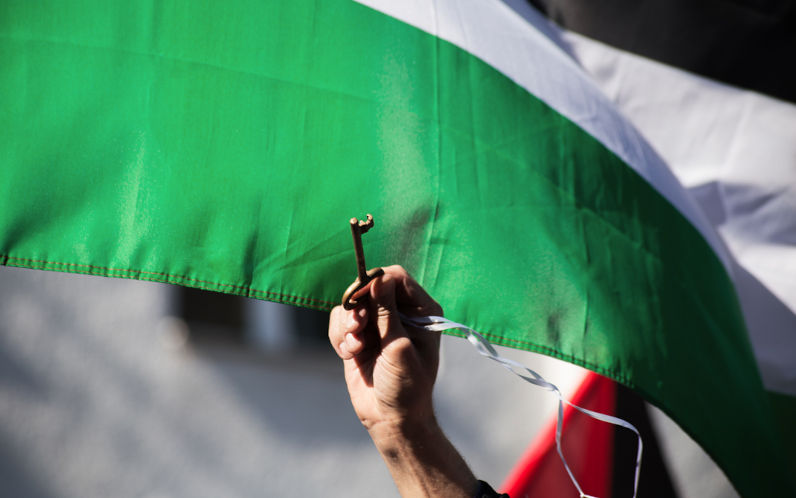
The Nakba is not simply an historical event but an ongoing system of displacement, erasure and resistance that continues to shape Palestinian identity and political life generations later.
The Nakba, in its deep sociological and political meaning, is not merely an historical event that took place in 1948 and ended. It is ongoing and evolving colonial structure. Since its displacement of hundreds of thousands of Palestinians from their cities and villages, attempts to uproot them from geography, history, and consciousness have never stopped, through integrated system of laws, policies, and narratives that sought to erase Palestinian people and replace their story with an alternative narrative.
Understanding this project requires deconstructing narratives on which it was founded, and examining the major contradiction that shaped conduct of its leaders from beginning: how a movement with a secular nationalist character used religious narrative to justify the modern settler colonial project.
The Zionist movement emerged in Europe in late 19th century, influenced by the western nationalist and colonial model. Ironically its most prominent leaders, such as Theodor Herzl, David Ben Gurion, and Vladimir Jabotinsky, ranged between secularism and atheism in their personal beliefs. Yet they understood early on the power of religious discourse in mobilising political and popular support for the Zionist project.
Herzl, founder of political Zionism, approached the idea of a “national homeland” with clear pragmatism. Argentina and Uganda were proposed as possible options before settling on Palestine, but he realised that Palestine alone possessed the symbolic weight capable of mobilising Jewish masses and attracting western support shaped by Biblical narratives.
Within this context came his famous statement: “Zionism is return to Judaism even before return to Land of Israel,” clear indication of functional use of religion in service of a modern nationalist project.
David Ben Gurion, meanwhile, used Torah as a political discourse tool before the international community, while practically viewing “return” as project aimed at reshaping European Jews into a new nationalist model tied to land and military power, not solely religious promise.
Zionist leadership understood early that promoting the project to the west required the use of concepts such as “Promised Land” and “historic right of Jews” to justify displacement and uprooting imposed on Palestinians in 1948.
In July 1948, Ben Gurion summarised the essence of Israeli policy toward Palestinian refugees when he wrote in his diary: “We must do everything to ensure they never return… older people will die and younger will forget.”
This bet was built on a colonial perception that Palestinian identity would erode over time, and that new generations would lose connection to land and destroyed villages. But what happened over following decades was exact opposite.
Nakba did not remain merely historical memory. It became a central element in the formation of Palestinian identity across generations. Palestinian families continued passing details of destroyed villages and cities to their children and grandchildren, while preserving house keys and property documents as material and emotional symbols of right of return.
Many studies related to Palestinian collective memory indicate that younger generations of refugees maintain strong connection to their original villages despite never having seen them. Palestinian memory also transformed from condition tied only to grief and loss into memory of resistance confronting attempts of erasure and exclusion.
This attachment did not remain within symbolic consciousness alone. It was reflected in successive Palestinian confrontations, from the 1st and 2nd intifadas to repeated wars on the Gaza Strip. Generations born decades after Nakba still consider the right of return a central part of their national identity.
Continued occupation, displacement policies, and settlement expansion in West Bank and Jerusalem, alongside ongoing wars on Gaza, have also turned Nakba into continuing reality rather than past event. Palestinians do not deal with Nakba as distant historical memory, but as renewed experience whose consequences shape their daily lives.
After 78 years, it has become clear that conflict was never merely dispute over borders or just land, but struggle over narrative, existence, and identity. The settler colonial project sought from its beginning to reshape both geography and history, while Palestinians held onto their memory as a form of survival and resistance.
Today, with rise of religious and ultranationalist currents inside Israel, the image Israel attempted to present of itself as a “liberal” state is steadily fading, while calls for displacement and exclusion are becoming more explicit and public.
At same time, Palestinian memory continues to deepen more than ever. Generations on whom Ben Gurion bet would forget still carry the names of destroyed villages, house keys, and stories of first uprooting, turning memory into tool of confrontation against a project that long sought to erase Palestinians from their land and history.

Refaat Ibrahim
Refaat Ibrahim is a Palestinian writer from Gaza and the founder of The Resistant Palestinian Pens ( https://resistantpens.org/ ). A graduate in English Language and Literature from the Islamic University, he writes about political, social, and cultural issues in Palestine. Through his work, he amplifies Palestinian voices under occupation, believing writing is a bridge between truth and people’s hearts and minds.