The World Health Organization has declared the latest Ebola outbreak in the Democratic Republic of the Congo and Uganda a global health emergency after the virus spread across borders and killed nearly 90 people.
The World Health Organization (WHO) has declared the latest Ebola outbreak in the Democratic Republic of the Congo (DRC) and neighbouring Uganda a “public health emergency of international concern” after the virus killed nearly 90 people.
The outbreak, originating in eastern DRC’s Ituri province, involves the rare Bundibugyo strain of Ebola. The variant has no approved vaccine or treatment.
Health authorities said the outbreak poses a high regional risk because infections have already been detected in Uganda and cases linked to the outbreak have reached Congo’s capital, Kinshasa.
The WHO, however, stopped short of declaring a pandemic, saying it did not meet the necessary criteria. The United Nations agency advised countries against closing borders or restricting trade.
Here is what we know:
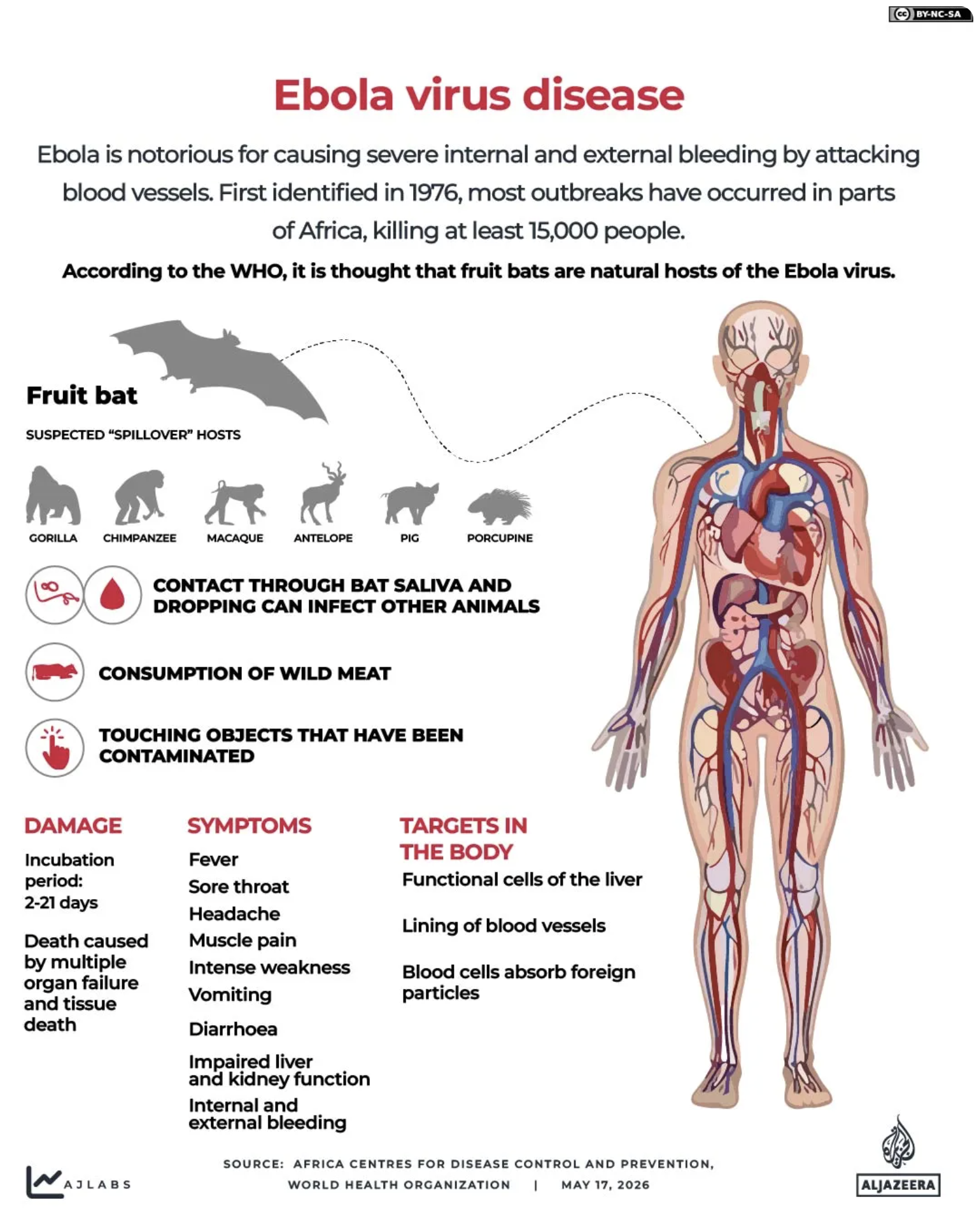
What do we know about the outbreak?
The outbreak was first reported in Ituri province in the northeastern DRC on Friday near the borders with Uganda and South Sudan, according to Africa’s Centres for Disease Control and Prevention (Africa CDC). As of Saturday, the centre had reported 88 deaths and 336 suspected cases.
The outbreak began in Mongwalu, a busy mining area. Infected people later travelled out of the area, sought treatment in other places and spread the disease. Africa CDC warned that population movements, weak healthcare infrastructure and violence by armed groups in Ituri could complicate containment efforts.
The outbreak’s patient zero was a nurse who arrived at a health facility in Ituri’s capital, Bunia, on April 24, showing Ebola-like symptoms, DRC Health Minister Samuel-Roger Kamba said.
Republished from Al Jazeera