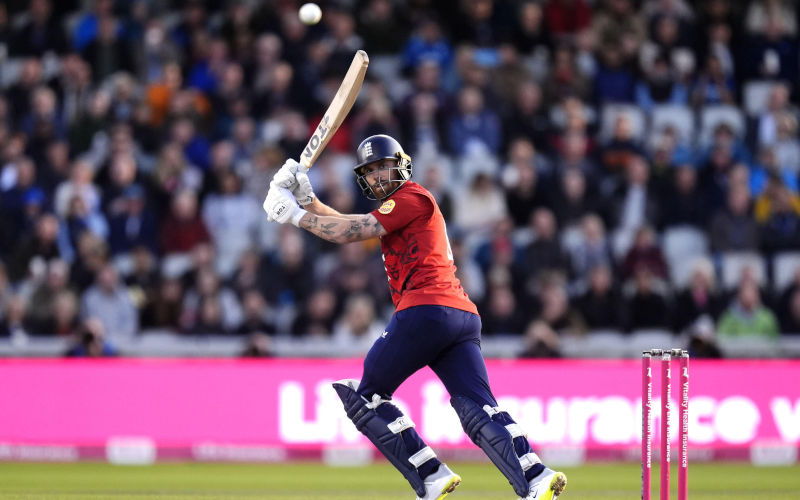
Cricket is now managed by business interests, making the lucrative T20 game a more attractive investment than the traditional centrepiece of the game, the Test.
There have over the last half-century been two revolutions in the game of cricket. One is administrative in the form of a shift to corporate management; the other the rise of the short-form T20 version. Neither revolution has ended yet, which means their full influence has yet to be seen.
Let’s take the evolution of the game’s management first. In the mid-1970s, cricket around the world was managed and administered at all levels by cricketers. At the local (club) level, that meant past and present players running the show, and at higher levels the governing bodies up to national level were constituted by people elected from the grass roots. Chairs of national boards were almost always known former cricketers. Business and other specialist expertise needed for management was sourced from outside the boards rather than businesspeople populating the boards themselves.
Today’s management scene is quite different. In Australia the change began with Kerry Packer’s World Series Cricket in 1977, a businessman’s interest challenging a national board’s interest for the first time. A change was instituted that over time saw governing bodies everywhere become heavy with figures from the commercial world. This reflected the simple fact that the game had become a commodity exploitable by capital. Today’s Cricket Australia’s board of ten has two former Test cricketers on it; the New South Wales board includes two people who have played Tests.
The change has had far-reaching implications. Business thinking now dominates the game’s administrations, which means that ‘return on capital’ and ‘market valuation’ are central considerations. In Australia today, this is most clearly reflected in the debate about whether or not the Big Bash, currently run by the state bodies and Cricket Australia, should be privatised.
Privatisation would change the effective ownership of BBL teams and bring in large sums of money, which, it is said by its proponents, would enable Australian cricket to be competitive in bidding for the services of its best players who would otherwise be lost to overseas franchises like the Indian Premier League, England’s The Hundred and the South African T20 league (also known as the Betway T20). The states are split on the issue, NSW and Queensland opposed and South Australia uncertain. For the moment the push for privatisation has stalled. But the fundamental issue, control of the game by business mindsets, remains and is central to the sovereignty of cricket.
Closely linked is the other revolution, the rise of T20 cricket since the turn of the century. T20 was invented in England in response to falling interest in the first-class county game and in the domestic 50-overs competition: its model was a short game invented in New Zealand called Cricket Max.
T20 quickly spread and attracted large crowds. The game was re-invented: new strokes like the ramp and scoop appeared and the reverse sweep (which had emerged earlier) became mainstream. Bowlers learned new defensive styles but scoring rates became higher than ever before.
Inevitably, the new approaches seeped into the longer forms of cricket, including Tests. This, arguably, had a rejuvenating impact by livening up proceedings. The T20 form was resisted by some, especially the older generations, but there were clear gains, for example, in big hits and thus entertainment value. At the same time, a new and worrying question arose: was there now a problem of the shortest form increasingly becoming the ‘tail wagging the dog’?
The Indian Premier League’s T20 competition in particular became dominant, one manifestation being the virtual disappearance of Test matches from late March to the end of May when the IPL dominated the calendar and demanded a ‘window’ to itself. T20 leagues proliferated around the world in the second decade of the century. Many good players, not able to make national Test sides but increasingly making good livings via T20 cricket, eschewed the longer forms and focused full-time on the T20 circuit. In establishment circles, they were often disparaged as ‘mercenaries’ but they became the backbone of the T20 game.
In all this there is an issue of balance within cricket. The centrepieces of the game have shifted from long-form to short-form cricket and from bilateral national tours to franchise tournaments. No longer is the Test match unchallenged as the game’s pinnacle, and no longer do Tests have a monopoly hold on the best players.
Where will this go in coming years? It is possible that T20 will cruel Test cricket; some would say it already has. Some countries might even stop playing Tests. Most national cricket boards are increasingly focused on T20 as the principal source of funding for the game, and their interest continues to shift as they harvest its rivers of gold: BBL crowds now match Test crowds and TV audiences are huge.
In South Africa, this all reached the point in 2024 where a Test squad was intentionally weakened because a tour of New Zealand clashed with the inaugural South African T20 tournament. It was decided the best talent had to be on show in the T20 matches. Two Tests were almost inevitably lost in consequence. In the Caribbean, the best players have for some years never been seen in first-class or Test matches; the West Indies has sunk badly in Test cricket. Sri Lanka, Pakistan, Bangladesh and tiny, cash-strapped New Zealand might all before long be at threat as far as Test cricket is concerned.
T20 may have revitalised cricket. The question now is whether that revitalisation will end up killing the game’s traditional centrepiece. T20 is already the real cricket for most of the game’s followers. Tests could be relegated to the margins, catering only for a dying generation of supporters. Meanwhile, business interests rule, profit and dictate.

Chas Keys is a former academic and Deputy Director General of the NSW State Emergency Service. He writes about floodplain management, climate change, the culture, ethics and politics of cricket and other matters. He is a member of the Emergency Leaders for Climate Action (ELCA)