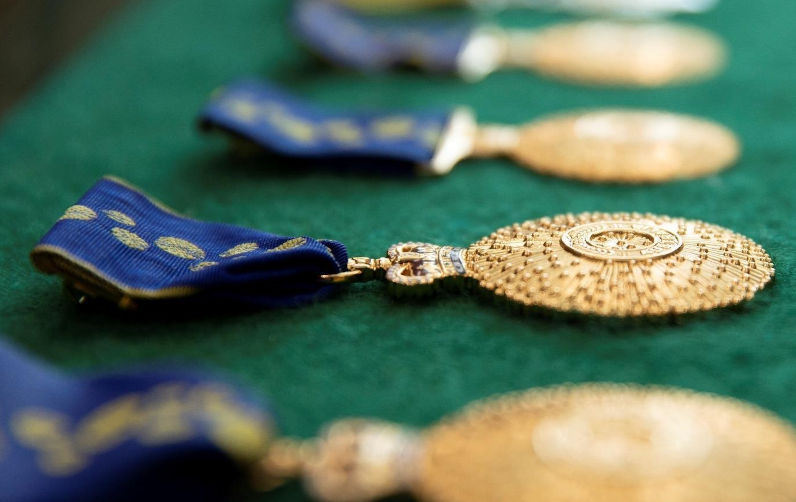
Australia has improved women’s representation in the honours system, but culturally and linguistically diverse communities, particularly CALD women, remain under-recognised despite their central role in social cohesion and community life.
When women became the majority of recipients in the 2023 King’s Birthday Honours List for the first time since the Order of Australia was established in 1975, it was rightly celebrated as a significant achievement.
The debate about women’s representation in Australia’s honours system has been important and necessary. For many years, women were underrepresented despite their enormous contribution to Australian society. Through better data, public discussion, stronger nomination efforts and institutional commitment, that imbalance has begun to change.
There is an important lesson in that experience. Representation gaps do not correct themselves. They become visible, they are examined and practical steps are taken to address them.
That raises another question.
Are culturally and linguistically diverse Australians, particularly CALD women, being recognised in ways that reflect the Australia of today?
This is not simply a question about honours. It goes to how Australia recognises contribution and whose stories become part of the national narrative.
Australia has changed dramatically since the Order of Australia was established in 1975. At that time, around one in five Australians was born overseas. According to the 2021 Census, 27.6 per cent of Australians are overseas born, almost half have at least one parent born overseas and more than 300 ancestries are represented across the country.
Multicultural Australia is not a future aspiration. It is the reality of modern Australia.
Yet the available evidence suggests that our systems of recognition may not fully reflect that reality.
SBS reporting found that between 2017 and 2021 only 17.2 per cent of honours nominations came from overseas born Australians despite migrants accounting for almost 28 per cent of the population.
My own analysis of Order of Australia data between 2015 and 2024 points to a similar pattern. During that period, multicultural Australians accounted for approximately 3 per cent of nominations and 2 per cent of awards. Measuring multicultural representation is not straightforward and no dataset is perfect. Nevertheless, the gap is significant enough to warrant closer examination.
This is not an argument for quotas. The integrity of the honours system must always rest on merit.
The issue is whether the system is equally effective at identifying merit across all parts of Australian society.
The honours system relies on nominations. Individuals cannot nominate themselves. Someone must recognise their contribution, gather supporting evidence, obtain referees and prepare a compelling case.
In practice, honours often follow established institutional pathways.
Universities nominate distinguished academics. Hospitals nominate senior clinicians. Government agencies recognise accomplished public servants. Professional associations put forward leaders in their fields. These organisations possess the networks, experience and administrative capacity needed to navigate the nomination process.
Many multicultural communities operate differently.
Some of the most significant contributions occur outside formal institutions. They take place in community organisations, migrant resource centres, schools, neighbourhood networks, aged care services and places of worship.
Over the past two decades I have worked with multicultural communities through government, community organisations and civic leadership roles. One observation has remained constant. Many of the people doing the hardest work to strengthen social cohesion are often the least visible outside their own communities.
They help newly arrived families settle into Australian life. They support women experiencing crisis. They assist elderly migrants facing isolation. They mentor young people. They organise food relief and settlement programs. They build trust between communities and institutions.
Much of this work is voluntary. Much of it happens quietly. Much of it attracts little public attention.
In many cultures, service is regarded as a responsibility rather than an achievement. Recognition is not actively sought and may even be discouraged.
The result is not deliberate exclusion. It is a visibility problem.
Australia often speaks about social cohesion as a policy objective. In reality, social cohesion is created every day by people working within communities to build connections, solve problems and support those who need help.
Many of those people come from multicultural backgrounds.
The issue becomes even more interesting when viewed through the lens of gender.
Australia deserves credit for improving the representation of women in the honours system. That progress should be celebrated and continued.
But it is reasonable to ask another question.
Which women are being recognised?
Australia publishes honours data by gender, but there is limited public reporting on cultural diversity and very little analysis of the experiences of CALD women within the honours system.
That absence of data makes informed discussion difficult.
The purpose of raising this issue is not to diminish the achievements of women who have received honours. Rather, it is to build on the lessons of a successful reform. The progress made over the past decade demonstrates that when underrepresentation becomes visible, practical solutions can follow.
Many CALD women provide forms of leadership that are central to community wellbeing but often remain unseen.
Across migrant communities, women frequently organise support networks, assist new arrivals, care for vulnerable families, mentor young people and provide culturally informed assistance during times of crisis.
This work is not always formally recognised. It is not always documented. Yet it is often essential to the wellbeing of families and communities.
If recognition depends heavily on institutional visibility, some forms of contribution may be less likely to come to official attention regardless of their value.
This is not necessarily a question of bias. It is a question of system design.
Honours do more than recognise individuals. They help define what Australia values.
When communities see people like themselves recognised, it reinforces a sense of belonging and inclusion. It sends a message that their contribution matters.
Australia’s multicultural success has depended heavily on people who work quietly to support settlement, strengthen communities and build bridges across cultures. Their contribution is part of the Australian story.
The question is whether our honours system is capturing that story as completely as it could.
The answer is not quotas or symbolic gestures.
There are practical steps that could make a difference.
First, better data. Annual honours reporting could include more consistent information about cultural diversity in nominations and awards, including intersectional analysis where appropriate.
Second, greater awareness. Many multicultural communities have limited understanding of how the honours system works or what level of contribution may justify a nomination. Local councils, multicultural agencies and community organisations could help improve awareness.
Third, stronger support. Preparing nominations requires time, evidence and administrative effort. Mentoring and practical assistance could help community organisations identify and document contributions that currently go unnoticed.
These reforms would not weaken the honours system. They would strengthen it.
The honours system tells us something about the nation we aspire to be. It reflects whose contributions we celebrate and whose stories become part of our shared history.
Australia has shown that representation gaps can be addressed when we are prepared to acknowledge them. The progress made in recognising women demonstrates that.
The next question is whether we are willing to apply the same attention to multicultural Australia.
If we do, we may discover that many of the people helping hold communities together have been there all along. We simply have not been looking closely enough.

Mainul Haque
Mainul Haque OAM is an economist and former senior Australian public servant with nearly 30 years’ experience shaping and analysing policy across government, academia, and the not-for-profit sector. He is a community leader, board member and non-executive director, and former ACT Multicultural Ambassador. He writes on social cohesion, migration, and public policy, grounding his analysis in practical experience.Mainul has held numerous board and advisory roles across Canberra’s community, education and multicultural sectors, and was awarded the Order of Australia Medal for his significant contribution to the ACT community.