Australia’s smelters will keep needing taxpayer bailouts unless governments create a publicly backed clean energy model that can deliver reliable, affordable power for heavy industry.
Australian heavy industry faces an existential issue: how to power critical energy-intensive industrial operations such as smelting with low-cost renewable energy at scale. Our current system completely fails to align energy supply to demand at a price that makes smelters viable and competitive. As a result, our strategically important national assets limp on with regular transfusions of public aid gouged from taxpayers, at permanent risk.
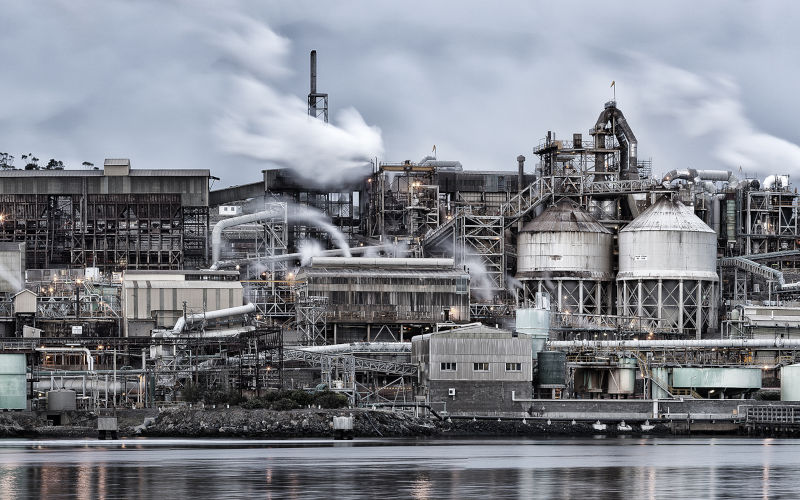
Last week, state and federal governments committed $105 million to save Nyrstar’s zinc smelter in Hobart and lead smelter in Port Pirie, SA, adding to a previous $135m in bailouts. In March, the Federal and Queensland governments announced a $2 billion rescue package for Rio Tinto’s Boyne aluminium smelter in that state. Rio’s Tomago aluminium smelter in NSW consumes 12 per cent of the state’s energy supply, is Australia’s biggest single energy user and supports more than 3000 direct and indirect high value jobs in a key export industry. Rio has its begging bowl out for a major taxpayer bailout, with the company threatening that at current power price projections aluminium production at the site would be “unviable” beyond 2028.
In a landmark new report, Sovereign Power the Electrical Trades Union and think tank The McKell Institute have proposed a solution – the creation of a new government entity, Sovereign Power, that would build, run and finance renewable energy generation to power Australian industry, reliably and affordably, offering long-term power purchase agreements (PPA) to industry, including Tomago.
Under the Sovereign Power plan, firmed renewables would be delivered at a cost of ~$66/MWh, compared to average private market PPAs of $117/MWh. This is in line with what Rio Tinto said needs to produce and export green aluminium competitively in the absence of carbon tariffs, permanently ending repeated calls for taxpayer bailouts every year or two.
As ETU and McKell argue, this would provide industry the certainty to invest, value-add and expand, and be the platform to train a new generation of workers in next-generation skills. Crucially, as the proponents say, the model enables us to refine more of what we dig up, creating value onshore, and putting Australian industry at the centre of economic progress in a decarbonising world.
The policy problem here is of national significance if Australia is to realise its clean energy superpower and green industrial powerhouse ambitions embodied in the Future Made in Australia (FMIA) vision. Simply, FMIA needs to be powered by utility scale Australian-made clean energy or there is no FMIA.
This is not rocket science. As ETU national secretary Michael Wright says, we are talking about “panels in a paddock”, complemented by large scale battery energy storage systems (BESS) that can be offloaded from a boat, freighted to site, and essentially plugged in. A firmed clean electricity supply at public rates would unlock demand response management (DRM) from Tomago – where the smelter reduces or shifts its electricity consumption during periods of peak grid stress in exchange for compensation – also providing a valuable firming asset for our national grid. And the deal could align public and private interests, by getting a decent profit share of aluminium upside when prices are at record highs, like in the middle of a US war against Iran.
Context is important too. China’s expansion of new smelting capacity way ahead of demand growth and the lack of a much-needed carbon price in international trade is what is causing Rio Tinto to yet again threaten to close this facility. And while some critics of the ETU/McKell model seem happy just to stand back, they ignore the fact that this would leave Australia strategically vulnerable, to the detriment of our national resilience.
Further, contrary to the view of some commentators, the proponents are not proposing a nationalisation of the Australian energy system, or suggesting our government take control of private businesses. They are proposing to build a publicly owned energy entity to increase competition in the national electricity market: more competition, not nationalisation.
Nor is this a case of exceptionalism or special pleading. Our world-leading private LNG export industry – in which multinational fossil fuel majors make massive bank off our public resources while paying little or no tax – only exists because the enabling social and physical infrastructure was created and funded by Australian governments, at taxpayers’ expense.
Great ideas for public interest alignment are needed from union leaders, finance and energy leaders, think tanks – and from political decision-makers who must then translate these into action.
Industry Minister Tim Ayres recently correctly signalled the need for collaborative, creative “industrial statecraft” and significant public investment, crowding in billions more in private sector capital for Tomago and the broader grid. This would involve “leveraging Commonwealth energy assets and special investment vehicles to increase and accelerate new electricity supply to Tomago… on a scale that would improve statewide competitiveness and productivity …creating hundreds of jobs.”
Minister Ayres is reportedly considering subsidising power to Tomago through the government-owned Snowy Hydro. While we desperately need a fix such as a new Sovereign Power federal special investment vehicle (SIV) to address the challenges of Tomago, it is clear that this, as currently configured, is not it. Snowy Hydro has failed to demonstrate it can manage two ‘nation building’ projects, let alone many of these. And it has too many conflicting objectives already.
Oliver Yates former CEO of the Clean Energy Finance Corporation (CEFC) and UNSW Green Energy Statecraft program leader Professor Elizabeth Thurbon propose a government backed scheme finance vehicle (SFV) to finance a renewables buildout surge and ensure clean energy supply to Tomago and other major industrial facilities at stable, long-term, commercially viable prices, using government funds strategically and providing pathways for taxpayers to share in upsides.
In this structural fix, the government would contract for clean energy directly using PPAs and on-sell it to large industrial users under long-term, fixed-price contracts. With government credit de-risking renewables projects at the source, the SFV lowers financing costs across the board. A 1-2 per cent reduction in the cost of capital translates into 10-20 per cent cheaper renewable power – without ongoing subsidies or fiscal exposure. Explicitly valuing Tomago’s huge DRM capacity also significantly lowers PPA pricing.
What is clear is that the clock is ticking and the merry-go-round of taxpayer-slugging subsidies without a permanent solution needs to stop. We urge Minister Ayres and his counterparts to act with urgency to secure the future of green manufacturing in Australia. The Labor national conference in July is the forum to lock in the way forward.

Tim Buckley
Tim Buckley is director of leading independent think tank Climate Energy Finance (CEF) and a former MD of global investment bank Citigroup.
AM Jonson
Dr AM Jonson is editorial director of CEF.