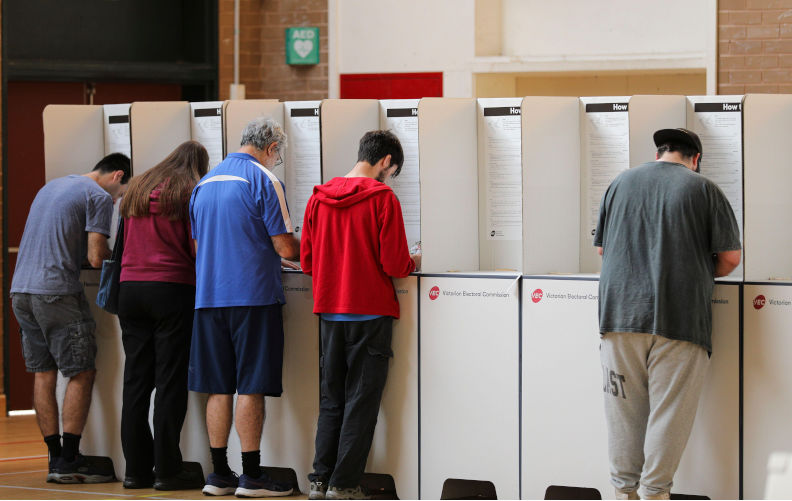
The story of a voter who did everything Australia once told working people to do: work hard, buy a home, raise a family and keep faith. Now, after years of lost jobs, debt and broken promises, his look towards One Nation is not loyalty but a warning.
He followed his father’s advice to the letter. By 2026, the country his father trusted had taken everything off him. This is why he’s looking at One Nation and why this that look should not be treated as permanent.
When the pollster reaches him on a Tuesday night, somewhere between the dishes and the next letter from the bank, Steve says he’s thinking about One Nation. Not with anger. Almost apologetically. Then he goes back to the kitchen table, where the bills are.
To understand that answer, you have to walk the whole way back with him.
He was born in the early 1970s in Coburg, in the inner north, where his parents had landed a decade before, his old man off a boat from a village he would never see again, chasing the one thing this country had promised people like him: a fair go for an honest day’s work. Brunswick and Coburg back then were full of families like his. Front lawns and backyards turned into vegetable patches. Church on Easter Sunday, the soccer club on Saturday. You looked out for your neighbours because half of them were related to you and the other half owed you a favour.
Then the family moved north to Broadmeadows, the way thousands did, because that is where the work was. Ford. The plant was the whole reason the suburb existed. It paid well, it paid reliably, and it let a man with no degree and broken English plan an entire life: a brick-veneer house, a car in the drive, two weeks down at the beach every January where the kids burned in the sun and the old man finally let his shoulders drop. His father worked that line and was proud of it. “Stay near the plant,” he’d say. “Good money, good people. You’ll be set.”
So when it was his turn, the choice made itself. He left school at the end of Year 11 and put his application into the plant, same as his dad. And then the country fell out from under him. The recession we had to have arrived right on cue. His father was lucky, seniority saved him. There was nothing for a teenager with no trade and the worst timing in the world. He spent the rest of the nineties doing whatever there was: labouring, a stint in a warehouse, cash jobs, long stretches of nothing. The mates who had stayed at school and gone to university were three years into careers by then, already talking about deposits.
Late in the decade, the call finally came. A job on the line at Ford. The dream his dad had sold him, a decade behind schedule but better late than never. He was good at it. He was proud of it. And for the first time in his life he could save. It took him until the global financial crisis, until he was nearly forty, to scrape together a deposit, while others he had gone to school with were buying their second homes or a decade into almost repaying the loan on their homes. He bought at the very start of the boom and borrowed to the edge of what the bank would allow. That was fine. The wage was strong. The job was secure. His partner ran a little business on the side. They started a family, late but happily.
By the time his eldest had barely started school, the thing his father swore would always be there was gone. Ford shut the line. The work his old man had built an entire life on, the work he himself had waited 15 years to inherit, simply ceased to exist in this country. The mortgage did not cease. Two kids still needed feeding. His partner’s side business became the only money coming through the door.
It took him three years to find steady work again, and “steady” is being generous. He felt like the early 1990s had come back again. Casual, at a freight processing centre. Scanning and stacking other people’s parcels, no sick leave, no certainty past Friday. A long way down from the skilled line he had been proud to call a trade. He didn’t complain. He had been raised not to. Through all of it he voted for one of his oldest mates when the marriage equality survey came around he ticked yes without a second thought, because his mate deserved the same as anyone. ‘Be a good man.’ That was the rule his father had given him, and he kept it.
By 2020 the savings were gone. The casual wage was reliable enough to be cruel, enough to keep turning up for, never enough to catch the mortgage. Then the pandemic. JobKeeper held the line for a while. His partner’s business did not survive it. His kids, in the local public school, lost the better part of two years to a screen in the lounge room. When it lifted, his partner was hollowed out, his children were behind in ways he didn’t have the words for, and the mortgage sat there, bigger than ever before.
Then the rate rises started, and didn’t stop, a net 13 of them, one after another, each one pulling a little more of the family out by the roots. And still, through 2022 and 2023, he did what he had always done. ‘Be a good man.’ He voted yes at the referendum, because his father had taught him you don’t kick people who are already down.
By 2026 there is nothing left. The savings are a memory. The repayments come off a credit card now, which is its own kind of debt with its own kind of clock. The mortgage is so large that he has done the maths and understands, quietly, that his children may inherit it instead of the house. And his parents, the ones who came here with nothing and believed the promise hardest, are old now, both on the pension, both needing care he has to find the money and the hours for. He is holding up the generation above him and the generation below him with a body and mind broken from the toil.
Here is the thing the comfortable keep getting wrong about a man like Steve. He did not turn bitter and then go looking for someone to blame. He did everything he was told. He left school for the honest job. He bought the house. He raised the kids. He voted Labor, like his father, until 2019. He voted United Australia when Labor stopped feeling like it was his. He came home to Labor in 2025, one last time, hoping. He said yes to his mate’s right to be married and yes to the referendum and yes, always, to being a good man.
And the system answered every yes by taking something else.
So when he tells the pollster One Nation, he is not endorsing a manifesto. He is registering that the deal his father believed in, work hard, play straight, and this country will keep its end, has been quietly cancelled, and that nobody in a suit has had the decency to tell him to his face. One Nation is simply a party that he can use to send one clear signal, one of resignation.
But here is what the people now courting that vote should understand. It is not loyalty. It is a receipt for damage, grief and loss. The day Steve finds out that Pauline Hanson stood in the Senate and voted against Same Job, Same Pay, the very law that would have handed a casual like him the wage and the security of the permanents working beside him; the law One Nation’s own senator stood up and called a “sham”, that vote is gone. He will go looking for someone else, the same way he went looking before.
He is not One Nation’s voter. He is nobody’s voter. He is a good man the country stopped keeping faith with, and he is still, even now, waiting for one side of politics to keep faith back.

Kos Samaras
Kos Samaras is a director at RedBridge Group, a research and strategy firm specialising in public opinion, social trends, and behavioural insights. He works across industry, government, and media to help organisations understand community attitudes and navigate complex social and political environments.