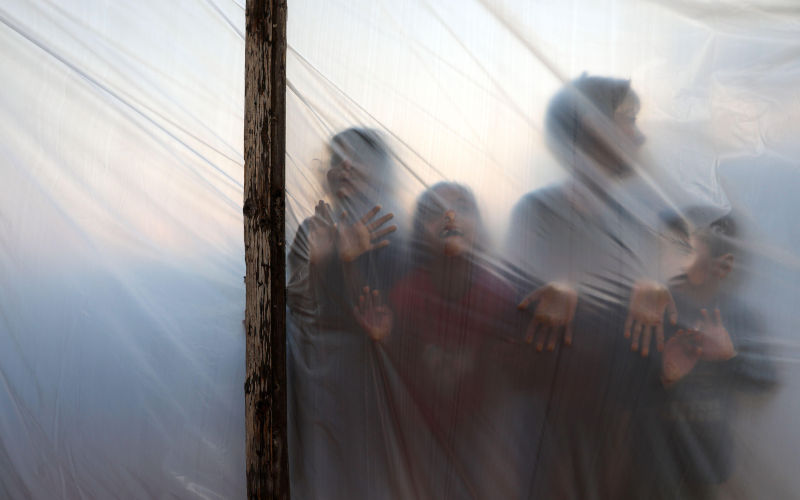
An International Commission of Inquiry on the Occupied Palestinian Territory report says the essence of childhood has been destroyed in Gaza.
Most people probably won’t read the United Nation’s 94-page report released on 23 June because it’s very long and written in formal legal and investigative language. Like many reports about serious human suffering, it may end up being stored away, occasionally referenced but not actually read by the general public, in whose name politicians make decisions about the situation described.
However, this report must be read, not because it tells us something we didn’t know, but because it records, in painstaking detail, something we already knew and have watched unfold for three years.
For months and years, images emerged, are still emerging, from Gaza that required no interpretation and no legal expertise: images of parents carrying the bodies of their children through shattered streets; of hospitals overwhelmed by casualties; of schools reduced to rubble; of families living in tents after being displaced again and again; of children searching for food and water amid devastation. Images that had become so routine they were in danger of being absorbed into the background noise of the daily news cycle.
The significance of the Independent International Commission of Inquiry on the Occupied Palestinian Territory, including East Jerusalem, and Israel report lies not in what it reveals but in documentation. It takes events that millions of people witnessed through photographs, videos, testimony and reporting and places them on the historical record, assembling the evidence and reaching conclusions that future generations won’t be able to dismiss as ignorance, confusion or the fog of war.
According to the Commission of Inquiry, thousands of Palestinian children were killed in their homes, killed in schools, killed in hospitals, killed in refugee camps and killed while seeking food and water. Tens of thousands more were injured, many sustaining life-altering wounds, while countless others were left without parents, without homes, without education, without healthcare, without safety and without any meaningful certainty about the future that awaits them.
The report argues that these outcomes were not merely tragic consequences of ‘conflict’ but formed part of a broader pattern that deliberately and systematically inflicted devastating harm upon Palestinian children, with consequences extending far beyond those who lost their lives. It describes the destruction not simply of individual children, but of childhood itself; the dismantling of the conditions required for children to grow, learn, develop and imagine a future beyond survival.
Whether you agree with every legal conclusion reached by the Commission or not, the human reality contained within its pages is impossible to ignore. ‘Behind every statistic is a child who should have been allowed to grow older and behind every finding is a life interrupted, a family shattered and a future altered forever.’
Years from now, historians and our children and their children, will study reports such as this one and ask what governments knew, what our leaders knew, what institutions knew and what ordinary people knew. They will discover that much of the evidence was available in plain sight, that the images were broadcast around the world repeatedly, on a daily, hourly basis, that humanitarian organisations raised repeated alarms and that journalists, doctors, aid workers and survivors testified again and again to what was happening and that many of those journalists, those health workers and others were imprisoned or killed in doing so.
They might also ask more difficult questions, not whether we knew but ‘what did we do with that knowledge’?
The uncomfortable truth is that this report ensures that when history asks what the world was told, there will be a record that can’t easily be erased, denied or forgotten.
The report is therefore not only an indictment of what it describes; it’s also a measure of our response to it and stands as evidence of suffering and, perhaps most importantly, a record of whether the knowledge we possessed was enough to move those with power to act before another generation of children paid the price for our hesitation.
Meg Schwarz
Meg Schwarz holds a Postgraduate Diploma in Counselling and Psychotherapy and brings over 35 years of experience championing social justice, advocacy and consumer engagement. Based in South Australia, Meg has dedicated her career to working alongside diverse communities, including refugees, people with disabilities and individuals with complex trauma backgrounds.With a strong passion for equality and human rights, Meg specialises in fostering meaningful communication, empowering voices through advocacy and creating inclusive spaces for dialogue. Her skills in stakeholder engagement, strategic communication and community development have earned her recognition as a trusted and compassionate leader in her field.