In an open letter to the Minister for Home Affairs, Meg Schwarz argues that Australia’s obligations to Palestinians must be reflected not only in foreign policy statements, but in the practical systems that shape access to visas, scholarships and education.
If Australia has obligations to Palestinians, they must be visible in our visa system.
Chris Sidoti (Australian expert on international human rights law, lawyer, advocate and former Human Rights Commissioner), in his article Australia has a legal obligation to act in response to Israel’s crimes in The Guardian (6 June), argues that Australia has legal obligations in response to what’s happening in Gaza and the West Bank and that these obligations require real action from countries, not just statements of concern.
Sidoti also sets out what that action should look like, including a very solid proposal that Australia provide at least 15,000 humanitarian places for Palestinian refugees from Gaza and restore scholarship eligibility for Palestinians to undertake tertiary study in Australia. He makes the point that this isn’t a wishlist, but the practical implementation of legal obligations. Australia, in his view, can choose to be a good international citizen and this is what that would look like.
I am writing to you because I want to say plainly what that argument looks like when it reaches the level of ordinary systems like visas, universities and migration processes. While Sidoti is speaking about a country’s responsibility and international law, what most people will actually see of those obligations, if they exist at all, isn’t in international forums, but in the way people are processed when they try to come to Australia.
We’re working with a migration specialist to assist a young Palestinian man who is applying to study a Master of Journalism in Australia. He wants to study journalism because he believes in it. He wants to tell stories, to record what’s happening and to build a future through education.
At the moment, he’s applying through the student visa pathway because that’s the route linked to his university offer and the one being pursued within his current circumstances.
He missed the university intake deadline this year and is now applying for next year. The university process will take weeks. It includes assessment of his academic record, recognition of prior learning and consideration of whether he’s eligible for scholarships. After that comes the visa process. Each step depends on the one before it. Each step is sequential and the whole process takes time.
On paper, none of this is unusual. Universities process large numbers of applications. Migration systems operate according to rules and timelines exist for a reason. I understand that, but I am writing because I’m watching what happens when that ordinary structure meets a situation that’s anything but ordinary.
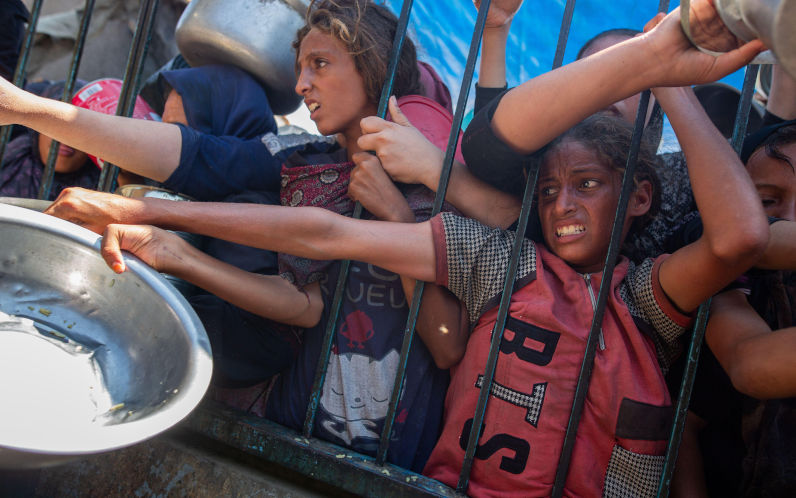
While he’s waiting, Palestinians are dying. That’s not a rhetorical point; it’s the reality that sits behind every hour, every week of delay. Time isn’t neutral in his situation in the way it is here.
This is where I think Sidoti’s argument becomes relevant in a practical sense. If Australia accepts that it has obligations in relation to Palestinians, then those obligations can’t only exist in foreign policy language or ministerial statements. They have to exist in the systems that determine whether people can actually come here and that includes student visas, university admissions processes and scholarship decisions.
At the moment, what I’m seeing is that the system doesn’t allow for urgency. It moves step by step, in sequence and it’s slow. Nothing moves until the previous step is complete. Each part of the process is reasonable on its own, but together they create delays that don’t take account of the conditions people are coming from.
The young man I’m assisting isn’t applying through a humanitarian visa pathway. He’s applying through the student system, but that distinction doesn’t change the reality that access to scholarships, timely processing and the ability to actually begin study aren’t just administrative issues; they’re what determine whether education remains possible at all.
At the moment, scholarships are assessed separately from admissions and admissions are assessed separately from visas. Each stage waits for the one before it. That structure makes sense in normal conditions, but in situations where people are trying to plan their lives under extreme instability, it creates delay that has serious consequences.
I’m not suggesting that rules should be removed or that decisions should be made without care. That’s not the point, but fairness can’t only mean treating everyone the same way through the same process, regardless of their circumstances. Sometimes fairness has to mean recognising when the assumptions built into a system no longer fit the reality in front of it.
If Australia is serious about what Sidoti is arguing — that it has obligations in relation to Palestinians — then those obligations have to be visible here as well – not only in what Australia says about international affairs, but in how people are actually treated when they try to engage with Australian systems.
At the moment, I see a gap between those two things. I see strong language at the level of principle and slow, rigid processes at the level of practice – and I don’t think that gap is harmless. It determines outcomes, quietly, one application at a time – and the difficulty is that Palestinians don’t have the time that our systems assume they have.
Yours sincerely,
A concerned Australian citizen

Meg Schwarz
Meg Schwarz holds a Postgraduate Diploma in Counselling and Psychotherapy and brings over 35 years of experience championing social justice, advocacy and consumer engagement. Based in South Australia, Meg has dedicated her career to working alongside diverse communities, including refugees, people with disabilities and individuals with complex trauma backgrounds.With a strong passion for equality and human rights, Meg specialises in fostering meaningful communication, empowering voices through advocacy and creating inclusive spaces for dialogue. Her skills in stakeholder engagement, strategic communication and community development have earned her recognition as a trusted and compassionate leader in her field.