Bangladesh’s future depends not just on roads, bridges and buildings. It needs trees to be planted and nurtured to maturity to ensure the country’s resilience.
Some of my happiest childhood memories are not of classrooms or playgrounds but of walking beside my father through the muddy fields of our village in Naogaon during the monsoon. When the rains softened the earth, he would take me with him to plant mango trees and jackfruit trees, my favourite. He never spoke about climate change or carbon emissions. He simply believed that every generation had a duty to leave the land better than it found it.
Looking back, I realise my father was planting much more than trees. He was planting patience, responsibility and hope.
As a teenager, I also remember watching late President Ziaur Rahman travel through rural Bangladesh encouraging canal digging and tree planting. Later, former President Hussain Muhammad Ershad continued promoting rural greening across the country. Whatever our political views today, both leaders understood an enduring truth: a nation’s prosperity depends not only on roads, bridges and industries but also on healthy rivers, fertile land and thriving trees.
Nearly 50 years later, Bangladesh has become one of Asia’s fastest growing economies. Millions have escaped poverty, and infrastructure has improved dramatically. Yet climate change now poses one of the greatest challenges to its future.
Floods, cyclones, river erosion, salinity and rising temperatures are already affecting millions of Bangladeshis. Meanwhile, its towns and cities continue to lose mature trees to rapid urban development.
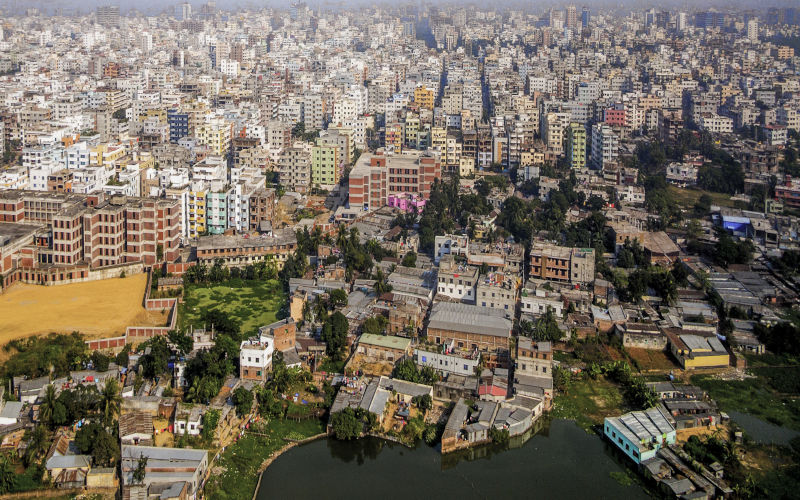
According to Bangladesh’s National Forest Inventory, forests cover only about 12.8 per cent of the country’s land area. Dhaka’s tree canopy is estimated at less than 11 per cent, making one of the world’s fastest growing cities increasingly vulnerable to extreme heat and air pollution.
Trees are not a luxury. They are essential infrastructure.
A mature tree cools the neighbourhood, filters polluted air, stores carbon, reduces flooding and improves public health. Unlike many public assets, its value increases with age.
Yet Bangladesh’s greatest challenge is not planting trees. It is growing them.
Every monsoon, millions of saplings are distributed. Photographs are taken and speeches are delivered. But far less attention is given to whether those trees survive. That must change.
I commend Prime Minister Tarique Rahman’s ambitious commitment to plant 25 crore, or 250 million, trees. It has the potential to become one of the country’s most significant environmental initiatives.
But success should not be measured by how many saplings are planted but by how many healthy trees are still standing five years later.
Every Member of Parliament should receive annual tree planting and tree survival targets for their constituency and report the results to Parliament. Deputy Commissioners, Upazila Nirbahi Officers, Union Parishad Chairmen and Members, Pourashava Mayors and City Corporation Mayors should also be given measurable greening targets.
Their responsibility should not end when a sapling goes into the ground. It should continue until that tree is well established.
Recognition and performance should be based on independently verified survival rates after one, three and five years, together with increases in local tree canopy and the protection of mature trees.
Bangladesh has successfully embraced Digital Bangladesh. Now it has the opportunity to build Green Bangladesh.
Every publicly funded tree should be GPS recorded and digitally monitored so citizens can see which districts and municipalities are succeeding. Transparency creates accountability, and accountability delivers results.
Its greatest opportunity, however, lies not in technology but in its young people. With a population of around 175 million, Bangladesh has more than 50 million members of Generation Z. They are the country’s greatest national resource. Prime Minister Tarique Rahman has a unique opportunity to inspire this generation to build not only a greener canopy but also a greener economy powered by innovation, renewable energy and environmental responsibility.
Imagine if every member of Generation Z successfully grew just five trees to maturity. Bangladesh would gain more than 250 million healthy trees within a generation.
Schools, universities, youth organisations and the Bangladesh Scouts could become partners in this national movement by encouraging young people to plant, nurture and monitor trees throughout their education.
Businesses should also play their part through corporate environmental program, while faith institutions can remind communities that caring for the Earth is both a civic and spiritual responsibility.
The Prophet Muhammad (peace be upon him) taught that when a person plants a tree from which people, birds or animals benefit, it is counted as an ongoing act of charity. Few teachings express environmental stewardship more beautifully.
Today, whenever I join community tree planting activities in Australia with my Australian born son Afif, I still think of those rainy days in Naogaon beside my father.
Different countries.
Different climates.
The same lesson.
Trees never ask who planted them.
They simply provide shade, cleaner air, fruit and hope to everyone.
Planting a tree takes only a few minutes.
Growing it to maturity takes years of care.
That is the challenge before us.
If we can unite government, local communities and the energy of Generation Z behind a national movement that values healthy trees over planting ceremonies, Bangladesh will not simply become a greener country. It will become a more resilient and more prosperous nation.

Mainul Haque
Mainul Haque OAM is an economist and former senior Australian public servant with nearly 30 years’ experience shaping and analysing policy across government, academia, and the not-for-profit sector. He is a community leader, board member and non-executive director, and former ACT Multicultural Ambassador. He writes on social cohesion, migration, and public policy, grounding his analysis in practical experience.Mainul has held numerous board and advisory roles across Canberra’s community, education and multicultural sectors, and was awarded the Order of Australia Medal for his significant contribution to the ACT community.