Community Strong has the chance to lead the way towards a new democratic habit, shaped by collaboration and long-term stewardship.
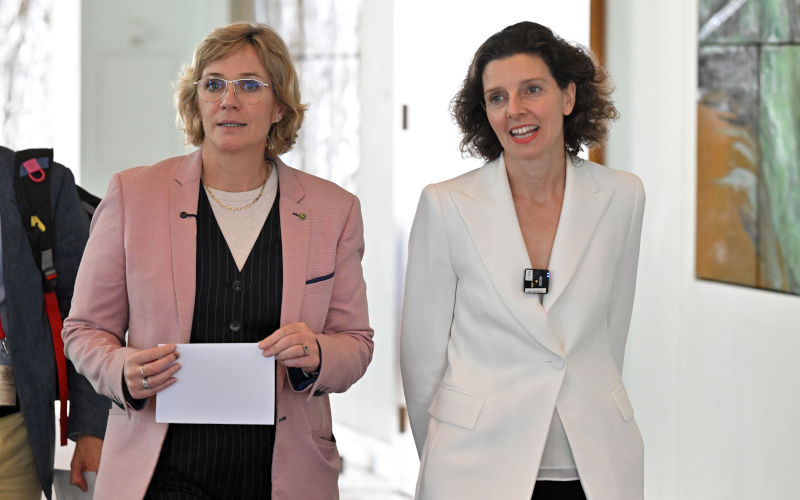
Since many voters hold little affection for political parties – and much of the popularity of the ‘independents’ was just that – the move by Allegra Spender and Zali Steggall to form a new one is surprising. They’ve been forced into this corner because of the changed electoral laws and because having a party makes Senate seats easier to win.
The deeper issue is not simply that parties are unpopular. It’s that the political system they dominate is poorly suited to the complex, long-term challenges modern democracies now face. People see political parties as tribal, self-interested machines more concerned with winning the next election than solving the next generation’s problems.
Once, political parties helped organise public life by turning competing values into programs of government. But in many democracies that organising role has hardened into a system of permanent campaigning. Public problems are filtered through partisan strategy. The aim has become not to learn, adapt or build agreement but to win, defend and attack.
This approach is a poor match for the issues that now crowd in on life. Climate adaptation, defence, intergenerational fairness, infrastructure, tax reform, housing, immigration and care for an ageing population (to name but a few!) all require diligent homework and shared responsibility. Yet party competition pushes politics towards short-term wins, slogans, blame and wedge issues.
Partisanship also narrows how citizens relate to public questions. Instead of weighing ideas on their merits, voters are encouraged to identify with a side. Facts are filtered through loyalty. Parliamentary debate becomes theatre for supporters rather than a search for better judgement. Voters, meanwhile, are reduced to spectators who choose between political brands every few years and then watch from the sidelines.
The result is a democracy that is constantly active but not necessarily capable. It produces conflict, media cycles and electoral drama, but too rarely produces considered agreement on hard problems. The question is how to move beyond an adversarial model of democracy towards one that is more collaborative, deliberative and productive. A healthier system would not treat collaboration as weakness. It would make collaboration part of the architecture of politics.
Citizens’ assemblies offer one way to begin that transition. Properly designed, they bring together a representative group of people, give them time, balanced information and access to experts, and ask them to deliberate on difficult public issues.
The value of a citizens’ assembly is not that it magically reveals the will of the people. Democracy is not simply a matter of counting preferences. Its deeper promise is that citizens can form better judgements when they are given time, respect and responsibility. Assemblies show that people are capable of grappling with the trade-offs that party politics often avoids or distorts.
Such a transition to collaboration will not happen overnight. It requires new institutions, new expectations and new measures of political success. Leaders would need to be judged not by whether they defeat opponents but by whether they can build durable agreements. The point is not to add a token consultation process to a system that otherwise remains unchanged. It is to build a new democratic habit: one in which public decisions are shaped by collaboration and long-term stewardship.
The community independents had major grassroots success, with numbers of active volunteers (often over 1,000 per electorate) that dwarfed what the major parties had ever seen. If Community Strong could effectively harness public deliberation – across electorates and partisan divides – then that would showcase a different party politics.

Luca Belgiorno-Nettis
Luca Belgiorno-Nettis is a Director of the newDemocracy Foundation. He has worked on democratic innovation and citizens’ assemblies for more than two decades and has advised governments and public institutions in Australia and internationally on deliberative democracy. Luca is also Managing Director of Transfield Holdings and Prisma Investment, a private family investment business. He holds a Bachelor of Architecture from the University of New South Wales, and a Graduate Diploma in Urban Estate Management from the University of Technology, Sydney. In 2004 he was made a member of the Order of Australia (AM) for service to the arts and to the community. In 2007, he was awarded the Chancellor’s Award for Excellence at the University of Technology. In 2014, he was awarded an Honorary Doctorate of Letters by Western Sydney University.